the Korean Porcelain
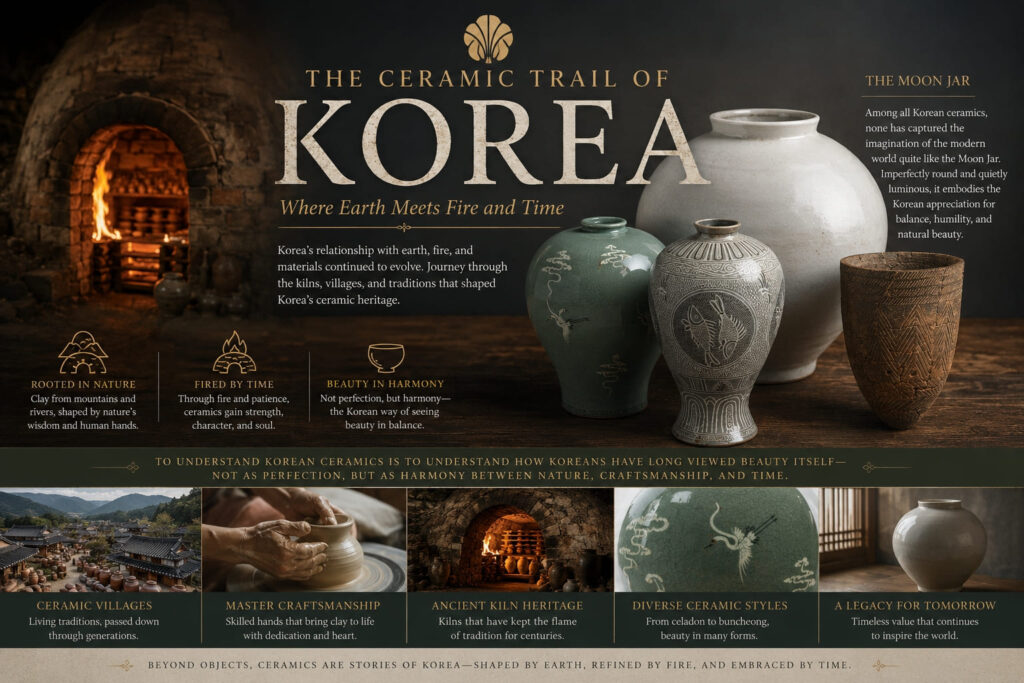
Korea’s relationship with earth, fire, and materials continued to evolve.
Journey through the kilns, villages, and traditions that shaped Korea’s ceramic heritage.
Korea built great palaces, but perhaps its most enduring beauty was shaped by hands, earth, and fire.
To understand Korean ceramics is to understand how Koreans have long viewed beauty itself — not as perfection, but as harmony between nature, craftsmanship, and time.
Among all Korean ceramics, none has captured the imagination of the modern world quite like the Moon Jar. Imperfectly round and quietly luminous, it embodies the Korean appreciation for balance, humility, and natural beauty.
A Gentle Journey Through Korea’s Ceramic Heritage
There is a quiet reverence in Korean ceramics—a beauty found not in flawless perfection, but in the natural, the unpretentious, and the understated. For centuries, Korean artisans have shaped the earth, allowing the fire and the glaze to tell their own stories.
To truly understand Korea, one must follow the trail of its clay, a journey that began thousands of years ago with the very first touch of human hands on raw earth.
The Timeline of Clay & Time
- The Dawn of Clay
Neolithic & Bronze Age (8000 BCE – 4th Century BCE)
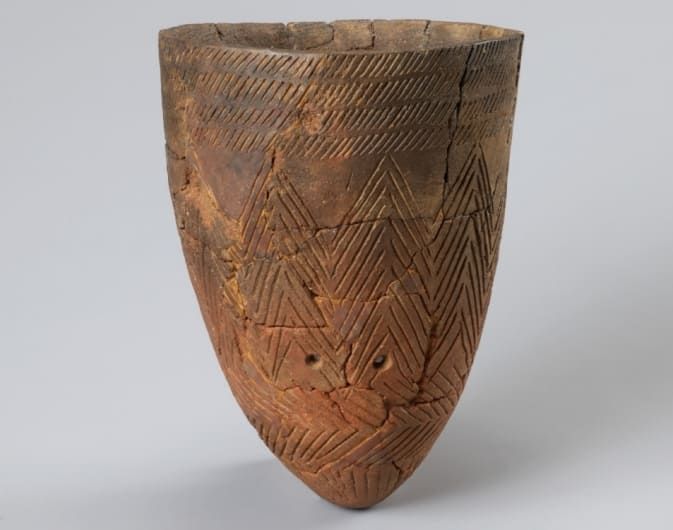
Long before royal kilns, Korea’s relationship with clay began with survival and raw nature. The iconic Jeulmun (comb-patterned pottery) features geometric lines pressed into the clay using bones or wood, mimicking the patterns of flowing water or rain. These pointed-bottom vessels were pushed directly into the river sand—a beautiful, primal connection between earth, food, and human hands.
- Goryeo Celadon (918–1392)
The Color of the Sky After Rain
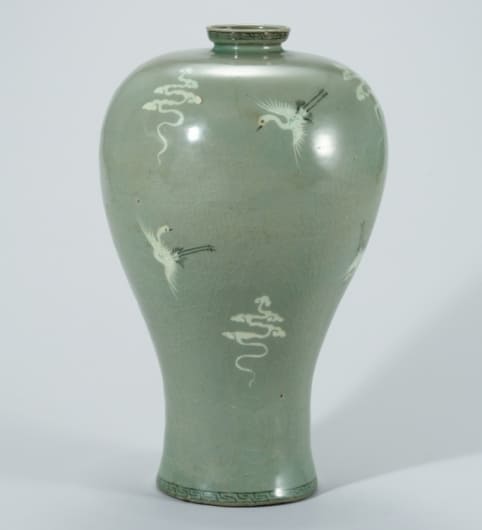
During the Goryeo Dynasty, ceramics reached an pinnacle of aristocratic elegance. Goryeo Cheongja (celadon) is world-renowned for its translucent, jade-green glaze—often described as the color of a mountain mist or the sky after a rainstorm. Artisans mastered the sanggam technique, delicately inlaying contrasting white and black slips into etched designs.
- Joseon White Porcelain & Buncheong (1392–1910)
The Beauty of Purity and Freedom
With the dawn of the neo-Confucian Joseon Dynasty, tastes shifted from royal opulence to minimalist purity.
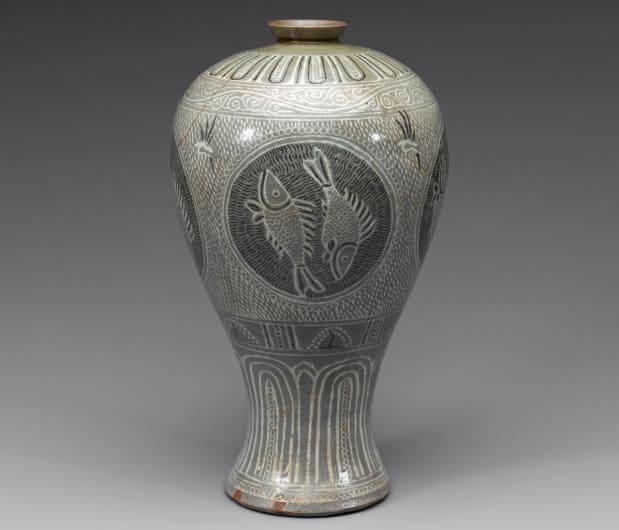
Buncheong Ware (분청사기)
A transitional, rustic ceramic coated with white slip. It was expressive, playful, and deeply admired for its modern, almost abstract freedom.
Baekja (White Porcelain, 백자)
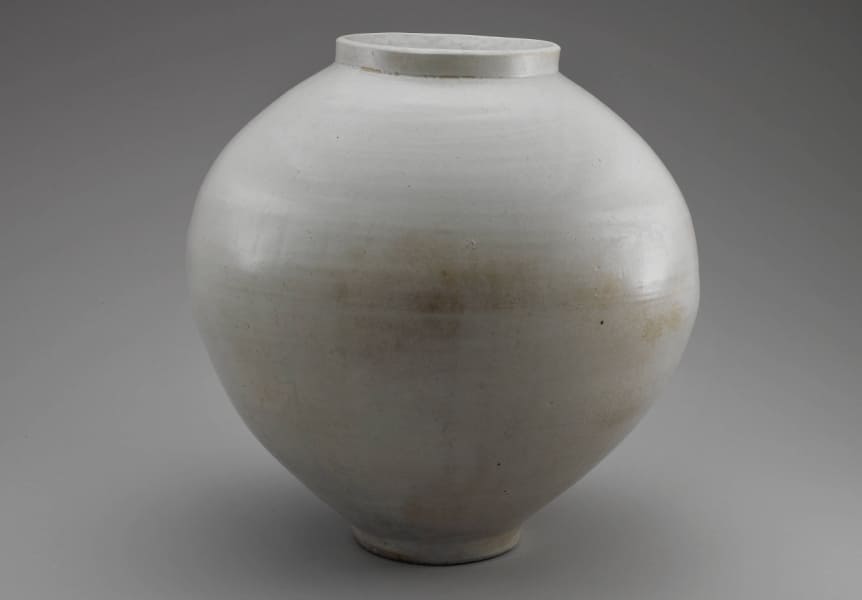
The ultimate expression of Joseon ideals. Stripped of vivid colors, its pristine white forms—such as the iconic, voluminous Moon Jar (Dalhangari, 달항아리)—symbolized honesty, humility, and spiritual purity.
The Ceramic Itineraries from Seoul (by historical order)
1. Gangjin: Where the Jade Glaze Resides
A deep southern escape into the birthplace of royal Goryeo celadon.
[ ROUTE FROM SEOUL ]
  Yongsan/Seoul Station ──(KTX / 1h 50m)──► Gwangju Songjeong Station ──(Bus / 1h 20m)──► Gangjin Terminal
A still-life shot of a single jade-green celadon teacup resting on a weathered wooden table. In the blurry background, misty southern mountains roll into the sea under a soft, overcast sky.
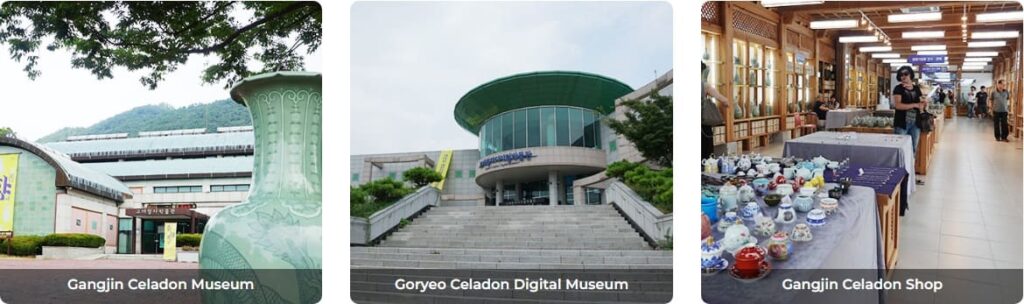
- The Heritage : Gangjin Celadon Museum
Set against the moody, beautiful backdrop of the southern mountains. You can walk directly among the outdoor ruins of historic kilns dating back to the 10th century. - The Stay : Accommodations near birthplace of Yeongrang
A beautifully preserved rural hanok that allows you to experience the rustic luxury of the southern countryside. Earthen floors and a quiet courtyard provide the perfect setting to unwind. - The Tea : Baegun Teahouse & Dawon
Sweeping green tea fields located at the foot of Wolchulsan Mountain. Sip traditional Yeon-cha (fermented tea) in a minimalist pavilion overlooking the foggy, rolling tea hedges.
2. Gwangju (Gyeonggi-do): The Royal Kilns of the Court
A riverfront journey honoring the minimalist purity of Joseon white porcelain.
[ ROUTE FROM SEOUL ]
  Gangnam Station (Bus 500-1) / Gangbyeon Station (Bus 1113-1) ──(Bus / 60m)──► Gyeonggi Ceramic Museum
An airy, high-key photograph of a pristine white Moon Jar sitting alone on a concrete plinth. The focus is entirely on its slight, organic asymmetry and the soft texture of the unglazed base.
- The Heritage : Gyeonggi Porcelain Museum
Located within a sprawling sculpture park focusing on the pure aesthetic of Baekja (white porcelain). The nearby Bunwon-ri area traces the pathway pottery took to reach the palaces via the Han River. - The Stay : Konjiam Resort / Local Forest Villas
A premium, nature-focused lodging option tucked away near the Hwadam Forest ecosystem, offering a peaceful retreat that balances out a day of historical walking. - The Tea : Bunwon Ceramic Market Tea Rooms
A meditative pour-over tea service hosted in the artisan markets. The presentation heavily emphasizes stark white porcelain teaware, echoing Joseon courtly elegance.
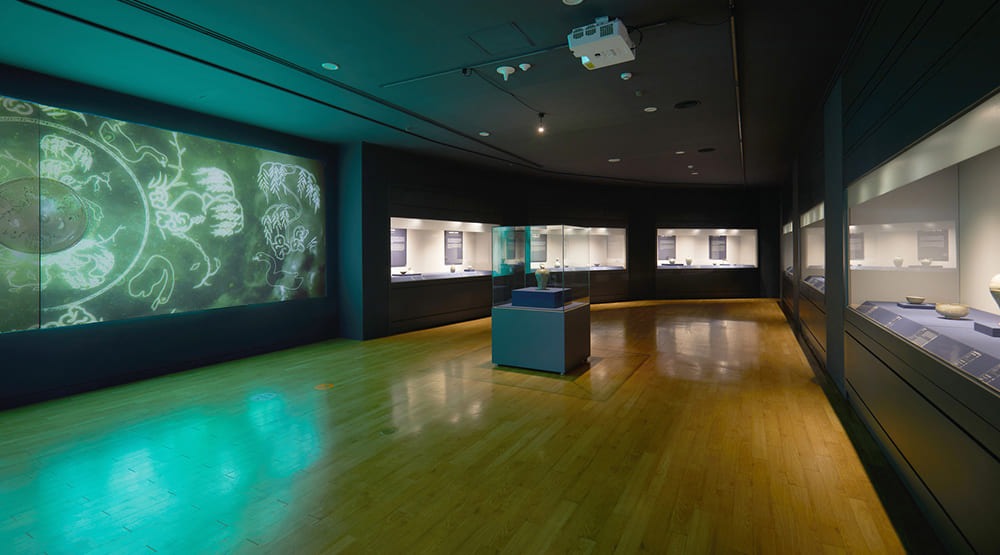
3. Mungyeong: Fire, Ash, and Tea Culture
A mountain-pass retreat built around raw, multi-chambered climbing kilns.
[ ROUTE FROM SEOUL ]
  Express Bus Terminal / East Seoul Terminal ──(Express Bus / 2h)──► Mungyeong Bus Terminal
A close-up shot of a dark, rustic tea bowl catching the light, showing the accidental patterns of flying wood ash. In the background, orange flames gently flicker inside an ancient mud-and-brick climbing kiln.
- The Heritage : Mangdaengi Wood-Fired Kilns
Mungyeong is famous for its sloped, brick climbing kilns. Visiting these rough-hewn structures gives you a deep appreciation for the natural ash glazes that define the region’s folk style. - The Stay : Mungyeong Saejae accomodations
Nestled inside the majestic mountain ridges of the Provincial Park. These accommodations feature modern comforts, allowing you to step directly into the morning mist of the pass. - The Tea : Chasabal Traditional Tea Spaces
The culture here revolves around the Chasabal (rustic tea bowls). Visit a sanctuary near the park entrance where tea masters guide you through the slow art of whisking powdered tea inside heavy stoneware.

4. Icheon: The Modern Heartland of Clay
A sanctuary where ancient traditions meet contemporary living.
[ ROUTE FROM SEOUL ]
  Pangyo Station (Gyeonggang Line) ──(Subway / 30m)──► Sindun Doyechon Station ──(Taxi / 5m)──► Ye's Park
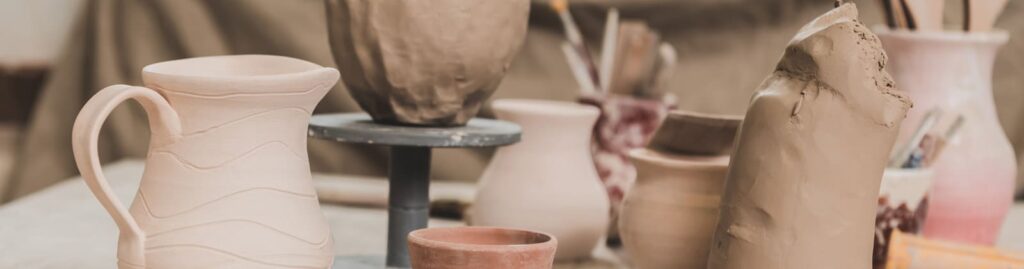
A minimalist photograph of a master potter’s hands covered in soft, gray clay, capturing the precise moment a vase rises on a wooden wheel. Warm morning sunlight streams through a paper hanok window, casting soft shadows on the floor.
- The Heritage : Ye’s Park
An open-concept, thoughtfully designed art village where hundreds of potters live and work. Wander through quiet, tree-lined streets to browse hand-carved tableware or watch masters throw clay on traditional wheels. (https://2000yespark.or.kr)
Location: 123, Dojayeosul-ro 62beon-gil, Sindun-myeon, Icheon, Gyeonggi - The Stay : Icheon city
Wake up to the sound of wind chimes and drink your morning coffee from a locally sourced, warm ceramic mug. - The Tea : Cafe Welcome & Tea House Eden
Hidden spaces at the back of resident artists’ galleries. Here, you can select your own wood-fired tea bowl to enjoy organic wild tea while conversing directly with the maker.
A Note for the Mindful Traveler
When holding a piece of Korean ceramic, look for the subtle asymmetry. It is not a flaw; it is an intentional space left for nature, the fire, and thousands of years of history to complete.
Korea’s ceramic heritage is not simply preserved in museums. It lives on in a tea bowl held with two hands, in a potter’s wheel turning quietly at dawn, and in the enduring belief that beauty is something nature and humanity create together.
🏺 Clay, Fire & Korean Craftsmanship
Before Korea became known for semiconductors, ships, and smartphones, it was admired for something far quieter.
Clay, fire, and the patience of master potters.
Korea’s ceramic heritage is not simply a story of pottery. It is a story of observation, patience, and refinement—qualities that continue to shape the country today, reminding us that progress is often built upon the wisdom of those who came before.
🏺 Korean Ceramics in Film & Drama
-
Goddess of Fire (2013, 불의 여신 정이)
Starring:
Moon Geun-young,
Lee Sang-yoon,
Kim Bum
A historical drama inspired by Baek Pa-sun, the legendary female potter whose artistry helped shape the legacy of Korean ceramics. -
The Painter of the Wind (2008, 바람의 화원)
Starring:
Moon Geun-young,
Park Shin-yang
A celebration of Joseon artistry, craftsmanship, and the creative spirit that also shaped Korea’s ceramic traditions. -
Yi San (2007, 이산)
Starring:
Lee Seo-jin,
Han Ji-min
The world of Joseon royal culture where white porcelain, scholars, painters, and artisans flourished together. -
Dong Yi (2010, 동이)
Starring:
Han Hyo-joo,
Ji Jin-hee
A glimpse into everyday life and royal culture during the height of Joseon craftsmanship and porcelain production.
🛏️ Hotels in Myeongdong
Choose your preferred booking partner.





You May Also Like
- MunGyeong—The Soulful Mountain Pass of KOREA
- Healing Korea – Pyeongchang Guide 2026
- Busan — The City That Carried a Nation
- Jeju — Waiting Beyond the Horizon
- Namwon – Memory of Emotion
- Andong – Where Korea Learned to Listen
- Tteok Trail: Where Korea Pauses
- The Korean Bread Trail
- Korean Coffee Beyond the Coffee Belt
More to Explore on KHOREA
Discover more stories across Korea — choose a category that inspires you.