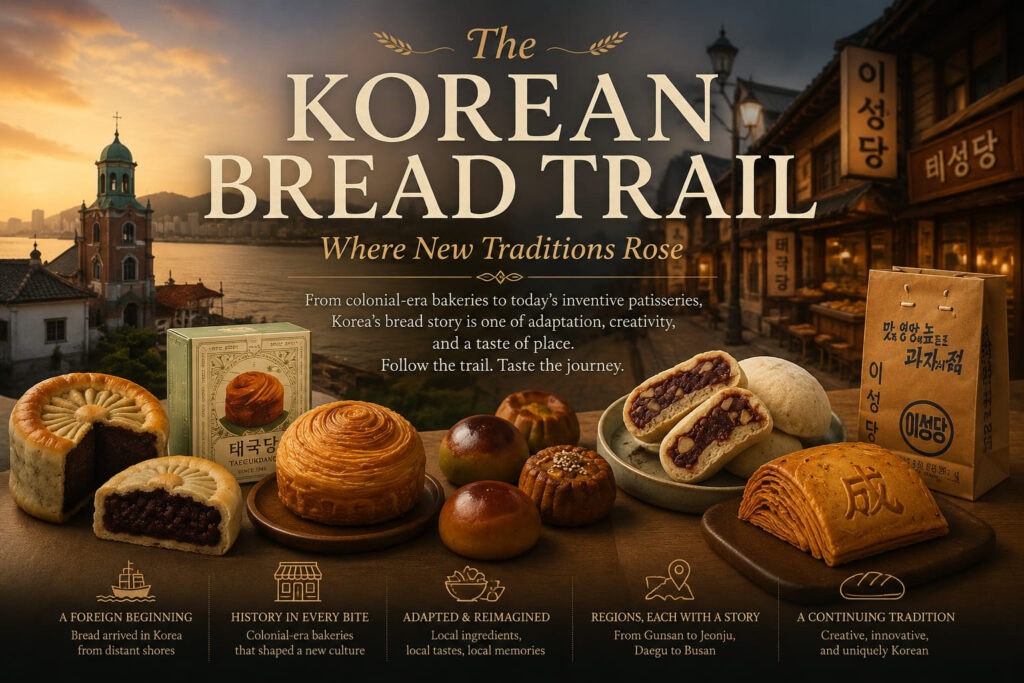
Korean Bread Trail
Bread arrived from foreign shores.
Korea transformed it through local ingredients, regional traditions, and generations of craftsmanship.
Follow the trail from Seoul to Jeju and discover how bread became part of Korea’s story.
The Korean Bread Trail – Where New Traditions Rose
Bread arrived in Korea from distant shores.
It was never part of the peninsula’s ancient culinary traditions. Rice remained the staple grain, and rice cakes accompanied celebrations, rituals, and everyday life for centuries.
Yet Korea welcomed bread with remarkable enthusiasm.
What followed was not imitation, but adaptation. Local ingredients, local tastes, and local memories slowly became part of the recipe. Red bean paste found its way into pastries. Walnuts became symbols of regional pride. Even cod roe entered the world of baguettes.
Today, a journey through Korea’s bakeries is more than a search for good bread. It is a journey through modern Korean history, regional identity, and the creative spirit that continues to shape contemporary Korean culture.
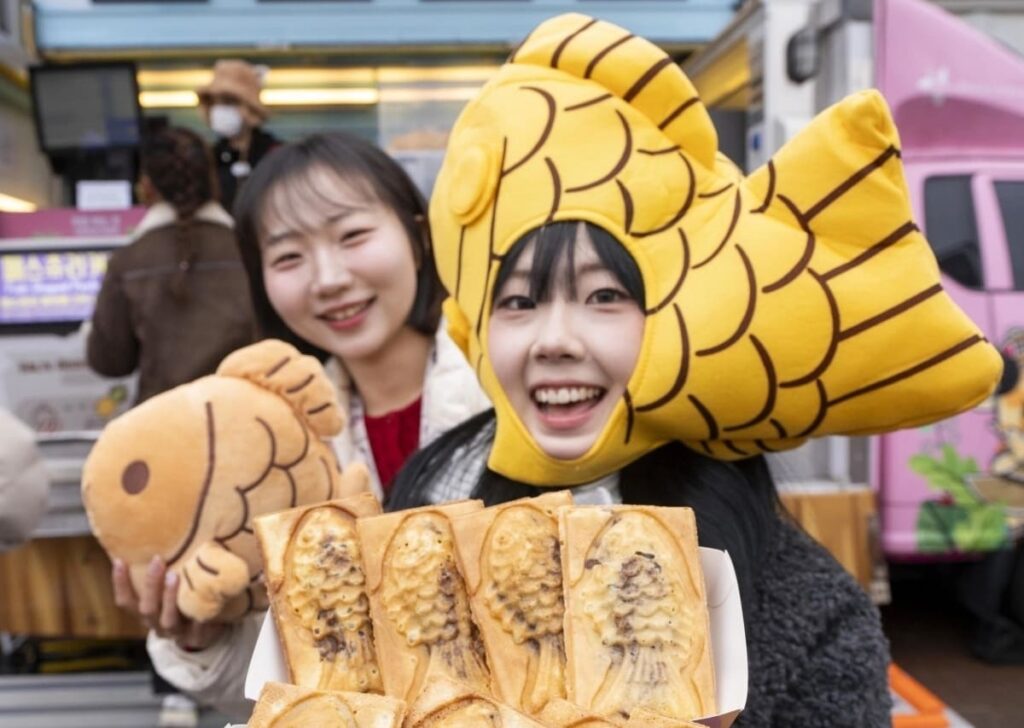
Seoul – Innovation in Every Layer
Every culinary journey in Korea eventually begins in Seoul.
The capital’s bakeries reflect the city’s personality: fast-moving, experimental, and constantly evolving. European techniques mingle with Korean ingredients, while traditional hanok neighborhoods host some of the country’s most fashionable cafés.
In districts such as Yeonnam-dong, Seongsu-dong, and Bukchon, artisan bakers treat bread not merely as food but as a form of craftsmanship. Sourdough fermentation, seasonal ingredients, and meticulous coffee pairings have transformed bakery visits into cultural experiences.
Seoul’s bakeries reveal a city that is always looking outward while continuing to reinvent itself.
Cheonan – The Walnut Legacy
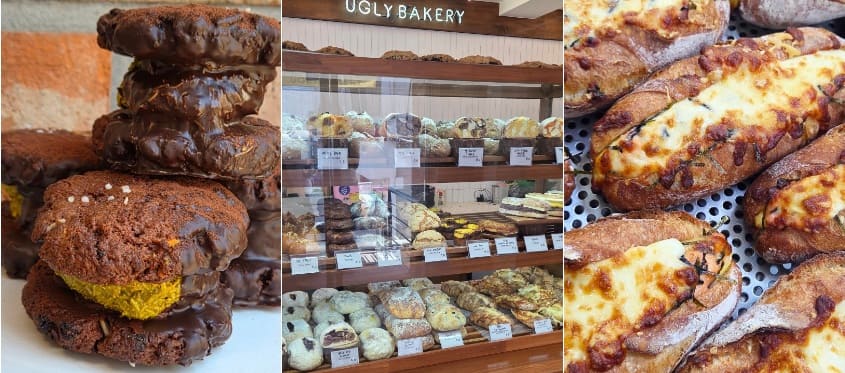
A short journey south leads to Cheonan, a city whose identity has become inseparable from one humble ingredient: the walnut.
For generations, travelers passing through Cheonan carried boxes of walnut cakes (호두과자) as gifts for family and friends. What began as a regional specialty eventually became one of Korea’s most recognizable baked treats.
The tradition reflects a familiar Korean pattern: local ingredients elevated into symbols of place and memory.
Even today, walnut cakes remain a reminder that some of Korea’s most beloved foods were shaped not by royal courts or grand traditions, but by railway stations, family businesses, and everyday travelers.

Daejeon – Korea’s Bread Capital
If there is a pilgrimage site for Korean bread lovers, it is Daejeon.
The city is home to Sung Sim Dang (성심당), a bakery that has achieved something rare in modern Korea: becoming a destination in its own right.
Visitors often travel specifically to purchase a few signature pastries before boarding the train home. The phenomenon is so common that bread has become part of the city’s identity.
What makes Daejeon remarkable is not simply the quality of its baking. It is the loyalty between the bakery and the community. In an age of global franchises, the city’s most famous bakery remains deeply connected to its hometown.
For many Koreans, Daejeon proves that food can become a source of local pride.
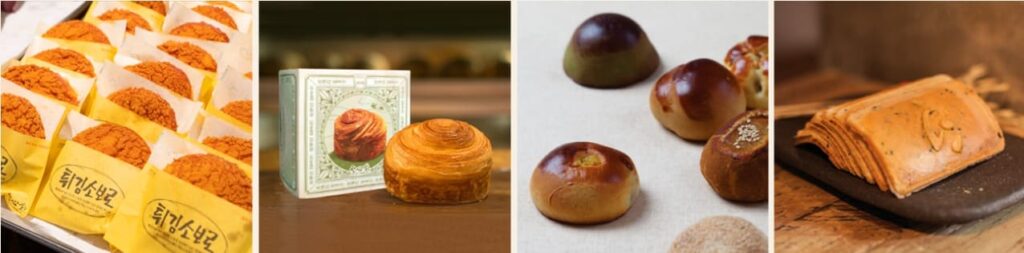
🌿 The Story of Sung Sim Dang
Sung Sim Dang traces its origins to the Korean War, when its founders arrived in Daejeon as refugees.
During those difficult years, they made a promise: if they survived, they would spend their lives helping those in need.
That promise became the foundation of the bakery.
Guided by the motto, “A world where every person is cherished,” Sung Sim Dang has spent decades donating unsold bread to local charities and supporting vulnerable members of the community.
Beyond its social mission, the bakery is celebrated for iconic creations such as the Fried Soboro, Pantalong Chive Bread, and Bomunsan Echo.
Gunsan – Bread and Memory
Gunsan tells a different story.
The city preserves traces of Korea’s modern history more vividly than almost anywhere else on the peninsula. Walking through its streets feels like stepping into an earlier era.
Its historic bakery culture emerged during a period of profound social and economic change. Today, visitors come not only for the bread itself but also for the atmosphere surrounding it.
In Gunsan, every loaf carries echoes of a port city that witnessed some of the most transformative decades in Korean history.
The experience is less about trend and more about memory.
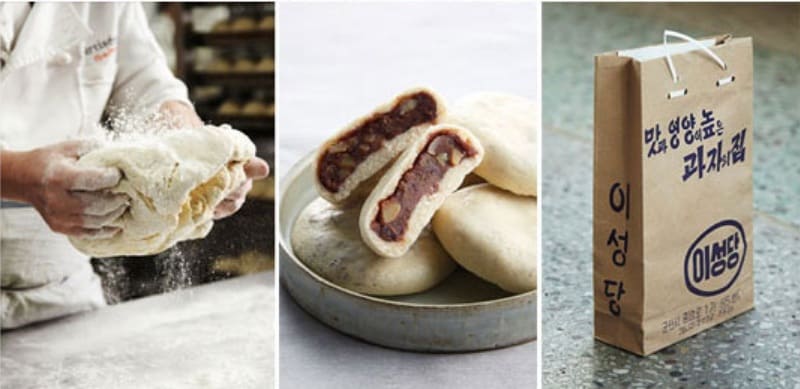
Gyeongju – A Heritage Wrapped in Red Bean Paste
Few baked goods are as closely associated with a place as Hwangnam-ppang is with Gyeongju.
The city’s famous pastry appears deceptively simple: thin dough surrounding smooth red bean filling.
Yet behind that simplicity lies a tradition that spans generations.
As the former capital of the Silla Kingdom, Gyeongju is a city where history feels ever-present. Ancient tombs, temples, and royal stories surround visitors at every turn.
Hwangnam-ppang fits naturally into that landscape. It is not merely a local snack but a cultural symbol connecting past and present.

Busan – Bread by the Sea
Korea’s largest port city brings a different energy to the bread trail.
The sea is never far away in Busan. Hills rise above harbors, fishing boats share space with container ships, and coastal neighborhoods look out toward endless horizons.
The city’s bakeries reflect that relaxed atmosphere.
Salt bread, with its rich butter and gentle salinity, has become particularly beloved along the coast. Enjoyed with coffee and ocean views, it captures something essential about Busan’s character: simple pleasures elevated by place.
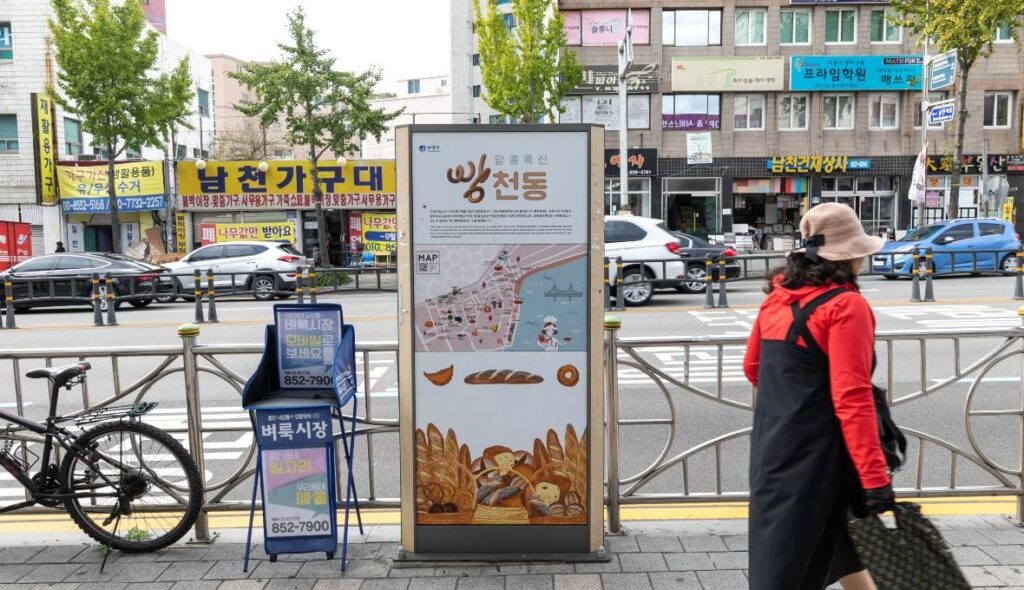
Jeju – The Island of Ingredients
The journey concludes on Jeju Island.
If Seoul represents innovation, Jeju represents terroir.
Volcanic soil, coastal winds, and a distinctive agricultural culture shape the island’s ingredients. Tangerines, carrots, buckwheat, and other local products frequently appear in breads and pastries.
Many bakeries here feel less like businesses and more like extensions of the surrounding landscape.
Each bite offers a glimpse into the island’s unique environment.
It is a reminder that great bread begins long before it reaches the oven.

Where New Traditions Rise
The Korean bread story is ultimately not about bread alone.
It is about adaptation.
A food that arrived from elsewhere gradually became woven into local life. Bakers embraced foreign techniques while remaining rooted in Korean ingredients, communities, and memories.
The result is neither entirely Korean nor entirely foreign.
It is something created through encounter, exchange, and imagination.
And perhaps that is why the Korean Bread Trail feels so compelling.
It tells the story of a country that continues to welcome new ideas while finding its own way to make them meaningful.

Unlike tteok↗ (떡), bread was not inherited from the past.
It became Korean because generations chose to make it their own.
🥖 Stories Behind Korea’s Bread Culture
- Bread, Love and Dreams (2010, 제빵왕 김탁구) A young baker’s journey mirrors Korea’s own transformation—from scarcity to craftsmanship, perseverance, and innovation.
- Gourmet (2008, 식객) Though centered on Korean cuisine, the series celebrates artisans who dedicate their lives to perfecting a single craft.
- Little Forest (2018, 리틀 포레스트) A gentle reminder that food is not only consumed—it is cultivated, shared, and woven into everyday life.
- Daily Bakery & Café Culture Modern Korean dramas frequently feature neighborhood bakeries and cafés, reflecting how bread quietly became part of daily Korean life.
🍞 The Spirit of the Bread Trail
- From Foreign Arrival to Local Tradition Bread may have arrived from abroad, but Korea embraced it and made it uniquely its own.
- The Rise of Neighborhood Bakeries Long before trendy cafés, local bakeries became gathering places for families, students, and communities.
- Innovation Through Adaptation Korean bakers continuously blended European techniques with local tastes and ingredients.
- A New Korean Tradition What began as an imported food eventually became part of Korea’s everyday cultural landscape.
Continue the Trail
Every traveler discovers a different Korea.
If you find a memorable tteok shop, a quiet tea house, or a hidden alley worth sharing, post your journey using #KbreadTrail.
Your next favorite stop may come from another traveler’s story.
🛏️ Hotels in Myeongdong
Choose your preferred booking partner.





You May Also Like
- Tteok Trail: Where Korea Pauses
- Korean Coffee Beyond the Coffee Belt
- 2-Day Everland & Daejanggeum Park Tour
- Busan — The City That Carried a Nation
- Jeju — Waiting Beyond the Horizon
More to Explore on KHOREA
Discover more stories across Korea — choose a category that inspires you.