
Jeju — Waiting Beyond the Horizon
An Island Shaped by Wind, Sea, and Time
Long before Jeju became one of Korea’s most beloved travel destinations,
it was known by another name: Tamna.
Tamna (탐라) – An Island Nation
Today, visitors arrive in search of volcanic landscapes, emerald waters, and coastal escapes. Yet beyond its beaches and scenic roads lies an island shaped by fire, wind, and centuries of life between the mainland and the open sea.
For many visitors, the first glimpse of Jeju comes not from its beaches or coastal roads, but from the window of an arriving aircraft. Rising from the heart of the island, Hallasan (한라산) appears above the clouds as if quietly welcoming those who have crossed the sea to reach it.
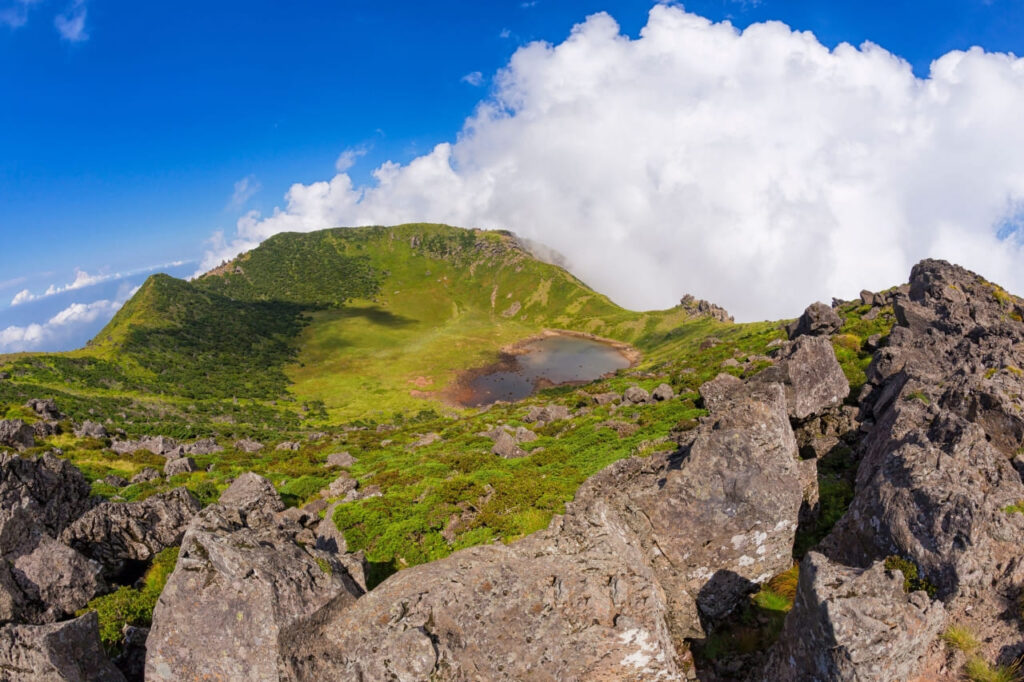
At its summit lies Baengnokdam (백록담), a volcanic crater formed by ancient eruptions. Yet despite its dramatic origins, the landscape feels remarkably gentle. Rather than overwhelming visitors with grandeur, it offers something rarer—a sense of comfort, as though the mountain has been patiently waiting to embrace all who arrive.
Beyond Hallasan, Jeju unfolds at its own pace. Volcanic cliffs meet emerald waters, stone walls wind through quiet villages, and trails follow the contours of the coastline. The island invites travelers not to rush from one attraction to another, but to slow down and discover the rhythm of life shaped by the sea and the wind.
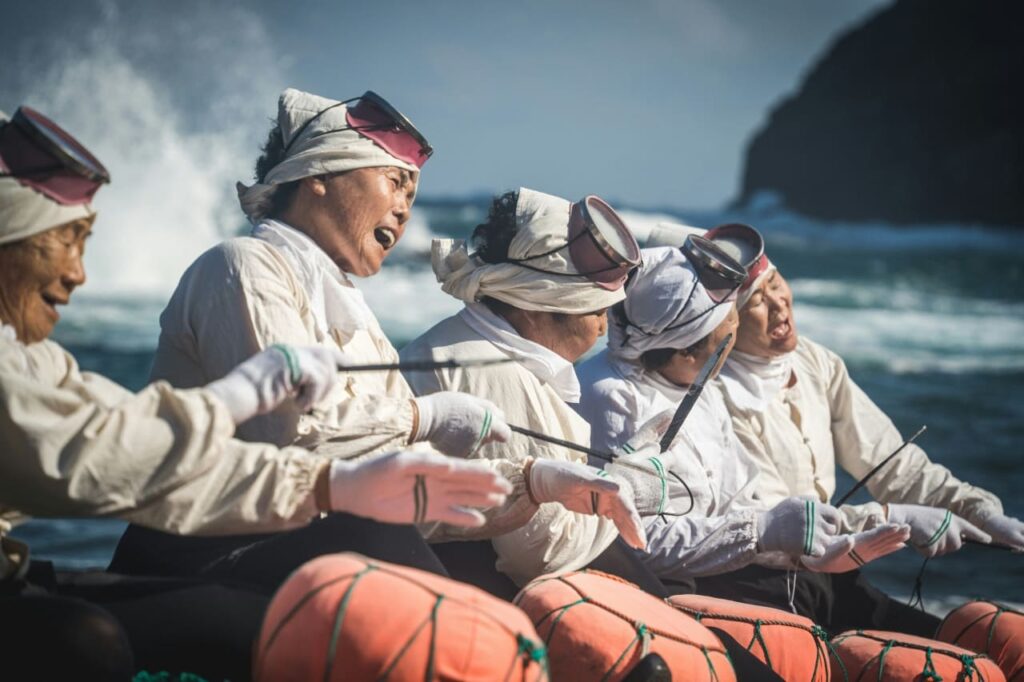
Here, the beauty of Jeju is not found in a single landmark. It lives in the resilience of the Haenyeo (해녀) divers, the scent of citrus orchards carried on the breeze, the sound of waves against black volcanic rock, and the countless paths that lead travelers toward unexpected moments of stillness.
Whether you come seeking nature, culture, cuisine, or simply a place to breathe a little deeper, Jeju offers something increasingly rare in modern travel: a destination that feels both timeless and welcoming.
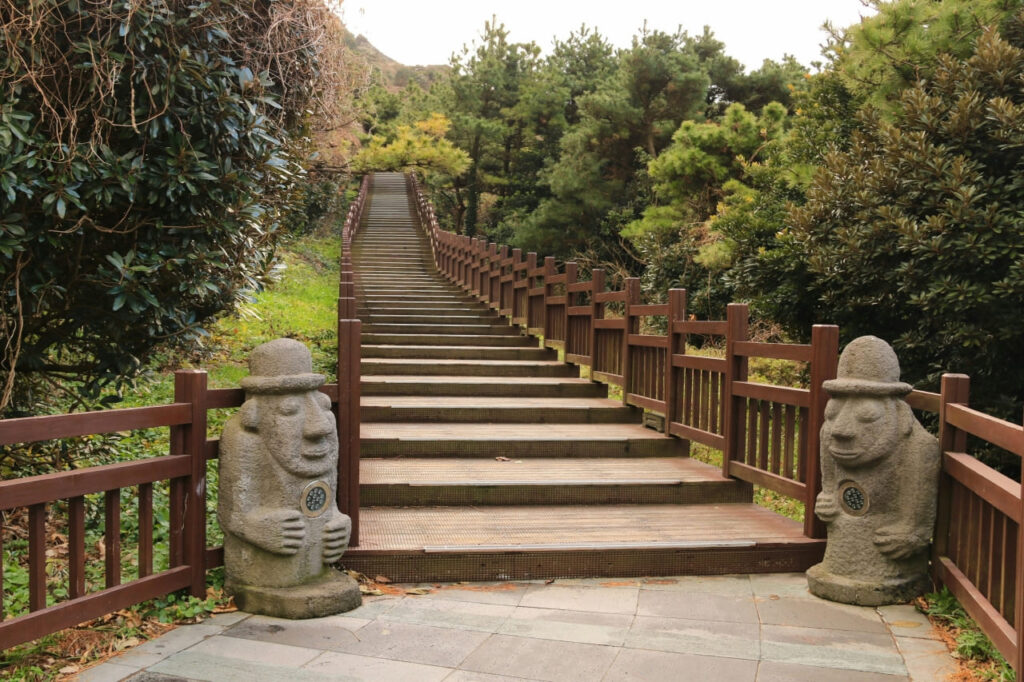
In every season, the island reveals a different face.
Fields of yellow canola flowers announce spring.
Summer brings sparkling coastlines and endless blue horizons.
Autumn paints the volcanic slopes in warm hues,
while winter winds remind visitors of the forces that first shaped this remarkable island.
And through it all, Jeju remains exactly where it has always been
—waiting beyond the horizon.
The Majestic View Created by the Nature, Jeju (source: K-heritage.tv)
Hallasan — The Mountain That Welcomes You
For many travelers, Jeju’s first greeting comes long before they reach the island itself.
As the aircraft descends through the clouds, Hallasan rises from the center of Jeju, quietly watching over the island below. Standing 1,947 meters (1.2 miles) above sea level, it is South Korea’s highest mountain and the defining landmark of Jeju.
At its summit lies Baengnokdam, a volcanic crater formed by ancient eruptions. Yet despite its dramatic origins, the landscape feels remarkably gentle. Rather than overwhelming visitors with grandeur, it offers something rarer—a sense of comfort. The mountain seems less like a monument to be conquered and more like an old friend welcoming travelers home.
Hallasan is not simply a mountain. It is the heart of Jeju, shaping the island’s climate, landscapes, and identity for 20 thousands of years.
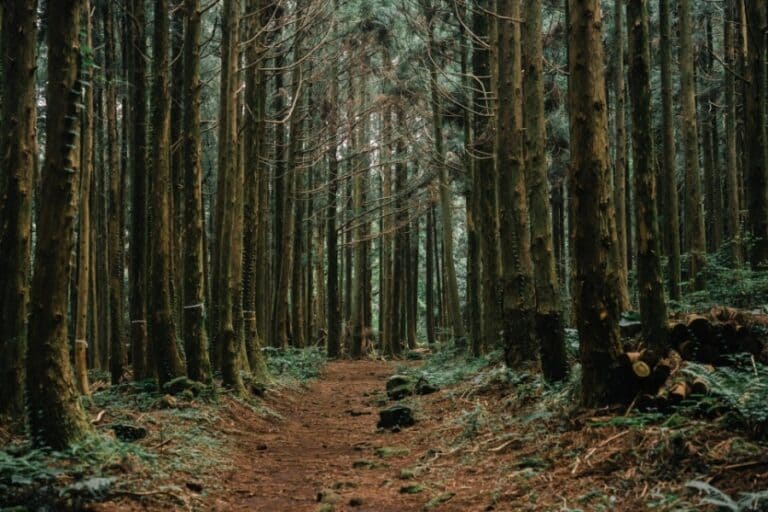
Oreum — The Island of a Thousand Hills
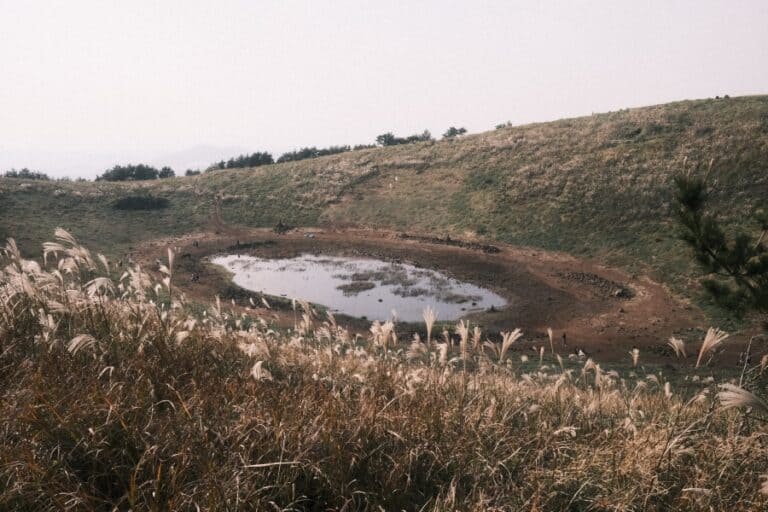
While Hallasan dominates the skyline, the Oreum (오름) define the character of the island.
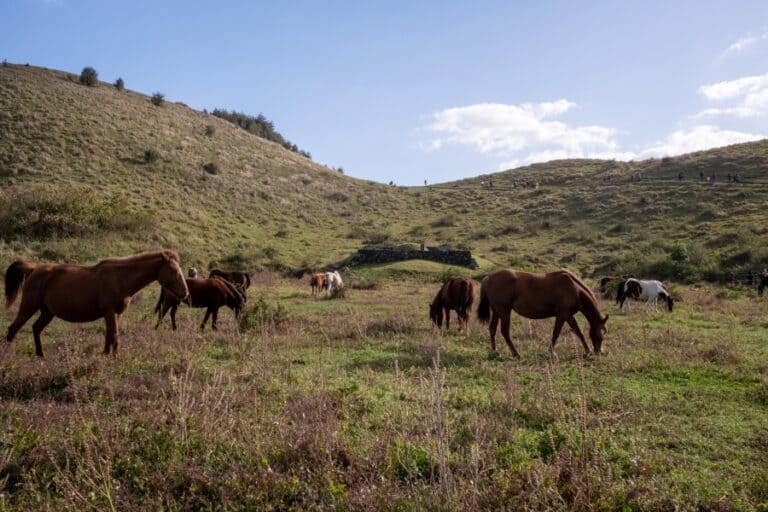
Scattered across Jeju are hundreds of small volcanic cones formed by ancient eruptions. Covered with grasslands, forests, and seasonal wildflowers, they create a landscape unlike anywhere else in Korea.
Some oreum offer panoramic views of the coastline, while others provide quiet walking paths through peaceful countryside. Together, they reveal a softer side of Jeju’s volcanic origins—one that feels calm, approachable, and deeply connected to nature.
For travelers seeking a slower pace, few experiences capture the spirit of Jeju better than a walk across its rolling oreum landscapes.
Jusangjeolli Cliffs — Where Fire Meets the Sea
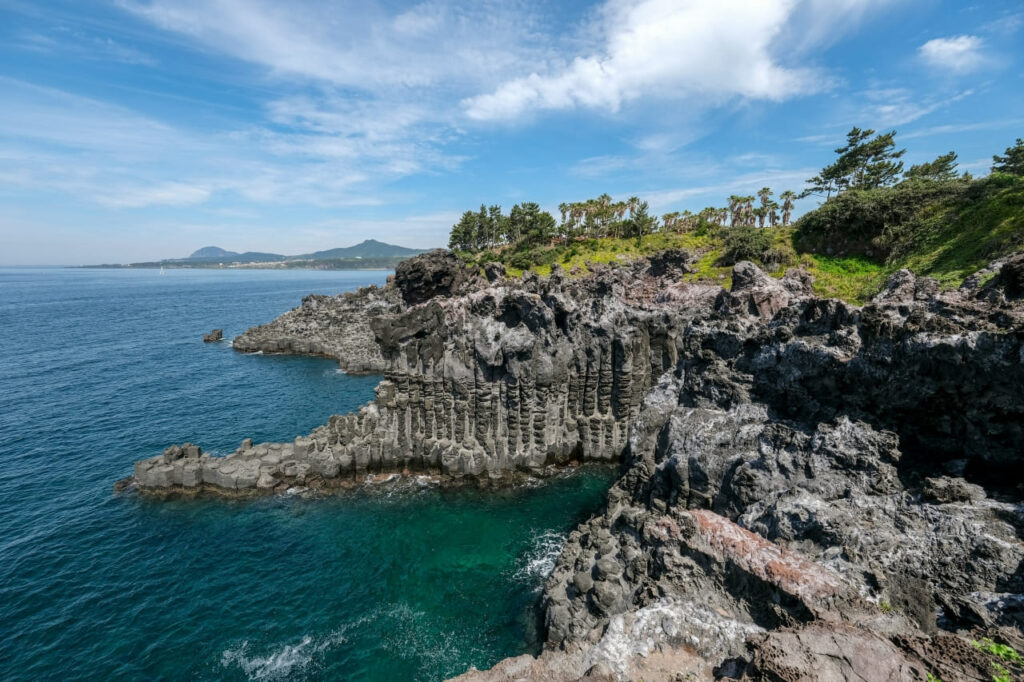
Few places illustrate Jeju’s volcanic origins more dramatically than the Jusangjeolli Cliffs (주상절리).
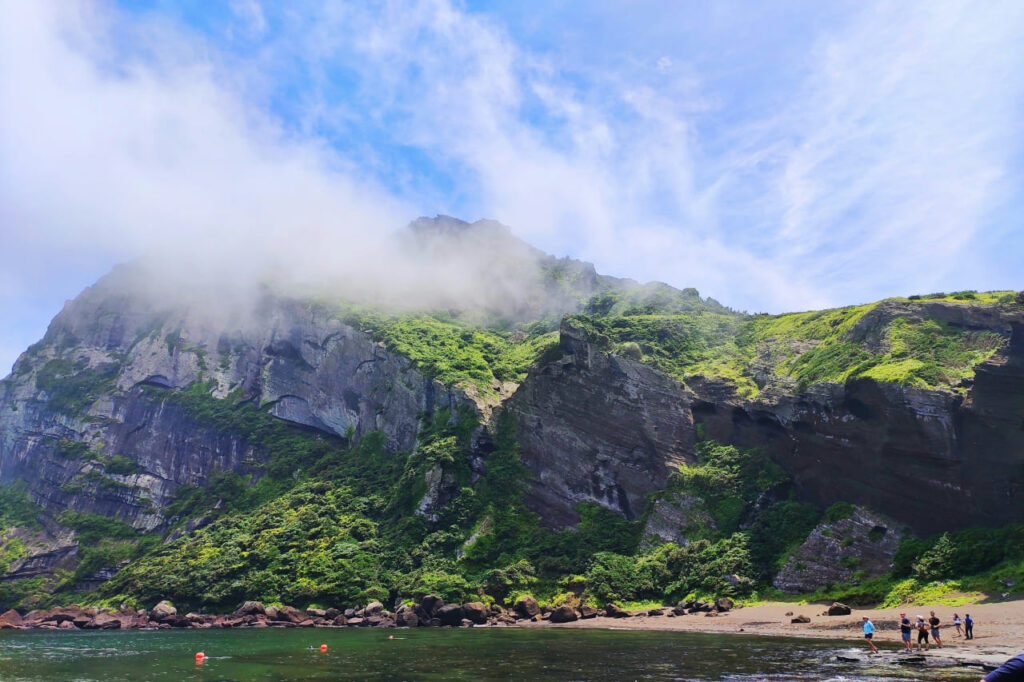
Created when molten lava flowed into the sea and cooled rapidly, the cliffs are composed of striking hexagonal stone columns that appear almost too perfect to be natural. Rising above the ocean, these formations stand as a reminder of the immense geological forces that shaped the island.
As waves crash against the dark volcanic rock, visitors can witness a meeting between fire and water that began thousands of years ago.
It is one of Jeju’s most iconic coastal landscapes and a powerful expression of the island’s volcanic heritage.
Olle Trails — Discovering Jeju at a Slower Pace
Jeju is not a destination best experienced in a hurry.
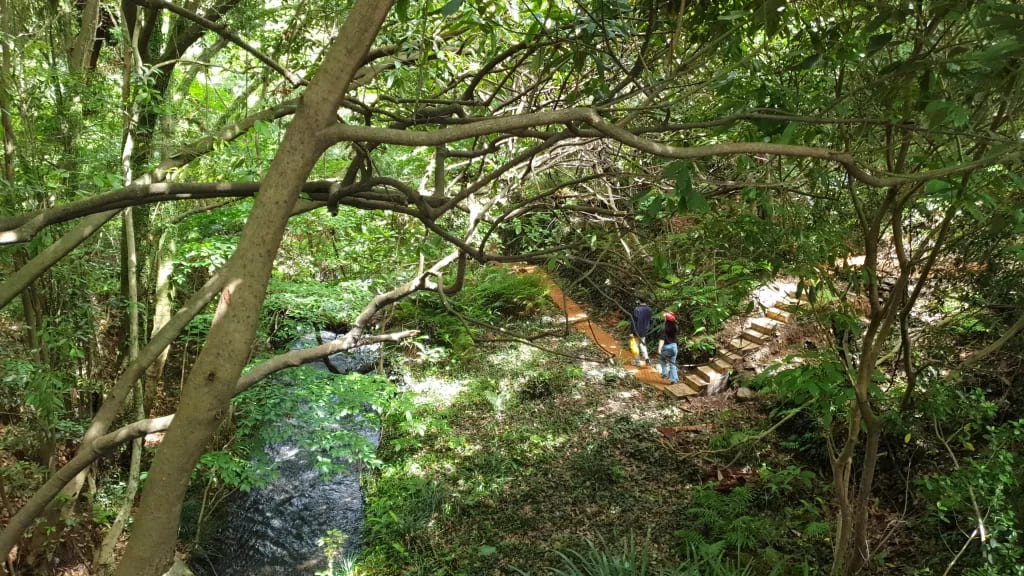
While many visitors arrive with a list of famous attractions, the true charm of the island often reveals itself along the Olle Trails (올레길).
Winding through coastal villages, citrus orchards, forests, beaches, and stone-walled pathways, these walking routes encourage travelers to slow down and connect with the landscape at a human pace.
The Olle Trails are more than hiking routes. They are an invitation to experience everyday Jeju—to hear the wind, watch the waves, and discover places that rarely appear on postcards.
To truly understand Jeju, sometimes the best thing to do is simply walk.
Haenyeo — The Women of the Sea
The story of Jeju is not only written in its landscapes but also in the lives of its people.
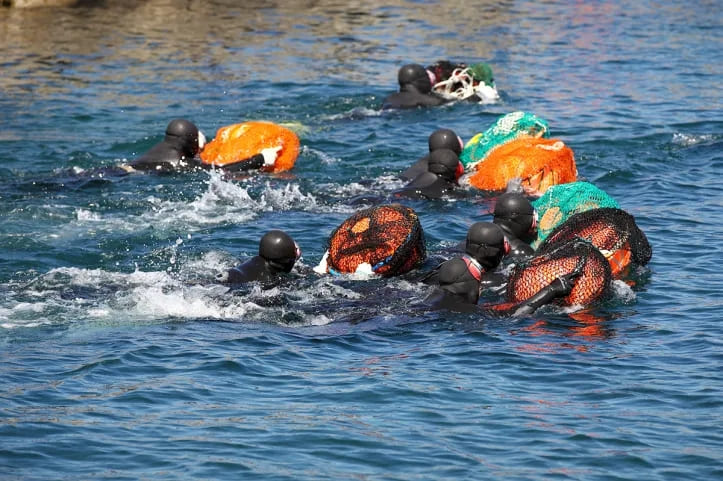
Among the island’s most remarkable cultural traditions are the haenyeo (해녀), female free divers who harvest seafood from the ocean without the use of breathing equipment.
For generations, these women have ventured into the sea in all seasons, embodying resilience, independence, and a deep connection to nature. Their way of life has become one of the most distinctive symbols of Jeju’s cultural identity.
Today, the haenyeo remain a living link between the island’s past and present, preserving traditions that continue to inspire visitors from around the world.
Taste of Jeju
Jeju’s cuisine reflects the island itself—simple, fresh, and shaped by the sea and volcanic land.
Local specialties include Jeju Black Pork, prized for its rich flavor and tenderness, as well as fresh seafood such as hairtail, tilefish, abalone, and sea urchin. Tangerines and Hallabong (한라봉) citrus fruits add a bright sweetness that has become synonymous with the island.
Whether enjoyed at a traditional market, a seaside restaurant, or a small local eatery, Jeju’s food offers another way to experience the island’s unique character.
Every meal tells part of the story of Jeju—its waters, its fields, and the people who have called the island home for generations.
You May Also Like
- Best 25 Hotels in Jeju by Area
- Stanford Hotels Korea – Trusted Hotels from Seoul to Jeju
- Tongyeong – Shaped by the Sea, Sheltered by Islands
- Suncheon – Where Korea Slows Down
- Buyeo – Invitation to a slower world
- Tteok Trail: Where Korea Pauses

🌊 Jeju in Film & Drama
🎬 Jeju in Film & Drama
- My Lovely Sam Soon (2005, 내 이름은 김삼순)
Starring: Kim Sun-a, Hyun Bin
Hallasan landscapes, coastal roads & one of Korea’s most beloved romances - When Life Gives You Tangerines (2025, 폭싹 속았수다)
Starring: IU, Park Bo-gum
A heartfelt portrait of Jeju’s people, family bonds & island resilience - Merchant Kim Man-deok (2010, 거상 김만덕) Starring: Lee Mi-yeon
The inspiring story of Jeju’s legendary philanthropist and merchant - Emperor of the Sea (2004, 해신)
Starring: Choi Soo-jong, Song Il-gook
Maritime trade, exploration & the legacy of Jang Bogo across East Asia
🌋 The Spirit of Jeju
- Haenyeo Women Divers
UNESCO-recognized tradition symbolizing resilience, independence & community - Hallasan Mountain
Korea’s highest peak and the spiritual heart of the island - Jeju Olle Trail
Coastal walking paths revealing the island’s volcanic beauty and local life
More to Explore on KHOREA.COM
Discover more stories across Korea — choose a category that inspires you.