Buyeo-The Elegance of a Lost Kingdom
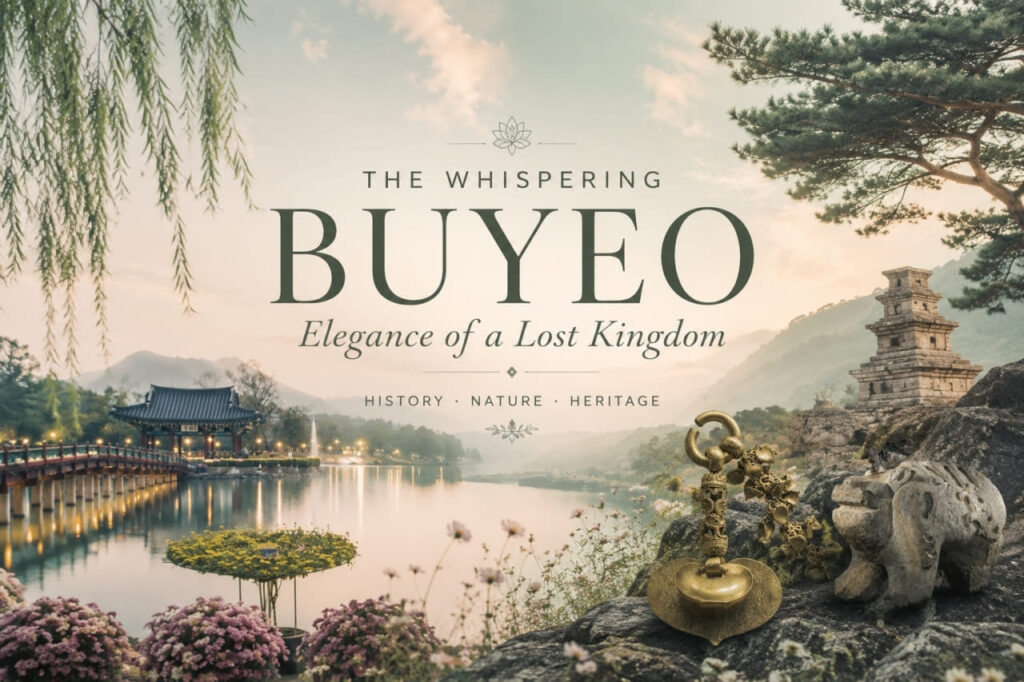
Buyeo—The Whispering Elegance of a Lost Kingdom
Before Korea became a kingdom of scholars, fortresses, and royal palaces, there was Baekje↗ (백제, 18 BCE – 660 CE).
Its final capital was Buyeo (부여).
If Gyeongju↗ tells the story of Silla, Buyeo whispers the memories of Baekje.
If the heritage left by the Confucian scholars of Andong↗ belongs to a disciplined world of straight lines, Buyeo—the final capital of the ancient Baekje Kingdom—is a realm of soft, poetic curves.
Location of Buyeo in Korea
Nestled beside the gentle curves of the Baekma River↗ (백마강), this quiet town preserves something increasingly rare in modern travel: beauty without spectacle. There are no towering skylines here, no neon-lit entertainment districts, and no rush to be seen.
Instead, Buyeo invites travelers into a slower world shaped by lotus ponds, stone pagodas, and the lingering grace of a kingdom that disappeared more than 1,400 years ago.
The ancient capital was once known as Sabi (사비), a name often associated with dawn. Whether by history or coincidence, the image feels perfectly suited to the city today. Morning arrives softly in Buyeo. Mist rises from the river. Temple ruins emerge from the shadows. Willow branches sway above still water.
The aesthetics of Baekje are often summarized by an old Korean phrase: Geom-i-bul-ru, Hwa-i-bul-chi (검이불루 화이불치)— “Frugal, but not shabby. Magnificent, but not luxurious.”
No destination expresses that philosophy more beautifully than Buyeo.
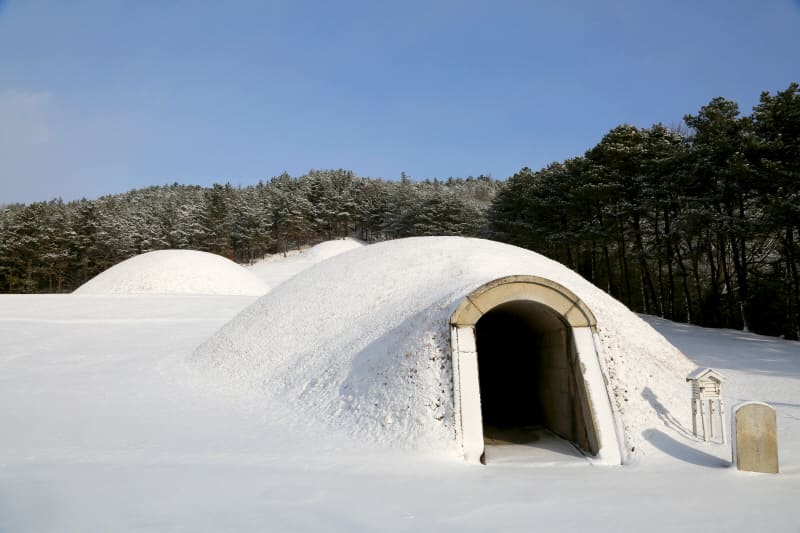
Here, the masterpiece is not a single monument but an atmosphere.
It lives in the elegant proportions of the Five-Story Stone Pagoda at Jeongnimsa Temple Site. It glows within the extraordinary craftsmanship of the Great Gilt-Bronze Incense Burner of Baekje↗. It drifts across Gungnamji↗, Korea’s first artificial royal garden, where lotus blossoms still bloom each summer as they did centuries ago.
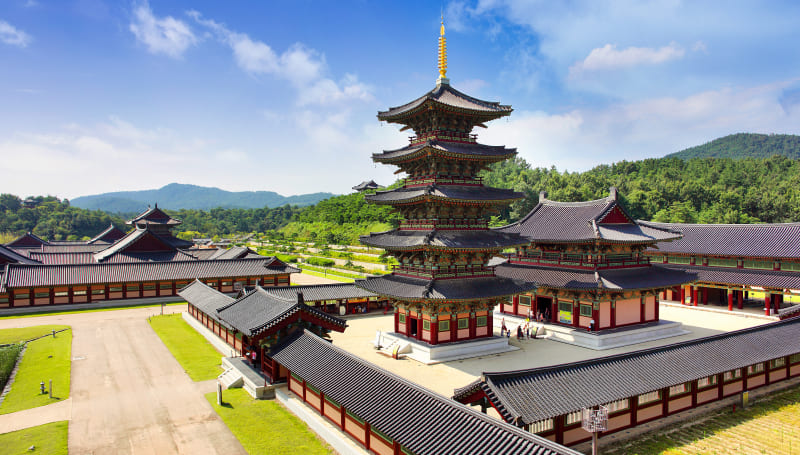
For travelers seeking the deeper cultural soul of Korea, Buyeo offers something that few destinations can: the chance to walk through the memory of a lost kingdom and discover that its beauty never truly disappeared.
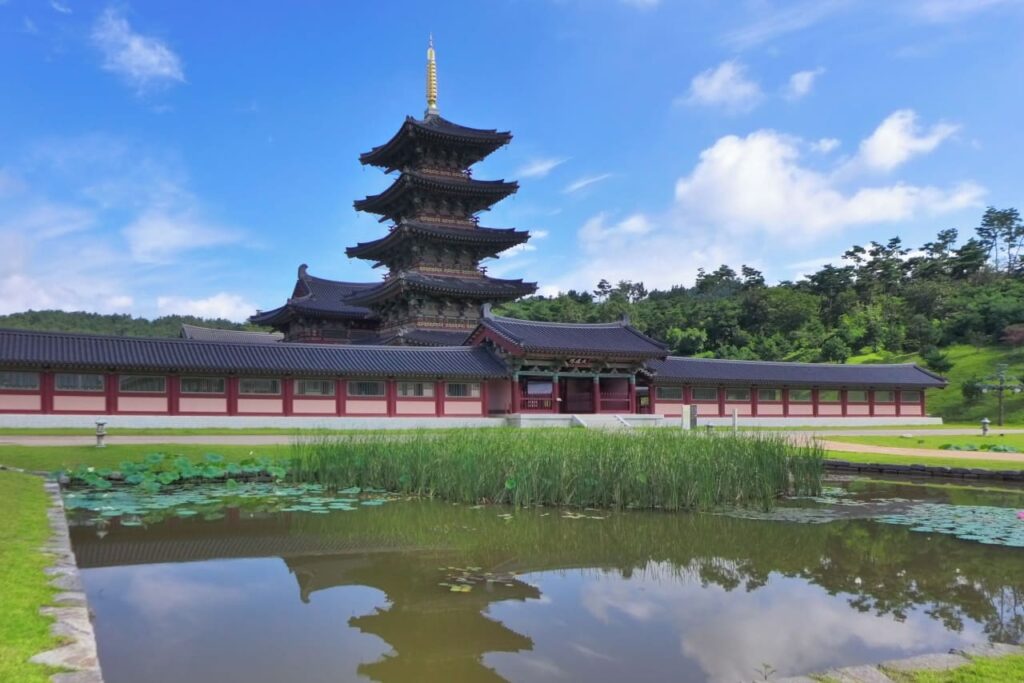
THE LANDMARK: ARTISTRY SURVIVING 1,400 YEARS
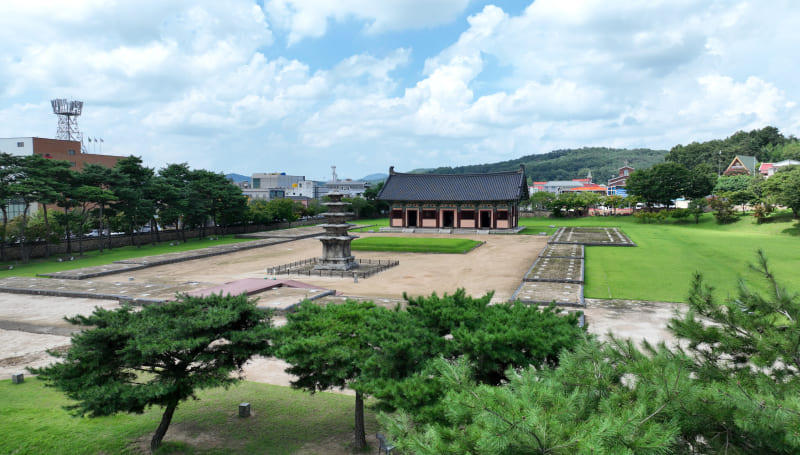
The absolute highlight of any journey to Buyeo is the Jeongnimsa Temple Site↗. Stepping onto this vast, whispering field of historical solitude to confront the Five-Story Stone Pagoda is a moment of pure artistic reverence.
The subtle, mathematical narrowing of each ascending tier and the delicate, upward lift at the corners of the roof stones encapsulate the peak of ancient architectural grace.
On a clear evening, as the setting sun bathes the gray granite in soft amber tones, the surrounding atmosphere becomes breathtakingly elegant.
THE CHRONICLES: THE NARRATIVE OF BAEKMA RIVER
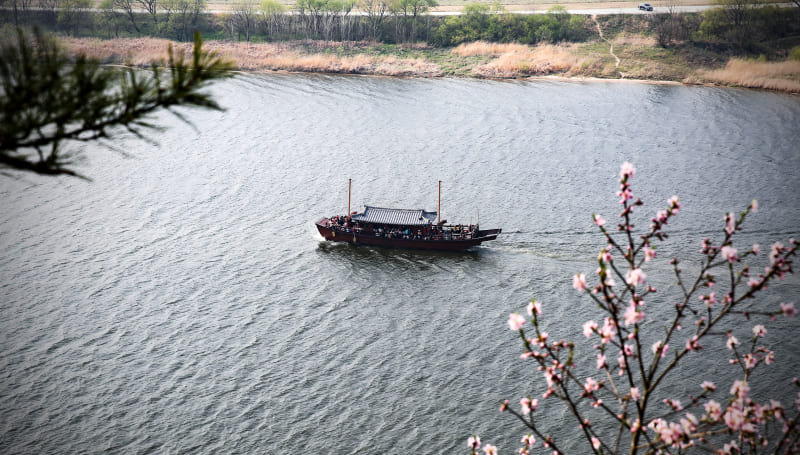
The most profound way to absorb the city’s pulse is to board a traditional wooden boat and look up at Busosanseong Fortress from the water. Atop the rugged cliffs covered in dense, ancient forest sits Nakhwaam Rock↗ (The Rock of Falling Flowers) and the small, graceful Baekhwajeong Pavilion resting lightly above it.
Beyond its tragic legends of the kingdom’s final days, the site embodies a sublime, melancholy narrative of an ancient dynasty’s last stand.
At dawn, when the morning mist rises gently off the river’s surface, Busosanseong appears as if it were a vast, living ink wash painting.
THE MASTERPIECE: THE MIRACLE IN THE DARK
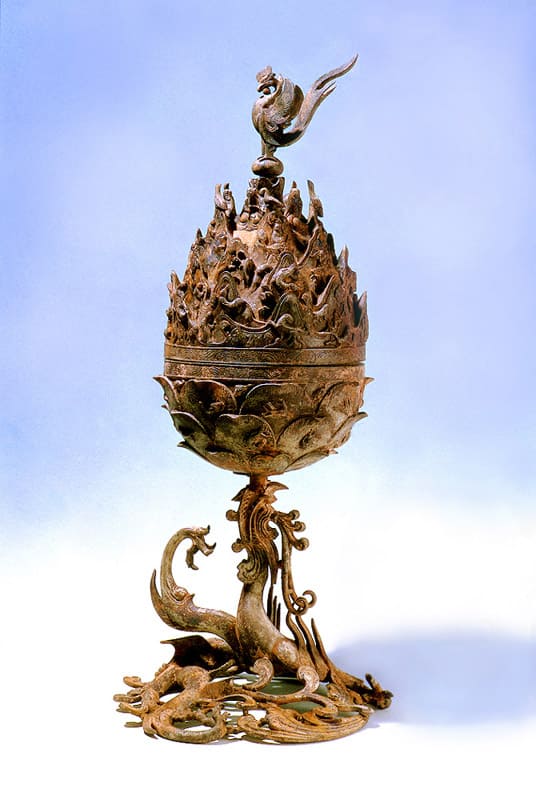
If one single artifact could validate the cultural prestige of an entire nation, it would undoubtedly be the Great Gilt-Bronze Incense Burner of Baekje↗.
THE ABSOLUTE MASTERPIECE
Exhibited in a dedicated, dimly lit chamber at the Buyeo National Museum↗, this incense burner is a miracle of ancient craftsmanship. At its crown, a phoenix spreads its wings in full splendor; below, five ethereal musicians and Taoist immortals reside amidst the layered lotus petals of the sacred mountain. Standing before this masterpiece, which encapsulates the entire utopian universe imagined by 7th- century artists, one is enveloped in a sense of spiritual and artistic grandeur entirely distinct from Andong’s Confucian austerity↗.
THE ROMANCE & LORE
GUNGNAMJI AND THE SONG OF SEODONG
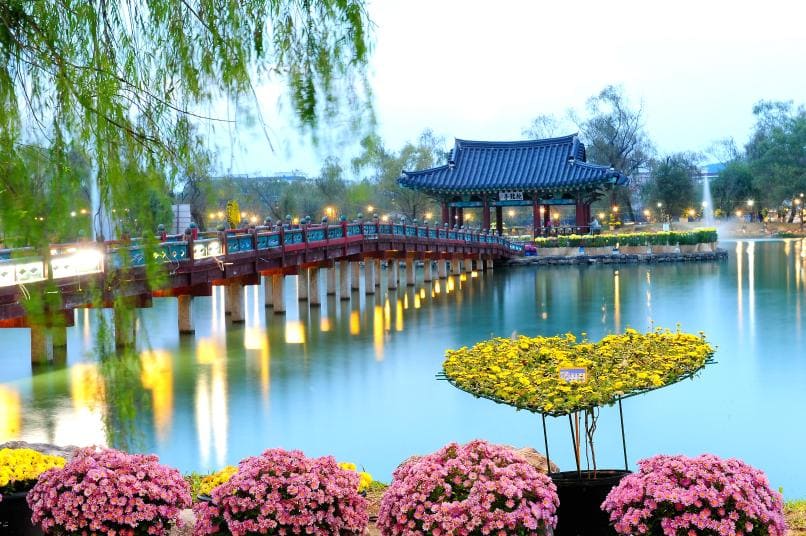
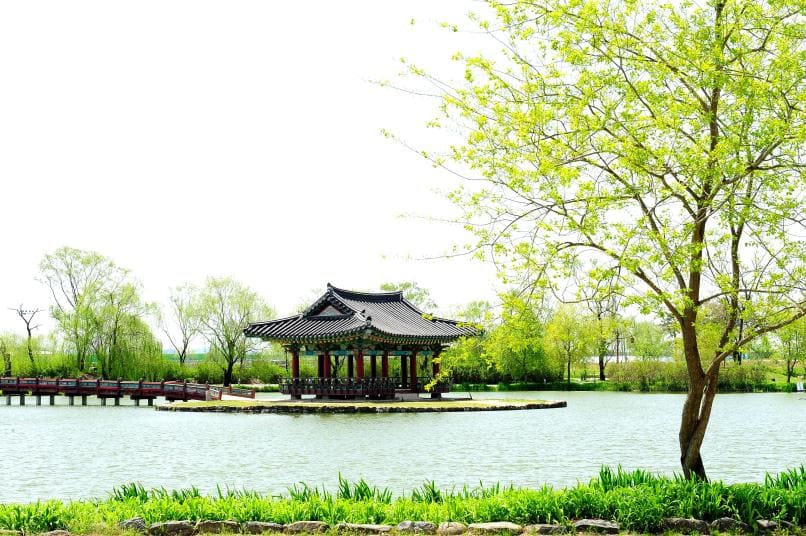
Buyeo is deeply tied to water. Gungnamji Pond↗, Korea’s first artificial royal garden, remains striking throughout the year, but it truly enchants in midsummer when the entire city is perfumed by blooming lotuses. A willow-lined path leads to the wooden pavilion sitting gracefully at the center of the water, drawing travelers into one of ancient Korea’s most legendary romances.
THE LEGEND OF SEODONG-YO (THE BALLAD OF SEODONG)
Long before he ascended the throne as King Mu of Baekje, a young man named Seodong lived a humble life digging wild yams near this very pond. Hearing tales of the peerless beauty of Princess Seonhwa, the third daughter of neighboring Silla’s king, he crossed the heavily guarded enemy border into Gyeongju. In a brilliant stroke of psychological warfare and romance, he distributed sweet yams to the local children, teaching them a catchy, scandalous song: “Princess Seonhwa slips out every night to meet Seodong in secret…”
The catchy ballad quickly spread to the royal palace. Believing the rumors, the king exiled the innocent princess. Seodong met her on her journey into exile, won her heart, and returned with her to Baekje, eventually becoming king.
Gungnamji, built by King Mu to mirror his love for his queen, stands today as a poetic testament to this cross-border romance—a physical landscape born from an ancient love song.
THE GOURMET: IMBIBING THE SCENT OF LOTUS
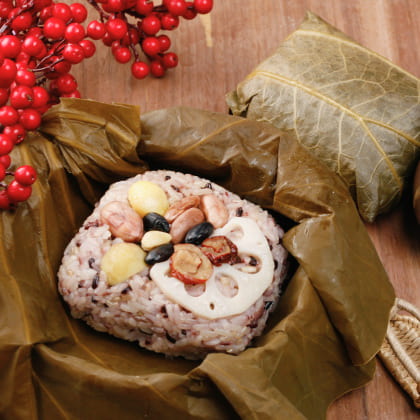
The local culinary scene mirrors this delicate botanical aesthetic. Buyeo’s premium dining centerpiece is Yeon-ip-bap (Lotus Leaf Rice). Sticky rice mixed with jujubes, chestnuts, and pine nuts is wrapped tightly in a fragrant lotus leaf and steamed. The subtle, herbal aroma infuses every single grain, introducing a quiet, meditative garden onto the palate. For an authentic taste of local heritage, pair it with fresh, seasonal premium seafood delicacies harvested from the Baekma River basin.
THE HIDDEN STAY: SANCTUARY IN THE STILLNESS
Nights in Buyeo are quiet as if it were intentional. Premium traditional boutique stays near the Baekje Cultural Complex, as well as beautifully restored modern-heritage hanoks↗ hidden within Gyuam Village, offer historic exteriors combined with contemporary luxury. Sipping a warm cup of local ginseng tea beneath exposed wooden rafters while listening to the distant, rhythmic flow of the Baekma River offers the modern traveler a pure, soul- soothing retreat.
Gongju: A Timeless Gateway to Korea’s Royal Heritage
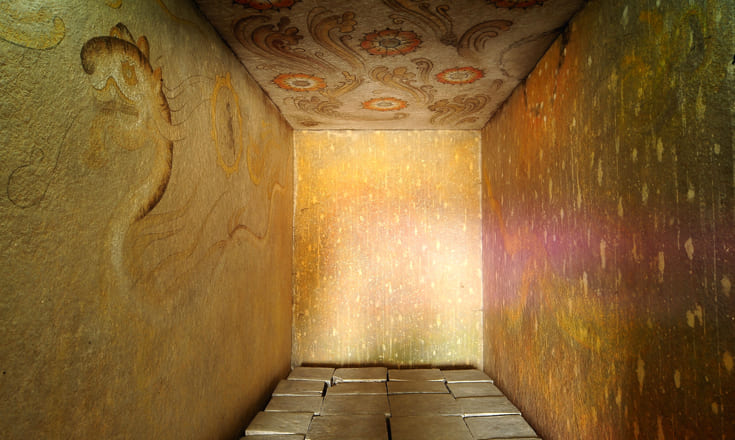
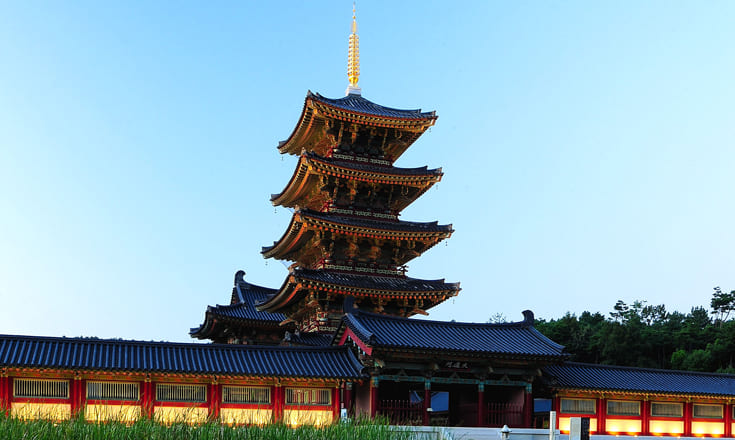
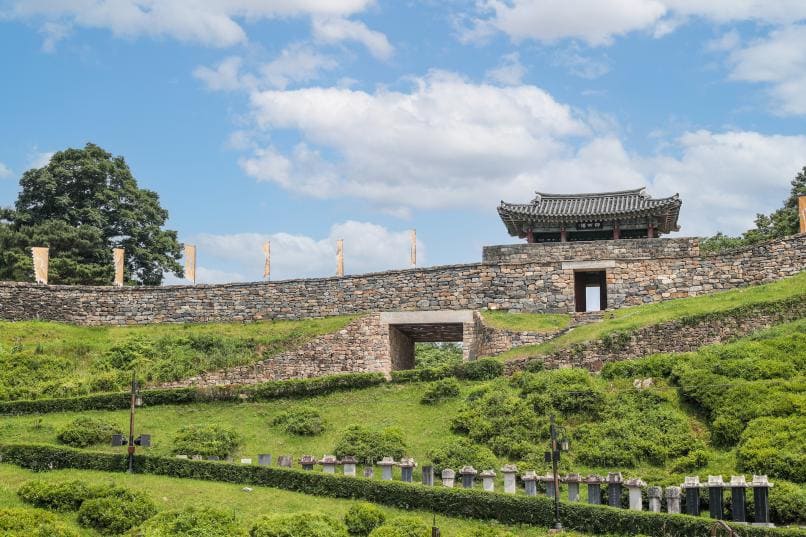
Most travelers reach Buyeo via Gongju, the former Baekje capital and home to the UNESCO-listed Gongsanseong Fortress and Tomb of King Muryeong.
How to Get There
Step 1: Take the KTX to Gongju (Approx. 70 mins)
Departure: Seoul Station or Yongsan Station
Arrival: Gongju Station (KTX)
Step 2: Transfer to Buyeo (Approx. 50 mins)
From the bus stop outside Gongju Station, take an intercity bus or local bus bound for Buyeo.
Alternatively, a taxi offers the most convenient transfer and takes approximately 40–50 minutes.
Note: Bus services are relatively infrequent. We recommend checking schedules in advance to coordinate with your KTX arrival time.
Travel Tip: Buyeo is easily visited as a day trip from Seoul, but an overnight stay allows travelers to experience the quiet beauty of the Baekma River at dawn.
Curator’s Note
While Andong teaches the rigid integrity and noble spirit of the Confucian scholar, Buyeo whispers of the transience of empires and the immortal beauty born from it. As a premium, high-end counterpart to your Andong travel feature, few destinations resonate more deeply.
🎬 K-Dramas & Films in Buyeo
🌸 The Legacy of Baekje
- Gungnamji Pond Korea’s oldest known artificial garden and a symbol of Baekje elegance.
- Busosanseong Fortress The final mountain stronghold of Baekje overlooking the Geum River.
- Nakhwaam Rock One of Korea’s most poignant historical sites, associated with the fall of Baekje.
🎬 Buyeo in Film & Drama
- The King’s Daughter, Soo Baek-hyang (2013, 제왕의 딸 수백향) Starring: Seo Hyun-jin, Jo Hyun-jae
A historical drama set during the Baekje Kingdom, inspired by the royal heritage of ancient Buyeo. - Ballad of Seodong (2005, 서동요) Starring: Jo Hyun-jae, Lee Bo-young
The legendary romance of King Mu of Baekje and Princess Seonhwa, closely linked to Gungnamji Pond. - Kingdom (2019, 킹덤) Starring: Ju Ji-hoon
Filmed at Baekje Cultural Land, where royal palaces and ancient streets bring Korea’s past to life. - The King’s Affection (2021, 연모) Starring: Park Eun-bin, Rowoon
Several scenes were filmed within Baekje Cultural Land, one of Korea’s premier historical filming locations.
🛏️ Hotels in Buyeo
Choose your preferred booking partner.





You May Also Like
- Healing Korea – Pyeongchang Guide 2026
- Namwon – Memory of Emotion
- Andong – Where Korea Learned to Listen
- Busan — The City That Carried a Nation
- Jeju — Waiting Beyond the Horizon
More to Explore on KHOREA
Discover curated stories across Korea — choose a path that inspires you.