Daejeon – Where Ideas Become Reality
Seoul gathers talent.
Daejeon refines it.
Then Korea builds the future.
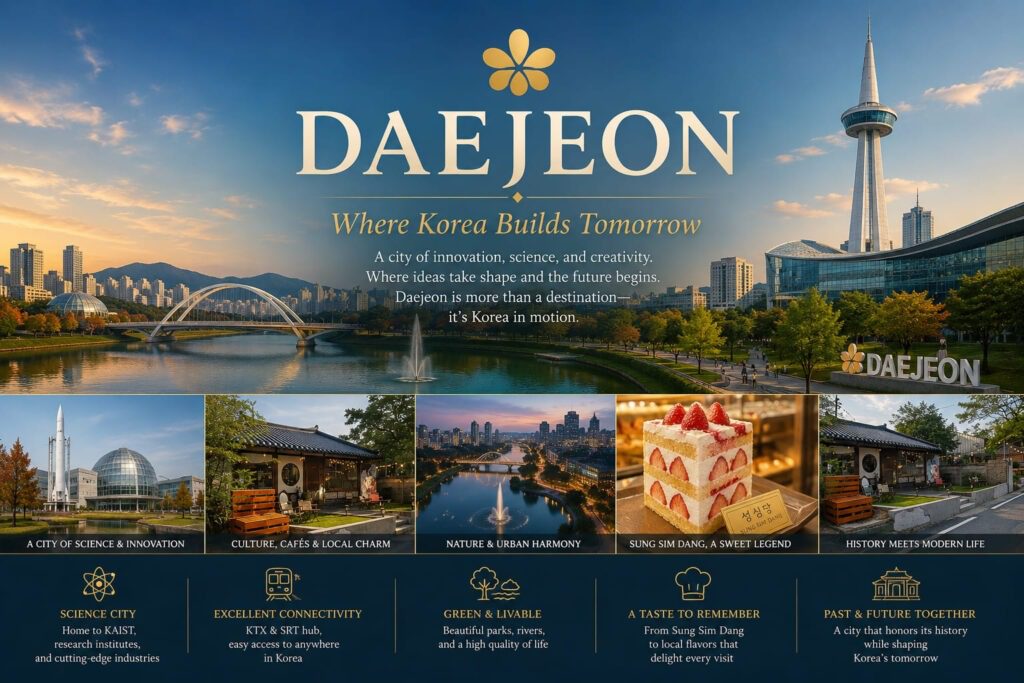
Between research labs, university campuses, and quiet riverside paths, Korea’s future takes shape.
A city of innovators, science, and quiet ambition.
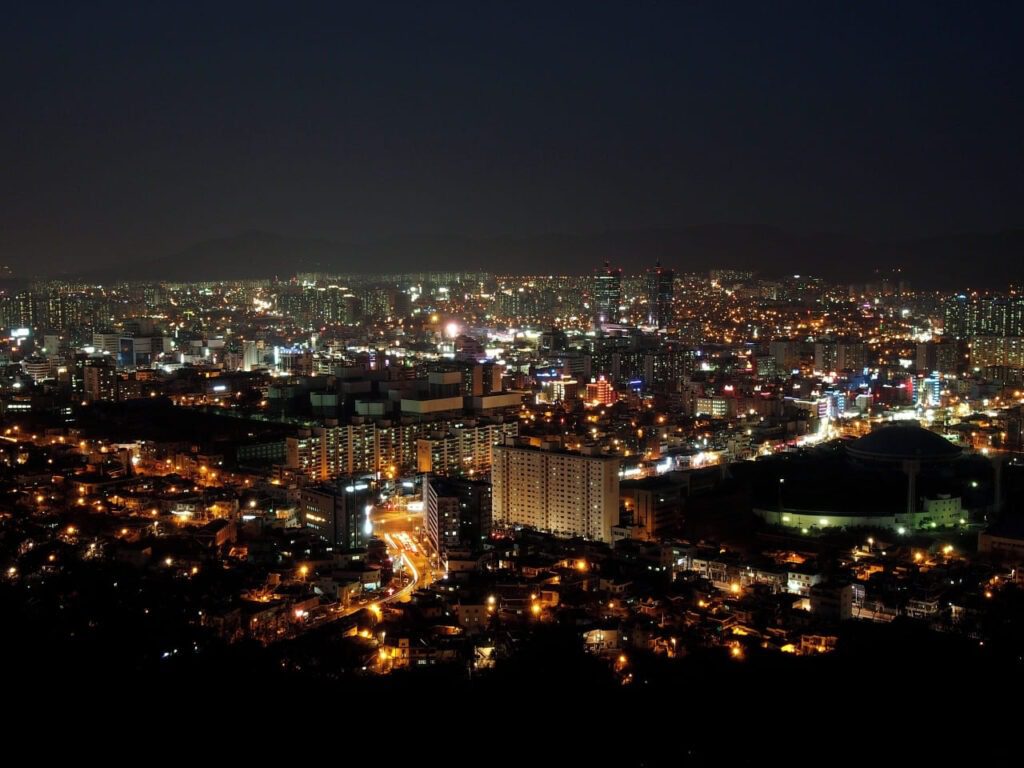
Daejeon – The City of Purpose
Most Korean cities invite travelers to look back.
They tell stories of kings, merchants, poets, and ancient capitals.
Daejeon is different.
It is a city built not to preserve yesterday, but to imagine tomorrow.
At first glance, it can seem understated. There are no royal palaces, no dramatic coastlines, and no famous mountain temples drawing crowds from around the world. Yet beneath its calm surface lies one of the most important landscapes in modern Korea.
This is the city where engineers design satellites, scientists develop future technologies, and researchers quietly shape the next chapter of the nation.
For many visitors, Daejeon reveals itself slowly.
For others, it becomes one of the most fascinating cities in Korea.
The City That Chose Purpose
Many cities grow from history.
Daejeon grew from possibility.
Nestled in the geographic heart of the Korean Peninsula, the city became a railway crossroads in the early twentieth century. Tracks converged here. People passed through. Ideas followed.
Later came the laboratories.
Then the universities.
Then the research institutes.
Today, the city is home to one of Asia’s most concentrated communities of scientists, engineers, and innovators.
In many ways, Daejeon is not merely a destination.
It is Korea’s workshop for the future.
Hanbat, Before There Was Daejeon
Yet long before laboratories and high-speed trains, this place had another name.
Hanbat.
The Great Field.
The name survives throughout the city—in parks, universities, libraries, and public spaces—but it also reveals something deeper about Daejeon’s character.
Unlike the vertical intensity of Seoul, Daejeon still feels horizontal.
The sky seems larger.
The streets breathe more easily.
The mountains remain visible from almost everywhere.
Even as the city built research centers and technology campuses, it never entirely abandoned the quiet openness of the field that came before it.
Perhaps that is why innovation feels strangely natural here.
The future was built upon space.
The Beauty of Thinking
To understand Daejeon, visit a palace if you must.
But eventually, you should walk through KAIST.
Not because it is a tourist attraction.
Because it explains the city.
The campus reflects Daejeon’s identity: practical, intelligent, and quietly ambitious.
Students cycle between laboratories.
Researchers gather over coffee.
Ideas move through the city as naturally as rivers.
In Daejeon, knowledge is not hidden behind museum glass.
It is alive.
Bread, Trains, and Community
Every city has a symbol.
Daejeon’s happens to smell like fresh bread.
For many Koreans, no visit is complete without stopping at Sungsimdang.
Yet the bakery’s significance extends far beyond pastries.
Its story is intertwined with railways, post-war recovery, and the generosity of a community that rebuilt itself together.
Perhaps that is why people line up so patiently.
They are not only buying bread.
They are participating in a tradition.
The Quiet Confidence of Daejeon
Daejeon rarely appears on lists of Korea’s most glamorous destinations.
It does not compete for attention.
It does not need to.
The city understands its role.
While others celebrate what Korea has been, Daejeon focuses on what Korea may become.
And perhaps that is its greatest attraction.
Not history.
Not scenery.
Not spectacle.
But possibility.
“Some cities invite you to visit. Daejeon invites you to build something.”
How to Get There
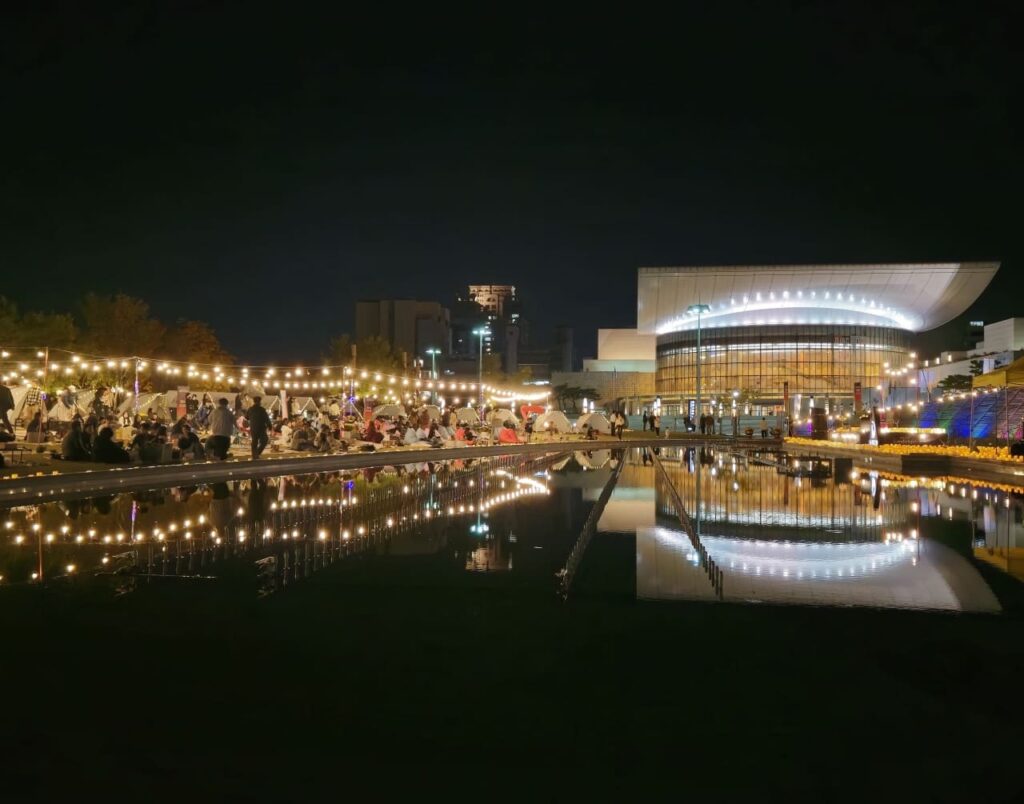
Take KTX from Seoul Station to Daejeon station
Where to go
THE URBAN CAPILLARIES & NEIGHBORHOODS
Soje-dong
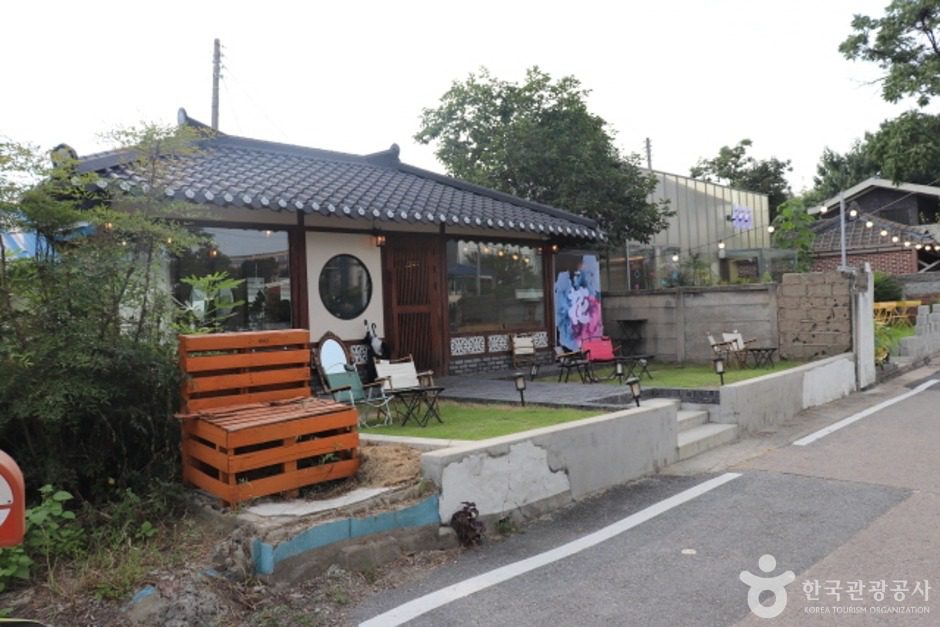
Nestled quietly behind the train tracks, Soje-dong is a masterclass in urban preservation and adaptive reuse. Once a residential enclave built for railway employees during the 1920s, this neighborhood has gently evolved into Daejeon’s most evocative design district. The low-slung, weathered timber roofs and narrow alleyways remain intact, but behind their faded facades lie meticulously curated design studios, minimalist bistros, and concept cafes.
- Atmosphere: Wabi-sabi architectural charm where industrial history dissolves into quiet, residential stillness.
- Key Experience: Strolling the reed-lined banks of the Daedongcheon stream as dusk begins to paint the old rooftops in hues of amber.
Eunhaeng-dong
A stark contrast to the quiet lanes of Soje-dong, Eunhaeng-dong represents the kinetic, youthful heartbeat of old downtown Daejeon. The neighborhood vibrates with energy, driven by vibrant independent retail shops and dynamic street life. It balances its fast-paced modern identity with deep cultural roots, acting as the historic gateway where generations of locals have gathered to shop, eat, and socialize.
- Atmosphere: High-energy neon pathways juxtaposed against legacy eateries that have stood for half a century.
- Key Feature: Walking beneath the massive, hyper-modern LED canopy that defines the central promenade, a bold nod to the city’s technological soul.
THE ALCHEMY OF FLOUR
Sungsimdang Bakery (Head Store)
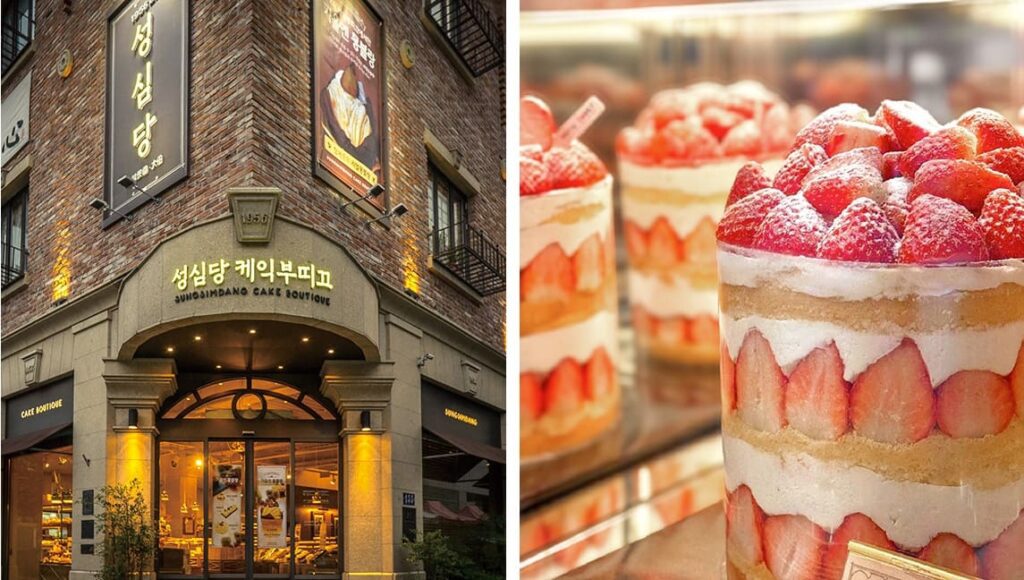
No visit to Daejeon is complete without paying homage to Sungsimdang Bakery Head Store. Far more than a local bakery, it is a living civic monument that has anchored the community since 1956. Reviewers frequently note the incredible scale of production and the democratic, bustling atmosphere within its walls, where everyone from young students to elderly residents stands in line for their daily bread.
- Signature Item: The Twigim Soboro—a perfectly executed, deeply satisfying crispy fried polo bun filled with sweet red bean paste.
- The Craft: A relentless commitment to community-driven baking, where unsold goods are donated to local charities every single night.
- Culinary Pairing: For lunch, follow the locals to a nearby diner for a bowl of Kalguksu (knife-cut noodles), a local comforting specialty served in a clean, savory broth that warms the soul without pretense.
THE CAFÉ CULTURE & SLOW SPACE
Soje-dong Café Alley
Within the quiet grid of Soje-dong, a distinct café subculture has taken root. Here, the act of serving coffee is treated as a slow, spatial ritual. These establishments don’t merely serve espresso; they frame views of bamboo gardens, incorporate raw concrete and original timber frameworks, and offer an intentional pause from the speed of modern Korean life.
- Design Philosophy: Clean minimalism that highlights the passage of time through exposed plaster, original beams, and large glass panes looking out onto small courtyards.
- Signature Serve: Single-origin pour-overs paired with artistic, seasonally inspired confections designed to mirror the natural textures of the neighborhood.

RETRO-FUTURISM & INTENTIONAL ART
Daejeon Expo Science Park
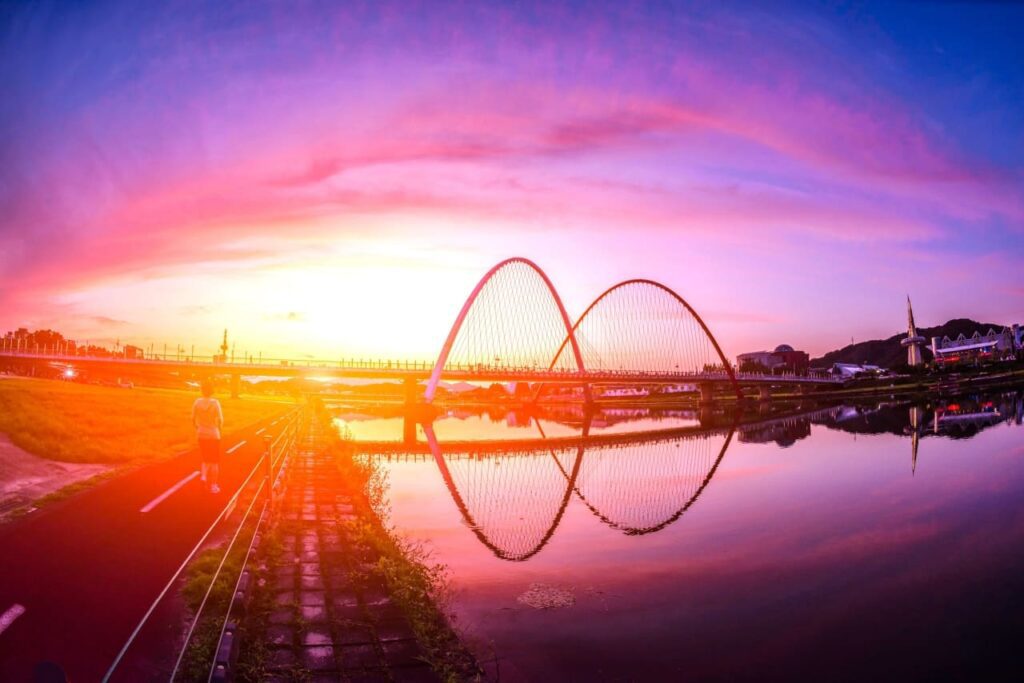
A nostalgic nod to the 1993 World Expo, this expansive park acts as a bridge between Daejeon’s foundational scientific identity and its modern leisure spaces.
- The Vibe: Broad open spaces that mirror the grand, mid-century layouts of international expos.
- The Route: Walk across the nearby Expopdari (Expo Bridge), a majestic pedestrian span that offers a panoramic view of the city’s low-slung skyline framing the distant, blue-hued mountains.
EXPO Hanbit Tower
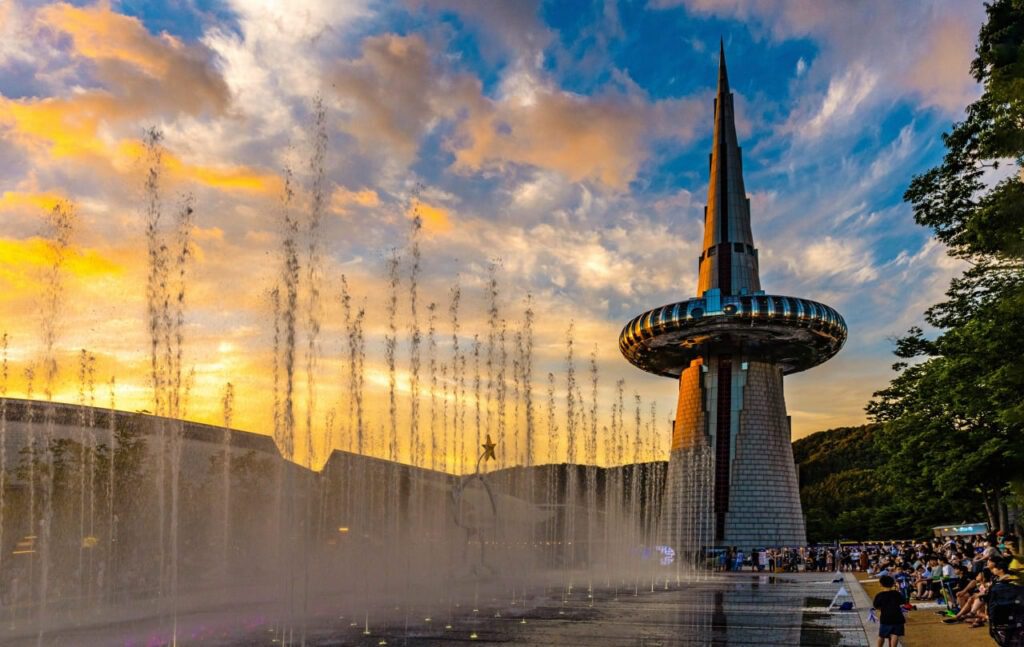
Standing as a centerpiece within the park, the EXPO Hanbit Tower rises like a retro-futuristic sentinel against the morning sky.
- Design: Its sleek, rocket-like geometry offers an iconic architectural statement.
- Perspective: Heading to the observation deck gives an eagle-eye look over the symmetric lines of the science district and the flowing river beneath.
Daejeon Museum of Art
Positioned seamlessly within the city’s green belt, this museum offers an expansive exploration of modern visual culture, balanced by a serene sculpture park outside.
- The Structure: A minimalist pavilion of glass and stone designed to pull the surrounding nature into the exhibition halls.
- Curatorial Focus: Showcasing groundbreaking contemporary works by domestic and foreign artists that bridge science, technology, and art.
Lee Ungno Museum
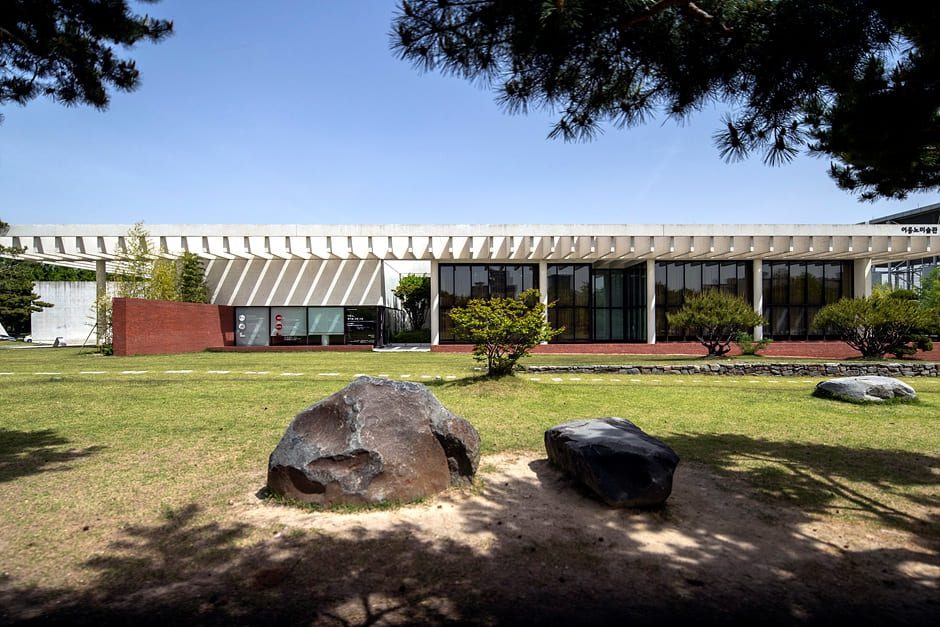
Designed by renowned French architect Laurent Beaudouin, this nearby institution is a masterpiece of light and architectural concrete.
- The Monograph: Dedicated entirely to the life and work of Lee Ungno, the master painter who blended classic Eastern ink traditions with Western modern abstraction.
- Spatial Mindfulness: The building itself forms a grid pattern that mimics the brush strokes of the art it protects, filtering natural light gently through white wooden slats.
WELLNESS & THE NATURAL COUNTERWEIGHT
Yuseong Hot Springs – Wellness for Thinkers
As dusk falls, cross into the historic thermal neighborhood of Yuseong Hot Springs. This isn’t a flashy resort district, but an honest, communal wellness ritual integrated directly into the city’s urban design.
- The Ritual: Dip your feet into the outdoor, open-air public foot baths (Jokjok-guji) beneath the fringe tree blossoms.
- The Atmosphere: The steam rising into the cool night air alongside commuting locals is the perfect antidote to a day of urban exploration.
Jangtaesan Recreational Forest (장태산 자연휴양림)
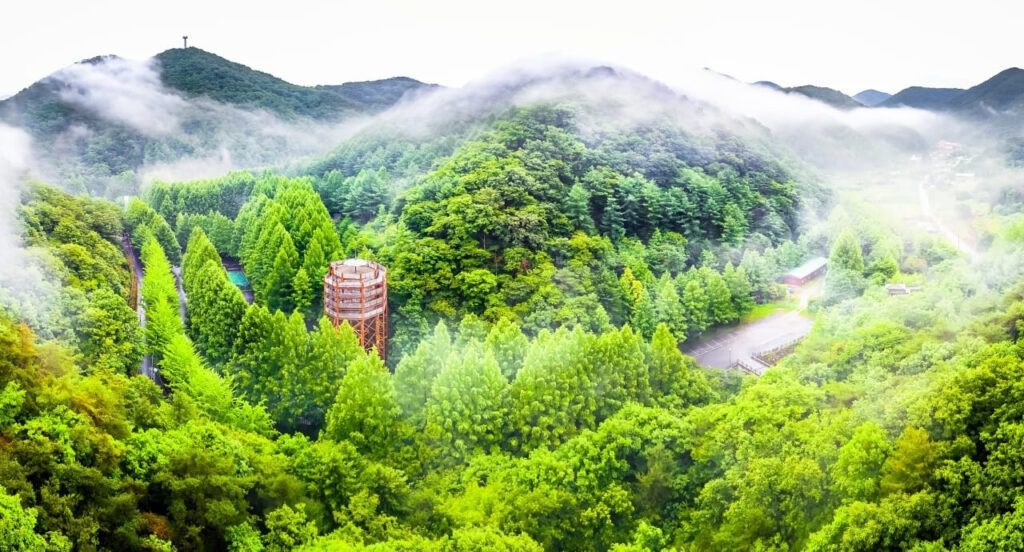
When the geometry of the city calls for a dramatic natural escape, locals retreat south into this dense woodland sanctuary, renowned for its massive groves of Metasequoia trees.
- The Canopy Walk: An elevated, structural walkway that allows visitors to glide through the mid-tier of the forest, offering a bird’s-eye view of the stunning linear landscape.
- The Vibe: Crisp, oxygen-rich mountain air and the soothing, rhythmic rustle of soaring branches that provide a stark vertical contrast to the city’s horizontal lines.
THE MODERN PASTURE: HANBAT ARBORETUM
Nowhere is the spirit of the ancient plain more intentionally preserved than at the Hanbat Arboretum (한밭수목원). Positioned like a massive green lung in the center of the city’s cultural axis, it is the largest artificial urban arboretum in South Korea.
Between the memory of Hanbat and the laboratories of tomorrow,
Daejeon continues to build what comes next.
Some cities preserve history.
Daejeon prototypes the future.
🎟️ KHOREA Travel Desk
Choose your preferred booking partner.
🛏️ Hotels in Daejeon





🔬 Daejeon — Science, Innovation & Future Builders
- KAIST (1999, 카이스트) Starring: Chae Rim, Lee Eun-ju, Lee Min-woo
A portrait of young people trying to discover who they would become. Long before Daejeon became known internationally for science and innovation, this iconic campus drama captured the dreams, friendships, and ambitions of Korea's future engineers and researchers. - Start-Up (2020, 스타트업) Starring: Bae Suzy, Nam Joo-hyuk, Kim Seon-ho
Dreamers, engineers, and entrepreneurs build technologies that may shape tomorrow. - Search: WWW (2019, 검색어를 입력하세요 WWW) Starring: Lim Soo-jung, Lee Da-hee
A drama about the people quietly building Korea's digital future behind the scenes. - Take Off (2009, 국가대표) Starring: Ha Jung-woo, Kim Dong-wook
A story of perseverance, experimentation, and achieving what once seemed impossible.
You May Also Like
- The Korean Bread Trail
- Stanford Hotels Korea – Trusted Hotels from Seoul to Jeju
- Tongyeong – Shaped by the Sea, Sheltered by Islands
- Namwon – Memory of Emotion
- Andong – Where Korea Learned to Listen
- Busan: The City That Carried a Nation
More to Explore on KHOREA.COM
Discover more stories across Korea — choose a category that inspires you.