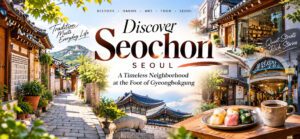
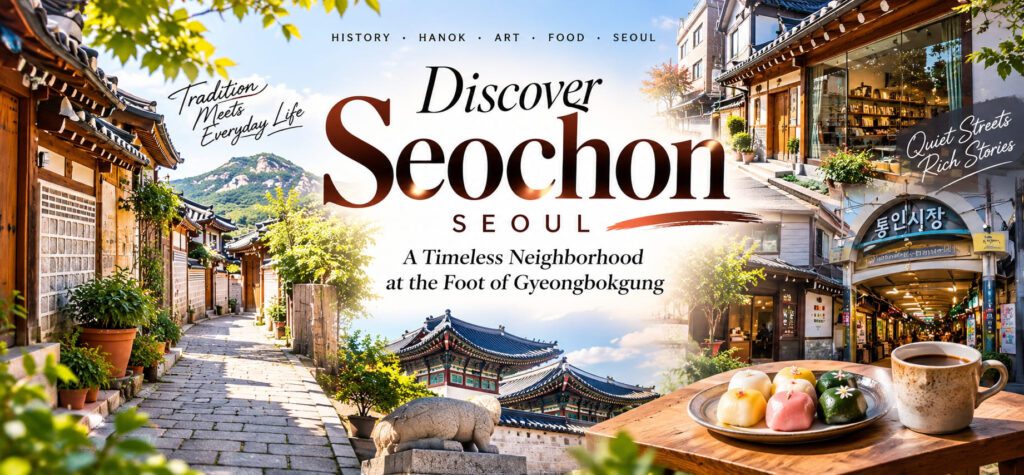
Nestled between the stone ramparts of Gyeongbokgung Palace and the granite peaks of Mount Inwangsan, Seochon (literally “West Village”) offers an intimate, grounded alternative to Seoul’s busier heritage enclaves. Where nearby Bukchon was historically home to royal families and high-ranking Joseon aristocrats, Seochon developed as a more diverse residential quarter, associated with the jungin—a professional middle-status class that included interpreters, physicians, and scribes.
Seochon is a wonderful place that has well-preserved its past, offering a glimpse of how Seoul evolved from the Joseon Dynasty into the modern era.
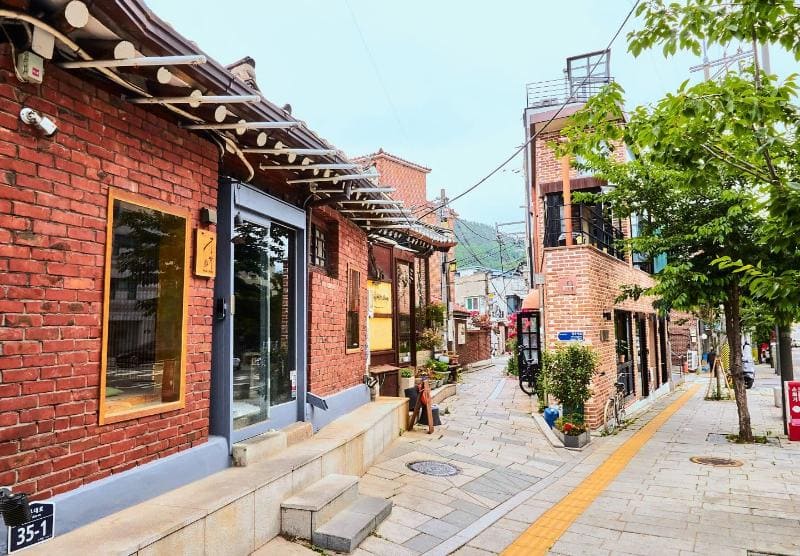
Today, this storied neighborhood blends low-slung, authentic 20th-century hanok architecture with mid-century residential brick, quiet independent bookstores, artisan studios, and family-run eateries.
Historical & Geographic Significance
- The Artistic Bastion: During the Joseon Dynasty, Seochon became an important center of artistic and literary life in Seoul, particularly from the Joseon period into the modern era. Legendary master painter Jeong Seon (aka Gyeomjae, 1676∼1759) famously painted his masterpiece Inwang jesaekdo, depicting the dramatic granite slopes of Inwangsan as seen from the Seochon area. In the early-to-mid 20th century, modernist writers, painters, and poets—such as Yi Sang, Yun Dong-ju, and Lee Jung-seob—found refuge in these same quiet alleys.
- A Distinct Architectural Fabric: Unlike the grand, uniformly preserved estates across the palace grounds in Bukchon, Seochon features urbanized Hanok from the 1930s interspersed with mid-century modern facades. The layout remains largely organic, shaped by natural streams flowing down from Inwangsan.
- Palace Synergy: Located just outside Yeongchumun, the western gate of Gyeongbokgung, Seochon offers a striking transition from the royal world of Joseon to the everyday life of the historic city.
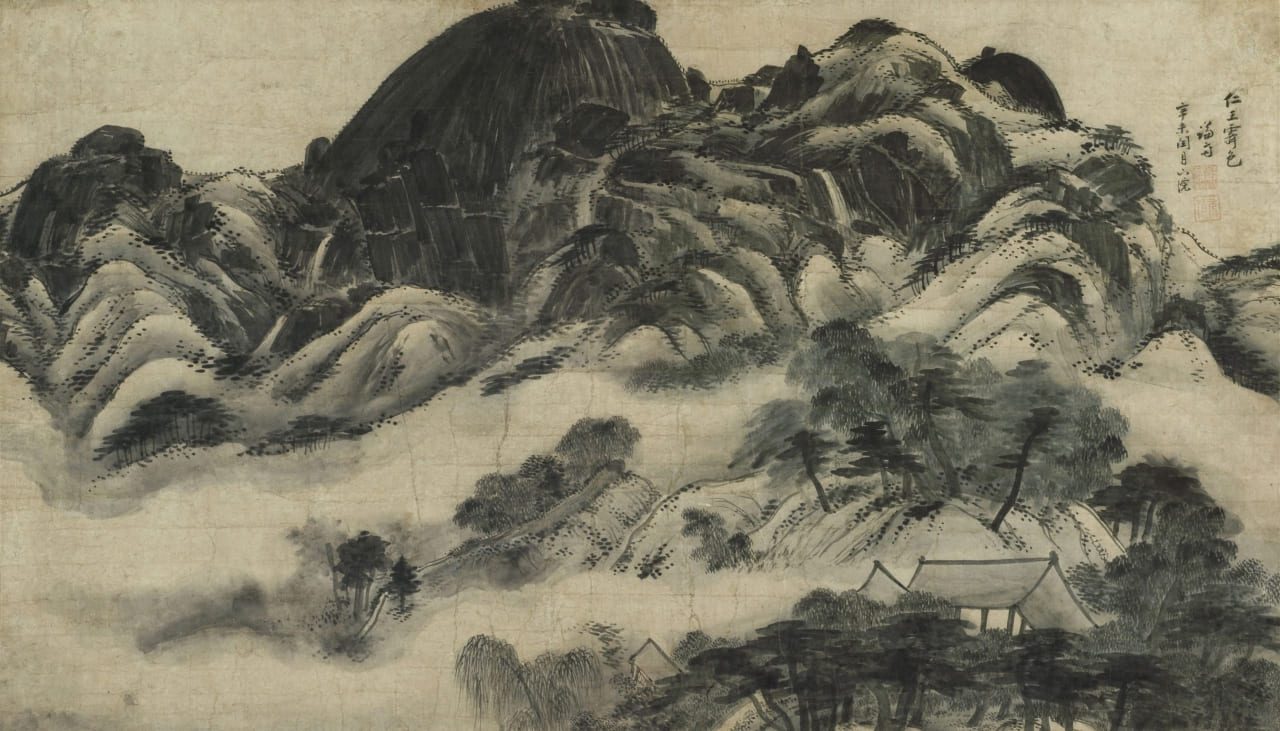
Jeong Seon’s ultimate masterpiece, Inwang jeseakdo, brilliantly captures a rain-washed Inwangsan Mountain in bold black-and-white contrast, pioneering a uniquely Korean style of true-view landscape painting. (Source: Heritage.or.kr, Museum.go.kr)
Must-Visit Highlights
1. Yi Sang’s House (이상의 집)
A restored cultural space on the site where avant-garde writer Yi Sang (1910–1937) lived from the age of 3 to 23. Step through the understated entrance to explore exhibits on his life and work, and pause in the quiet indoor lightwell.
2. Tongin Market (통인 시장)
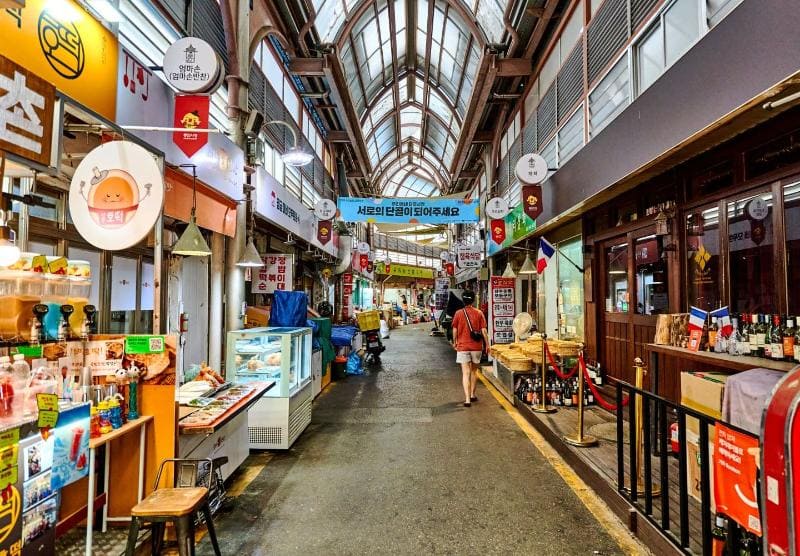
Established in 1941 during the Japanese colonial period, Tongin Market retains its warm neighborhood camaraderie while offering one of Seoul’s most memorable culinary rituals: the Coin Lunchbox (Dosirak).
- The Experience: Purchase a set of traditional-style brass tokens (yeopjeon) and a lunch tray at the market’s Dosirak Café. Wander through the arcade, trading coins for small portions of local specialties.
- Don’t Miss: The market’s signature Gireum Tteokbokki (oil-sautéed rice cakes), stir-fried in cast-iron pans with fragrant chili or savory soy sauce instead of the typical soupy gochujang broth.
3. Boan1942 (Boan Yeogwan, 보안 여관)
A historic 1942 travelers’ inn transformed into a contemporary multidisciplinary art space. Writers and artists once stayed here for extended periods; today, its preserved rooms host exhibitions alongside a bookstore and café.
4. Suseongdong Valley (수성동 계곡)
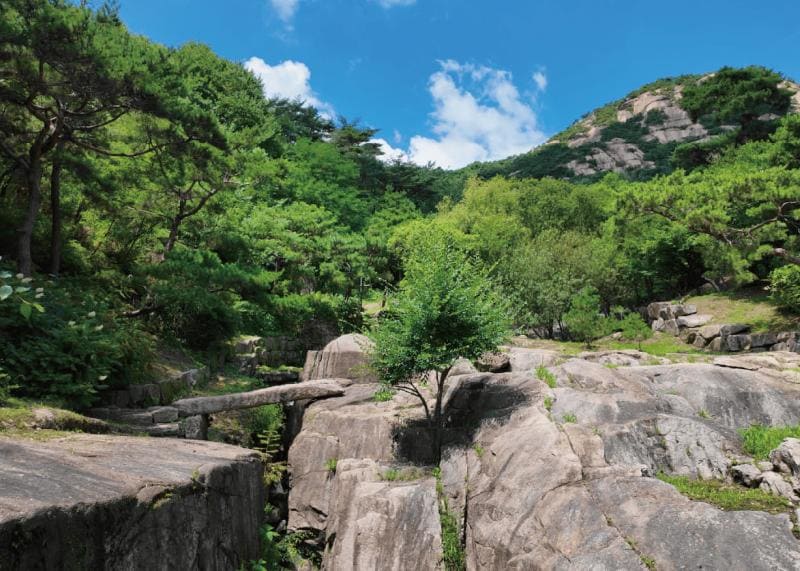
Nestled at the foot of Mount Inwangsan, Suseongdong Valley is a restored natural retreat celebrated for its appearance in Joseon-era landscape paintings. The valley offers a peaceful contrast to the surrounding city, with views toward Seoul’s historic neighborhoods and skyline.
How to Get to Seochon from Myeongdong
| Mode | Route & Details | Estimated Travel Time |
|---|---|---|
| Subway (Recommended) | Take Line 4 at Myeongdong Station (towards Chungmuro). Transfer at Chungmuro Station to Line 3 (towards Daehwa). Exit at Gyeongbokgung Station (Line 3), Exit 3. | 15–20 min |
| Taxi | Hail a cab along Namdaemun-ro toward Sajik-dong/Seochon. Tell the driver “Tongin Sijang (Tongin market)”, “Seochon” or “Gyeongbokgung Yeongchumun.” | 10–15 min (traffic dependent) |

Suggested Half-Day Itinerary
- Morning (09:30 – 11:45): Tour Gyeongbokgung Palace, exiting through the western Yeongchumun Gate.
- Lunch (11:50 – 13:00): Walk 5 minutes into Tongin Market for a custom brass-coin lunchbox and pan-crisped rice cakes.
- Early Afternoon (13:15 – 14:50): Stroll south toward Yi Sang’s House and explore the adjacent alleys filled with independent design studios and heritage cafes.
- Late Afternoon (15:00 – 17:30): Trace Ogin-dong up toward Suseongdong Valley for an open-air vista framed by Inwangsan’s granite face.
Hotels in Myeongdong
Stay within walking distance of Seoul’s most popular shopping streets.



You May Also Like
- Bukchon Hanok Village Guide
- Myeongdong to Ikseon-dong guide
- Sejong Center for the Performing Arts
- National Museum of Korea Guide
- Seoul’s Five Grand Palaces & Myeongdong Itinerary
- Seoul Overview: Curated by Persona & Sector Matrix
- The Rise of Designer-Led Spaces in Seochon, Seoul
- Myeongdong Travel Guide 2026 – Where to Stay, Eat & Shop in Seoul
- The Layered City: A Journey Through Seoul’s Hidden Histories
- Seoul Food Tours: Where to Eat Beyond the Guidebooks
- Jeonju Hanok Village: Korea’s Most Elegant Cultural Escape by KTX
More to Explore on KHOREA
Discover more stories across Korea — choose a category that inspires you.