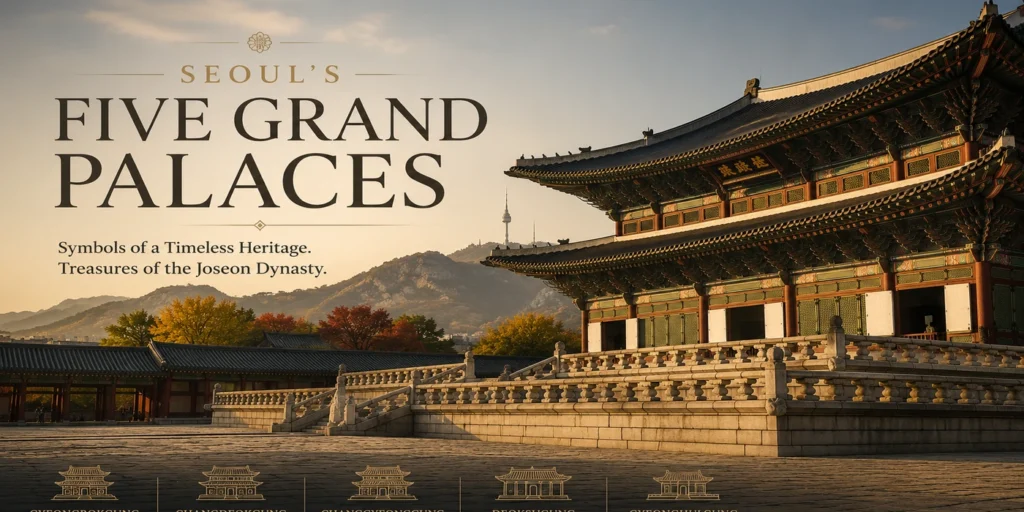
Explore the five royal palaces of Seoul and the legacy of the Joseon Dynasty
A Cultural Journey Through the Heart of Korea
For over 600 years, the royal palaces of Seoul have stood as living witnesses to Korea’s dynasties, invasions, artistry, and philosophy. Together, the Five Grand Palaces offer one of the richest historical experiences in Asia — and surprisingly, many of them are easily accessible from the vibrant shopping and dining district of Myeong-dong.
If you are staying in Seoul for 1–3 days, this guide will help you explore the palaces efficiently while balancing culture, food, nightlife, and relaxing walks through the city’s most atmospheric neighborhoods.
The Five Grand Palaces of Seoul
1. Gyeongbokgung (경복궁)
The Largest and Most Iconic Royal Palace
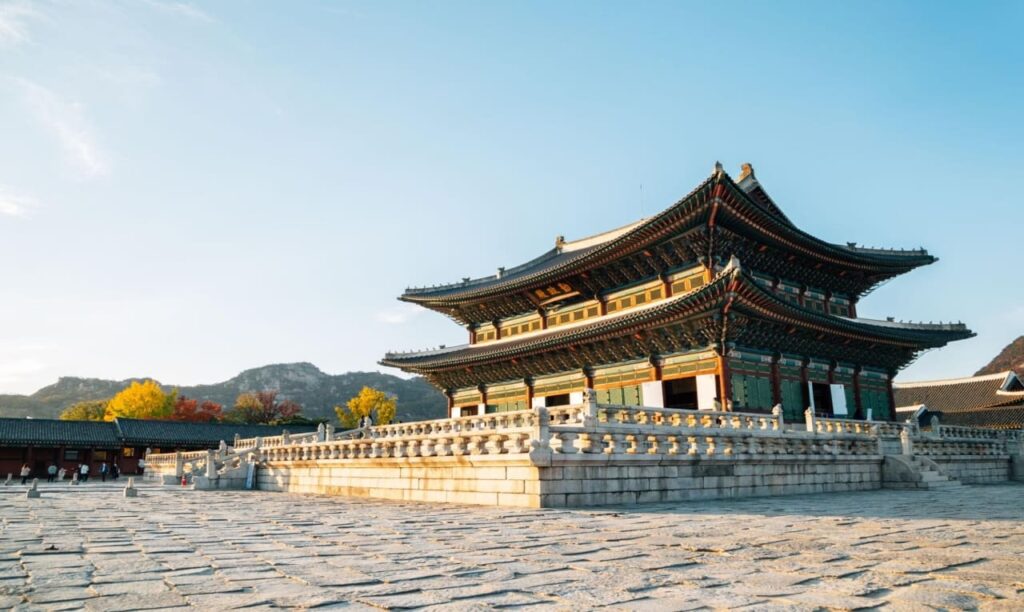
Built in 1395, Gyeongbokgung served as the main royal palace of the Joseon Dynasty. Its vast courtyards, mountain backdrop, and elegant architecture make it the symbolic heart of traditional Korea.
Highlights:
- Geunjeongjeon Throne Hall
- Gyeonghoeru Pavilion
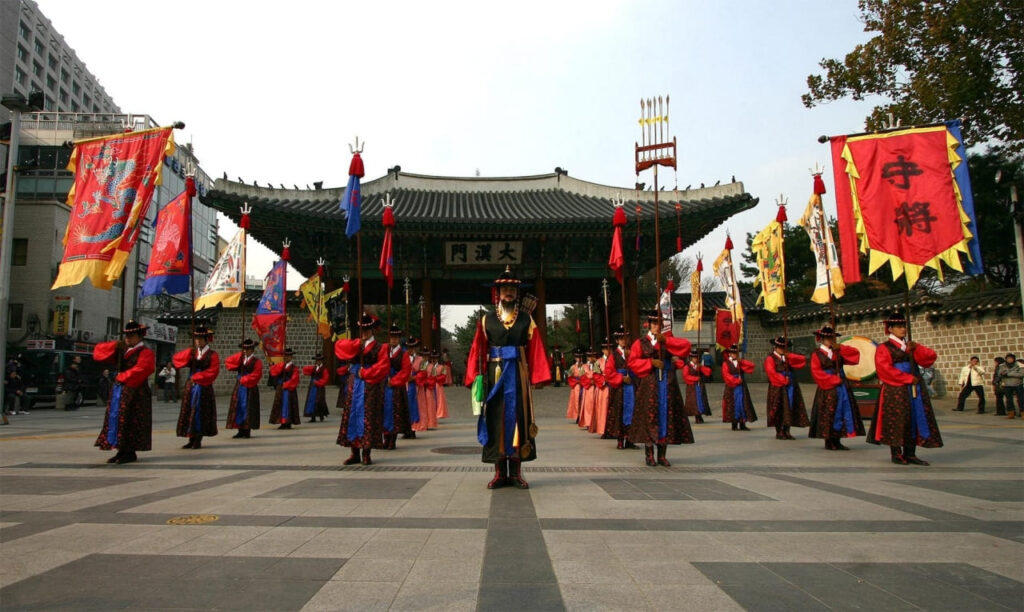
- Royal Guard Changing Ceremony
- National Palace Museum
- Hanbok photography experience
Best Time:
- Early morning for fewer crowds
- Autumn foliage and winter snow are especially beautiful
Nearby:
- Bukchon Hanok Village↗
- Insadong↗
- Cheong Wa Dae
2. Changdeokgung (창덕궁)
UNESCO World Heritage Elegance
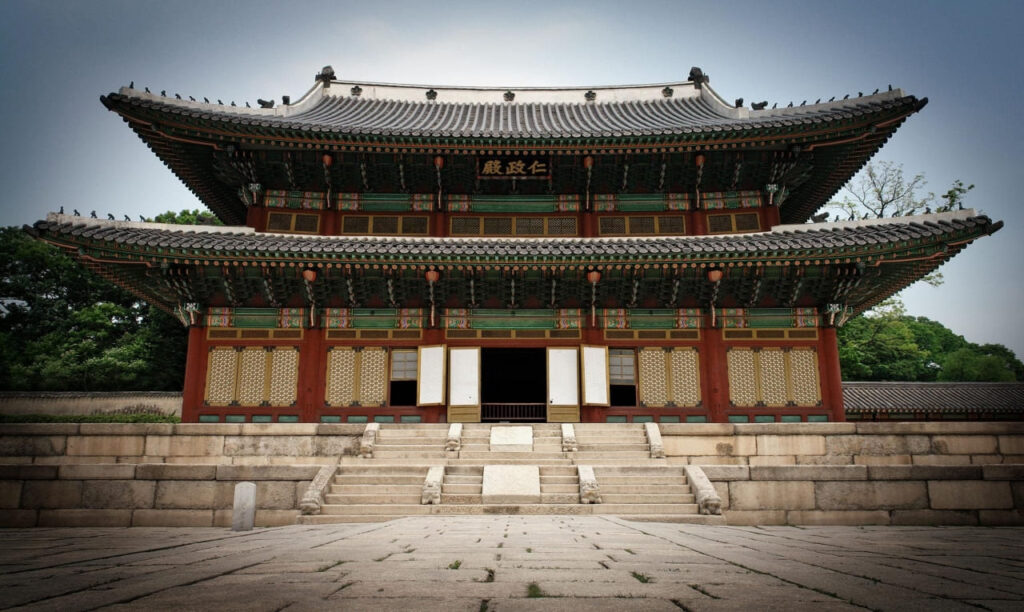
Often considered the most beautiful palace in Seoul, Changdeokgung harmonizes naturally with the surrounding landscape rather than imposing itself upon it.
Established in 1405 during the Joseon Dynasty as a secondary royal palace east of Gyeongbokgung. More than a seat of power, it evolved into the dynasty’s most intimate royal residence — a sanctuary where architecture, gardens, and forested landscapes existed in quiet harmony.
Following the devastation of the Imjin War, when all major palaces were reduced to ashes, Changdeokgung rose as the de facto heart of the kingdom, serving as the principal royal palace for over 250 years.
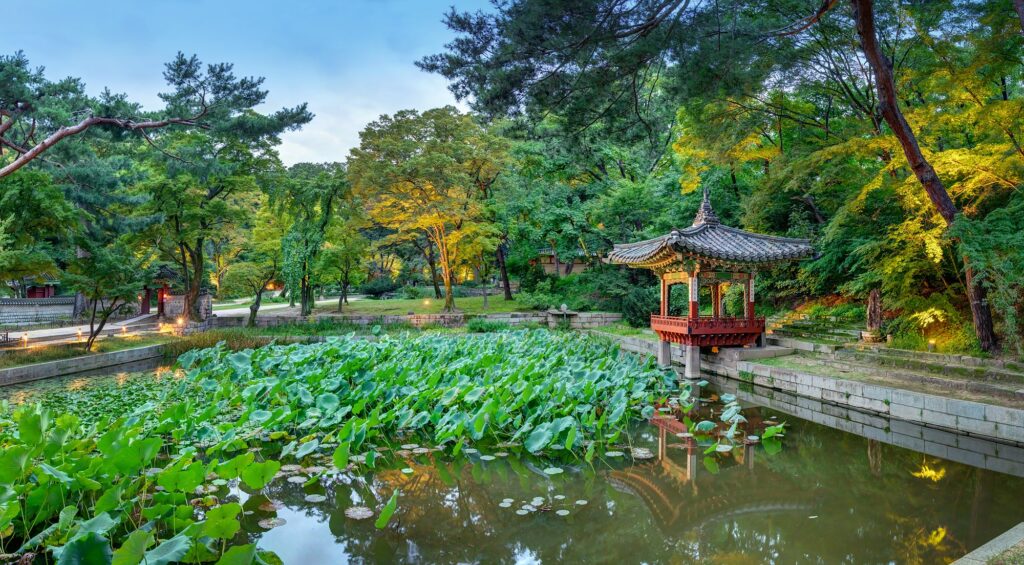
Today, its serene courtyards and secret gardens (Huwon, Biwon) remain one of Korea’s most poetic reflections of regal restraint and natural elegance.
Highlights:
- Secret Garden tour
- Lotus ponds and pavilions
- Quiet forest paths
- Refined architectural details
Atmosphere:
More intimate and poetic than Gyeongbokgung.
3. Deoksugung (덕수궁)
Where Korean Tradition Meets Western Influence
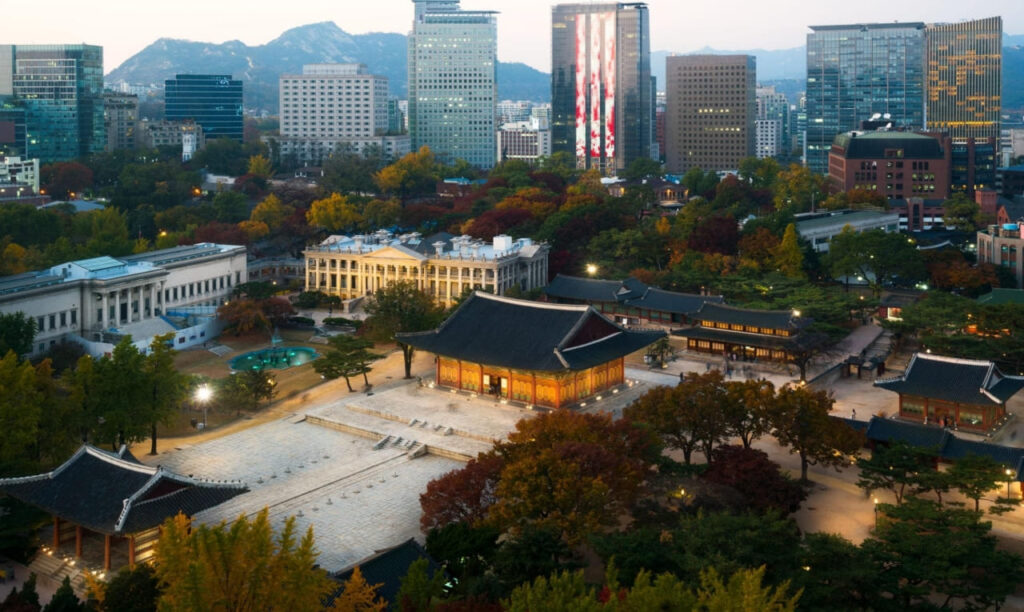
Located near Seoul City Hall, Deoksugung is famous for its romantic stone-wall road and unusual blend of Korean and Western-style royal buildings.
This palace feels especially atmospheric at sunset.
Deoksugung began as a temporary royal residence during the devastation of the Imjin War, offering refuge to King Seonjo in a kingdom shaken by invasion. Yet its greatest chapter unfolded centuries later, when Emperor Gojong transformed the palace into the imperial heart of the Korean Empire.
Here, amid stately stone pathways and elegant Western-style architecture, Korea embraced the currents of modernity while striving to preserve its sovereignty.
More than a royal palace, Deoksugung became a symbol of resilience — a place where the nation confronted crisis, reimagined its future, and stepped cautiously into the modern age.
Highlights:
- Seokjojeon Western-style palace
- Night illumination
- Stone-wall walking path
- Easy access from Myeongdong
Perfect For:
Travelers staying near Myeongdong who want an easy cultural experience without traveling far.
4. Changgyeonggung (창경궁)
The Quiet Hidden Gem
Less crowded and more peaceful than the major palaces, Changgyeonggung offers a slower and more contemplative experience.
Changgyeonggung served as the most intimate of the Joseon royal palaces — a place shaped less by ceremony and grandeur than by the rhythms of everyday court life. Originally used alongside Changdeokgung, it became a cherished residence for queens, dowagers, and generations of the royal family.
Within its tranquil halls and gardens, filial devotion, scholarship, and the quieter traditions of the dynasty unfolded across centuries.
More than a secondary palace, Changgyeonggung stood as a deeply human space where the royal court remained connected to both family life and the people beyond its gates.
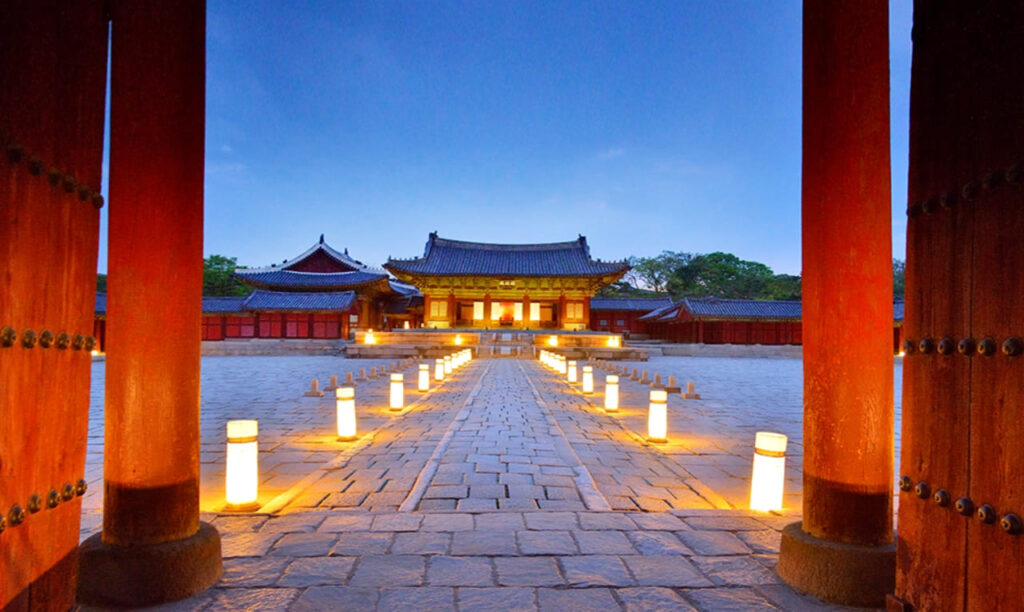
The palace grounds include:
- Beautiful seasonal gardens
- Historic greenhouse
- Quiet walking paths
- Excellent night views
Ideal For:
Travelers who enjoy photography and calm exploration.
5. Gyeonghuigung (경희궁)
The Forgotten Palace
Smaller and less visited, Gyeonghuigung provides a peaceful escape from the city’s intensity.
Many visitors overlook it entirely, which makes it one of Seoul’s most relaxing historical spots.
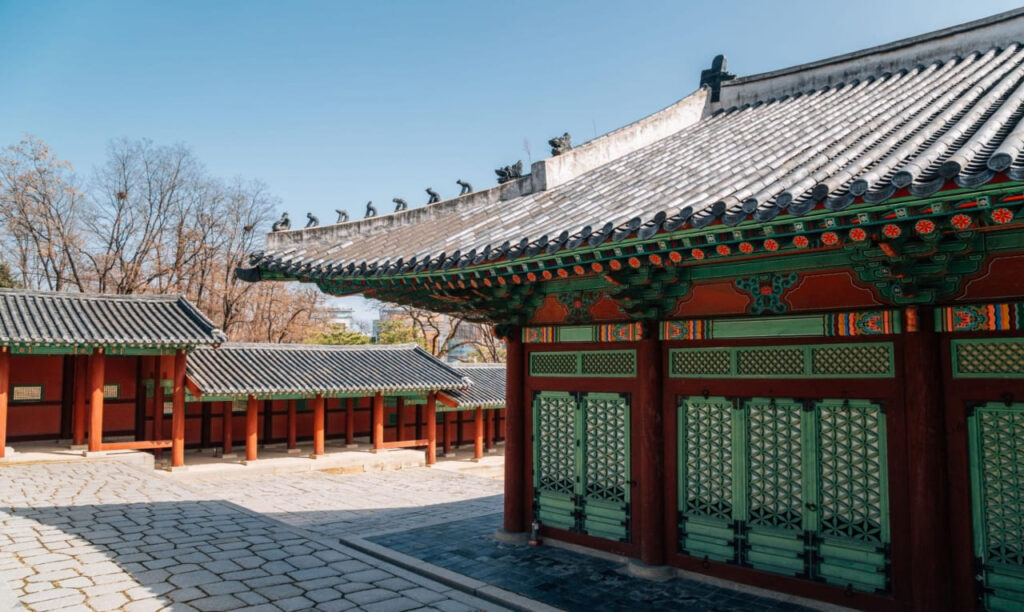
Gyeonghuigung stood as one of the Joseon Dynasty’s most important royal residences, serving alongside Changdeokgung as a key setting for state affairs, royal ceremonies, and times of refuge.
Known as Seogwol, or the “Western Palace,” due to its position among Seoul’s Five Grand Palaces, it embodied both political authority and quiet retreat. Often used as an imperial villa and temporary royal residence, Gyeonghuigung offered the monarchy a place of strategic calm beyond the formal rigidity of the main court.
Though much of the palace was lost to history, its legacy endures as a symbol of resilience, elegance, and the shifting tides of the Joseon court.
Nearby:
- Seochon ↗
- Independent cafés and galleries
3-Day Complete Seoul Cultural Experience
Day 1 — The Royal Capital
Morning
- Gyeongbokgung
Afternoon
- Bukchon Hanok Village↗ / Samcheong-dong
Evening
Day 2 — Confucian Seoul & Hidden Alleys
Morning
- Changdeokgung & Secret Garden
Afternoon
- Jongmyo Shrine / Sungkyunkwan
Continue to:
- Ikseon-dong↗ : Traditional cafés, Rooftop restaurants (Floating↗, Le Style↗)
Evening
- Daehak-ro (Daehangno) : Small theaters, Youthful nightlife
Day 3 — Romantic & Modern Seoul
Morning
- Deoksugung & Stone-wall road
Afternoon
- Gyeonghuigung / Seochon / Quiet cafés and galleries
Evening Options (Choose one)
- N Seoul Tower / Hongdae↗ / Cheonggyecheon / Dongdaemun Design Plaza (DDP)↗
Rainy Season Alternative Itinerary (June–August)
How to Enjoy Seoul During Monsoon & Summer Rain
Seoul’s rainy season usually begins in late June and continues through July, with hot and humid weather lasting into August. While palace walks and long outdoor routes can become difficult during heavy rain, Seoul is actually one of the best cities in Asia for rainy-day travel thanks to its underground shopping districts, museums, cafés, historic indoor spaces, and connected subway system.
Instead of long outdoor walks, this alternative itinerary focuses on:
- Short walking distances
- Indoor cultural experiences
- Covered shopping areas
- Scenic cafés
- Evening activities after the rain
3-Day Rain-Friendly Seoul Experience
Day 1 — Royal Culture Indoors
- National Palace Museum / Samcheong-dong cafés
- Insadong tea houses / Myeongdong shopping
Day 2 — Museums & Modern Seoul
Morning
Afternoon
- Leeum Museum of Art or COEX
Evening
- Cheonggyecheon after rain / Indoor cafés nearby
Day 3 — Relaxed Rainy Seoul
Morning
- Deoksugung & Stone-wall road during light rain
(Actually one of Seoul’s most beautiful rainy-day walks.)
Afternoon
- Seochon / Quiet cafés / Independent bookstores / Small galleries
Evening Options
Choose based on weather:
- Hongdae live music cafés↗
- Gangnam shopping
- Luxury hotel lounge bars
- Korean spa experience (jjimjilbang)
Best Rainy-Day Areas in Seoul
Most Convenient
Myeong-dong
- Underground shopping / Easy subway access
- Department stores / Covered arcades
Most Atmospheric in Rain
Samcheong-dong
- Wet stone alleys / Hanok cafés / Quiet mood
Best for Indoor Exploration
Small But Important Travel Tip
During Korea’s rainy season, many travelers make the mistake of planning overly packed outdoor schedules. Seoul is best enjoyed slowly in summer:
- longer café breaks,
- museum visits,
- evening walks after rainfall,
- and flexible indoor/outdoor transitions.
Ironically, some of Seoul’s most memorable moods appear right after the rain.
👑 Royal Palaces in K-Dramas
- Moon Embracing the Sun (2012, 해를 품은 달) Starring: Kim Soo-hyun, Han Ga-in
Royal romance & palace intrigue inspired by Joseon court life - Kingdom (2019, 킹덤) Starring: Ju Ji-hoon
Joseon palaces transformed into a dark political thriller - Love in the Moonlight (2016, 구르미 그린 달빛) Starring: Park Bo-gum, Kim Yoo-jung
Elegant palace scenery, royal gardens & youthful court romance
✨ Myeongdong & Modern Seoul
- My Love from the Star (2013, 별에서 온 그대) Starring: Kim Soo-hyun, Jun Ji-hyun
Luxury shopping streets, city lights & glamorous Seoul nightlife - Goblin (2016, 도깨비) Starring: Gong Yoo, Kim Go-eun
Romantic Seoul nights blending fantasy with modern city life - Myeongdong Street Food & Shopping Neon-lit alleys filled with Korean beauty, fashion & late-night snacks
You may also like
- Korea Travel Guide 2026 – Complete Itinerary, Cities & Travel Tips
- Seoul Travel Guide 2026 – Best Areas, Hotels & Itinerary
- Seoul 3 Day Itinerary: Luxury vs Lifestyle Travel Guide
More to Explore on KHOREA.COM
Discover more stories across Korea — choose a category that inspires you.