Korea’s Buddhist mountain temples and spiritual heritage
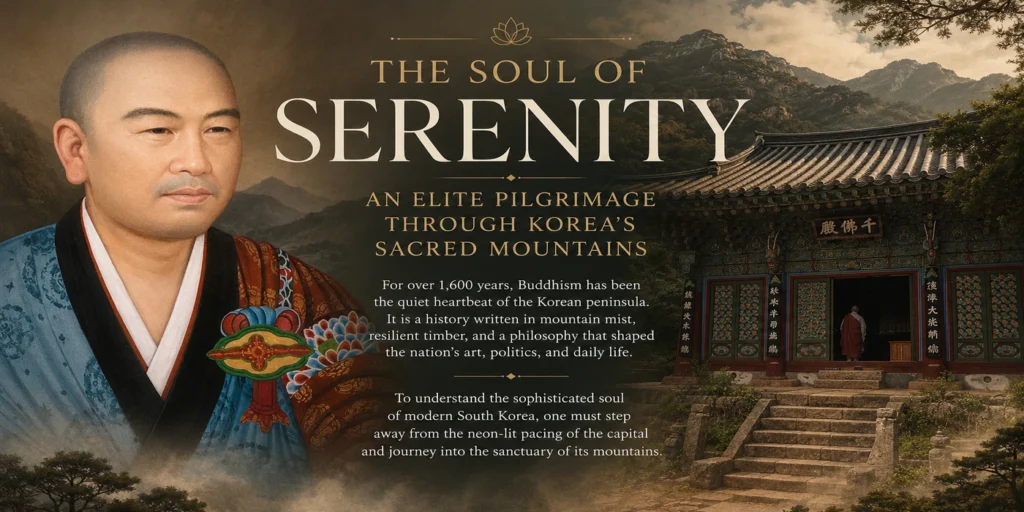
THE SOUL OF SERENITY: AN ELITE PILGRIMAGE THROUGH KOREA’S SACRED MOUNTAINS
For over 1,600 years, Buddhism has been the quiet heartbeat of the Korean peninsula. It is a history written in mountain mist, resilient timber, and a philosophy that shaped the nation’s art, politics, and daily life.
To understand the sophisticated soul of modern South Korea, one must step away from the neon-lit pacing of the capital and journey into the sanctuary of its mountains.
ABSORPTION, NOT ERASE
Coexisting with the Land (4th–7th Century)
When Buddhism arrived during the Three Kingdoms Period↗, it did not violently conquer the indigenous Shamanism (Musok,무속); instead, it masterfully absorbed it. Recognizing a deep-seated reverence for nature spirits, Buddhist monks seamlessly integrated folk deities into their cosmology.
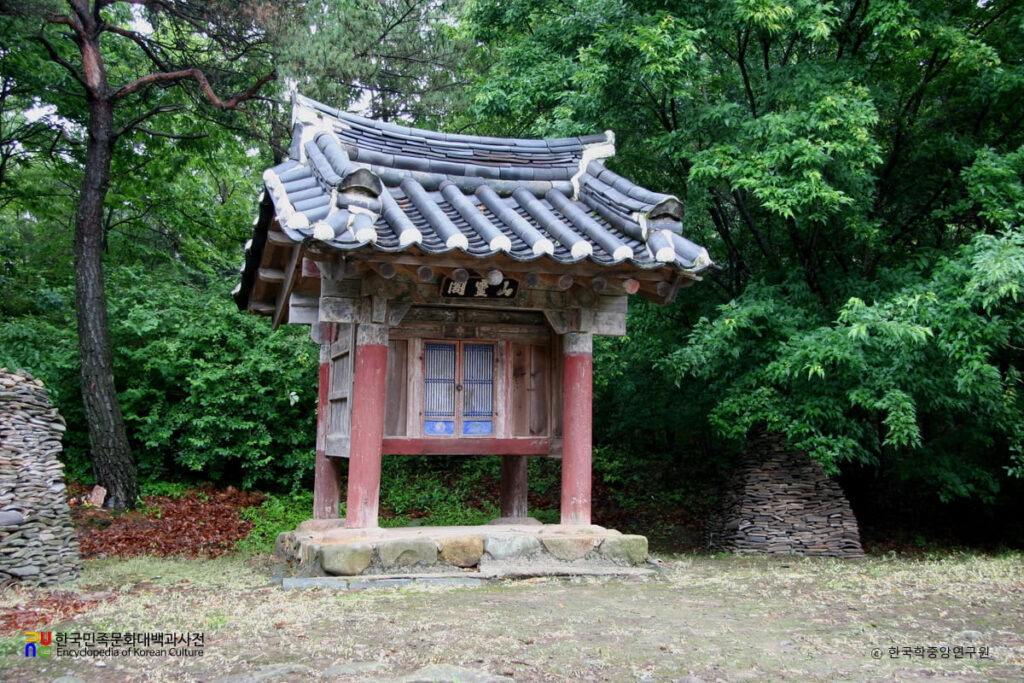
This brilliant synthesis is why today, every traditional Korean temple features a Sanshin-gak (Mountain Spirit Shrine,산신각) tucked quietly behind the main Buddha hall. By harmonizing with Shamanism, Buddhism evolved from a foreign philosophy into an intimately Korean faith, comforting a populace deeply attuned to the spirits of the land.
THE GOLDEN AGE TO THE EXILE IN THE MIST
(7th–14th Century & Beyond)
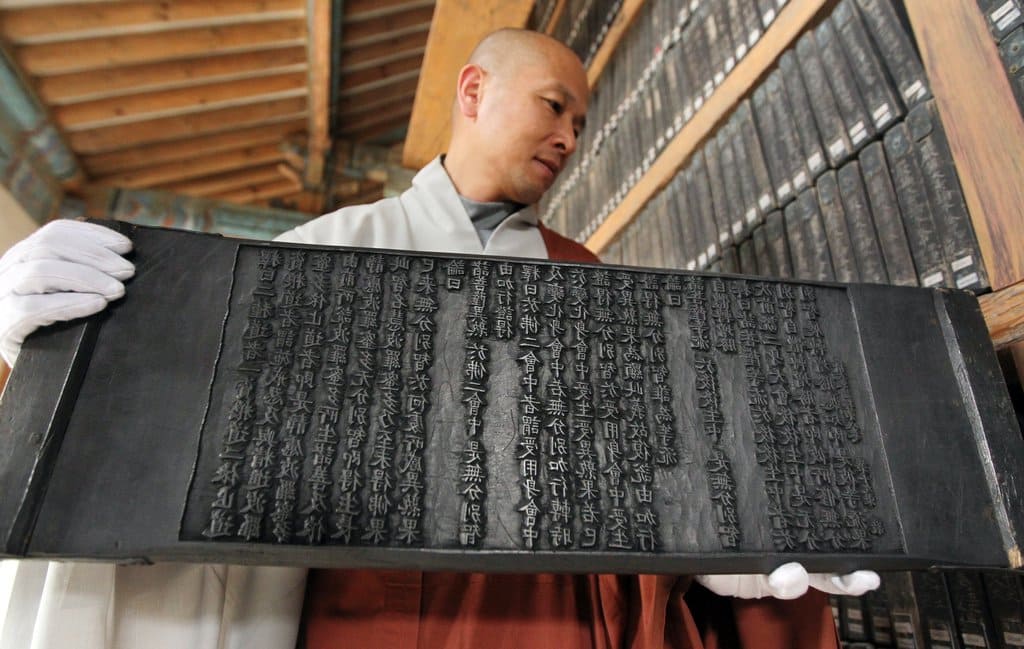
During the Unified Silla and Goryeo dynasties, Buddhism became the spiritual and cultural foundation of the Korean peninsula. Under Goryeo (918–1392), it flourished as the state religion, inspiring an extraordinary artistic and intellectual renaissance. This era produced masterpieces such as Gyeongju’s Bulguksa Temple↗ (불국사)—the pinnacle of Silla architectural mastery and stone engineering—as well as the creation of the Tripitaka Koreana↗, one of the most complete collections of Buddhist scriptures in East Asia.
However, the tides turned drastically with the rise of the Neo-Confucian Joseon Dynasty (1392–1910). Stripped of political power and relegated to the lowest social caste, monks were banished from entering the walled capital of Seoul. They retreated deep into the rugged slopes of Jirisan, Songnisan, and Seoraksan. Ironically, this era of exile preserved Korean Buddhism, turning the mountain monasteries into pristine, self-sustaining sanctuaries of spiritual purity.
THE SWORD AND THE SUTRA
Hoguk Bulgyo and the Imjin War (1592–1598)
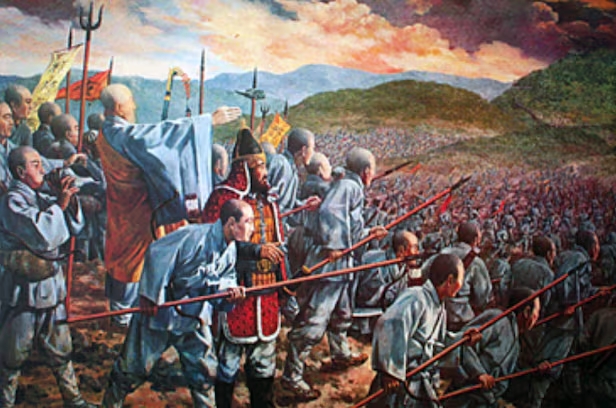
Yet, when the nation faced existential ruin during the Japanese invasions (The Imjin War↗), the forgotten monks did not hesitate. Embracing the concept of Hoguk Bulgyo (State-Protecting Buddhism,호국불교)—the belief that defending the nation is a sacred, spiritual duty—they traded their prayer beads for swords.
Led by legendary Zen masters like Seosan Daesa (서산대사), thousands formed the Uibyeong (Righteous Armies, 의병/승병), launching devastating guerrilla strikes from their intimate knowledge of the mountain terrains. This heroic sacrifice earned the heavily persecuted faith a profound, eternal respect from the Korean people.
THE MODERN HORIZON
A Peaceful Dualism
Today, visitors to South Korea are often struck by a unique spiritual landscape: neon red crosses of Christian churches punctuate city skylines, while serene Buddhist temples quietly occupy the surrounding hills. Far from a rivalry, the two faiths coexist harmoniously.
While Christianity is deeply woven into urban life and modern education, Buddhism serves as the cultural anchor, offering an escape into mindfulness and heritage. Because Korean Seon (Zen) Buddhism is fundamentally non-dogmatic and focused on the inner cultivation of the mind, it rarely clashes with modern theology, allowing contemporary Koreans to comfortably navigate both worlds.
THE MASTER PORTFOLIO: 7 ICONS OF KOREAN BUDDHISM
Seamlessly connected by Korea’s sleek, high-speed KTX network, this curated selection represents the ultimate journey through architectural splendor and living ritual.
In Korea’s mountain temples, silence itself becomes a form of wisdom.
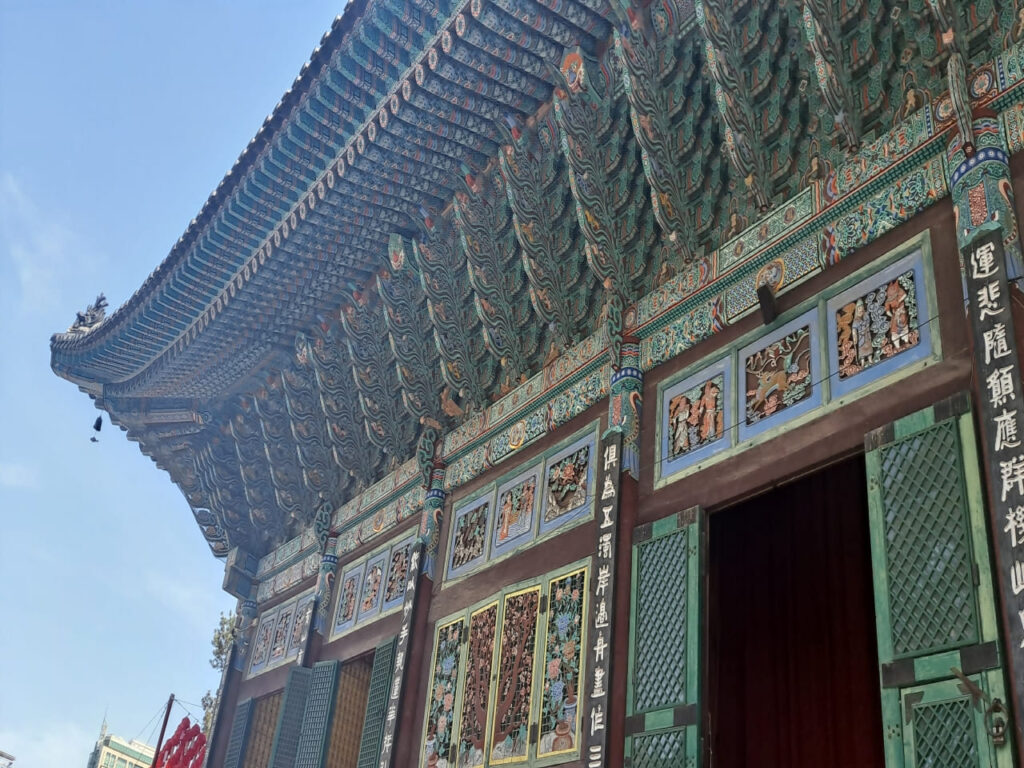
1. The Urban Anchor: Jogyesa Temple (조계사)
The vibrant epicenter of Korean Zen Buddhism, unexpectedly alive with rainbow lanterns amidst downtown Seoul’s skyscrapers. It serves as the historic administrative core of the Jogye Order.
- Direction: 55 Ujeongguk-ro, Jongno-gu, Seoul
- Explore on Google Map↗
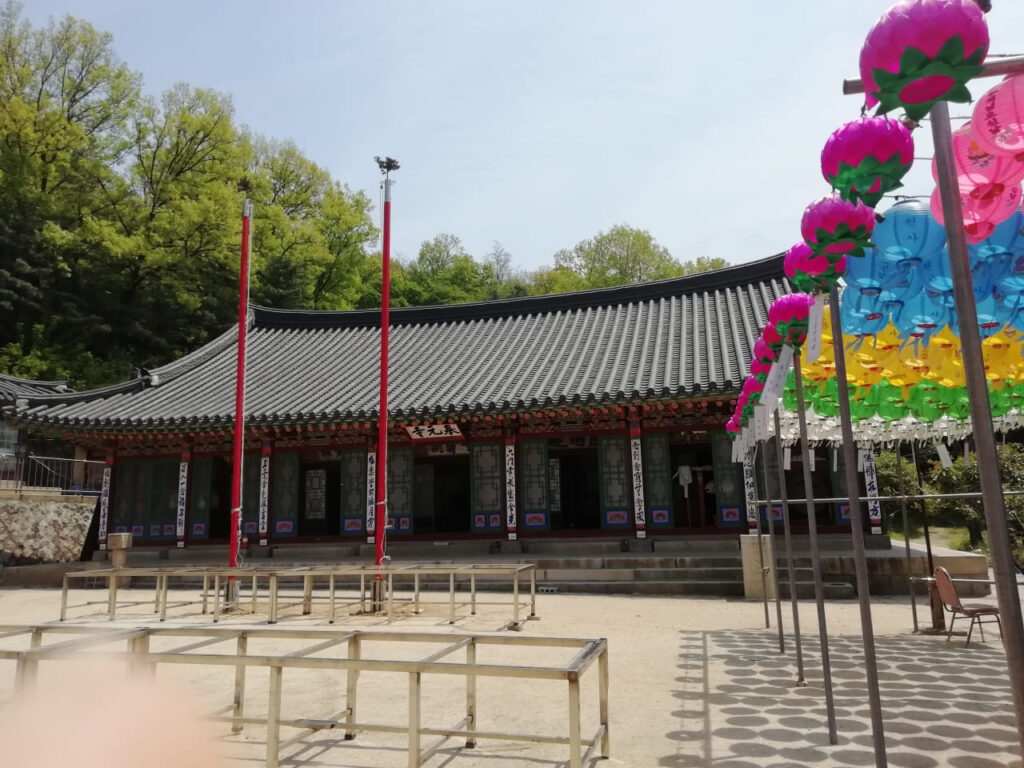
2. The Living Ritual: Bongwonsa Temple (봉원사)
Tucked at the scenic base of Seoul’s Ansan Mountain, this ancient sanctuary is the headquarters of the Taego Order, preserving brilliant traditional musical rituals and centuries-old heritage.
- Direction: 120 Bongwonsa-gil, Seodaemun-gu, Seoul
- Explore on Google Map↗
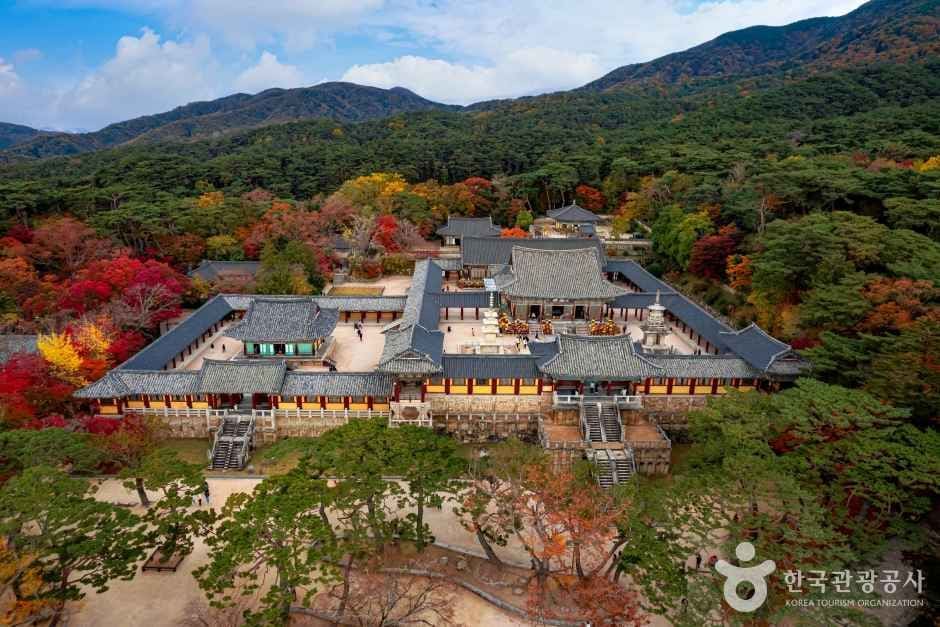
3. The Silla Crown Jewel: Bulguksa Temple (불국사)
A UNESCO-listed masterpiece in Gyeongju↗ showcasing pristine stone craftsmanship and engineering that brought a vision of a Buddhist utopia to earth.
- Direction: 385 Bulguk-ro, Gyeongju-si, Gyeongsangbuk-do
- Explore on Google Map↗
4. The Utopian Fortress: Guinsa Temple (구인사)
An awe-inspiring, multi-tiered citadel winding up a narrow, misty ravine in Danyang. As the grand headquarters of the Cheontae Order, its monumental architectural scale feels entirely otherworldly.
- Direction: 73 Guinsa-gil, Yeongchun-myeon, Danyang-gun, Chungcheongbuk-do
- Explore on Google Map↗
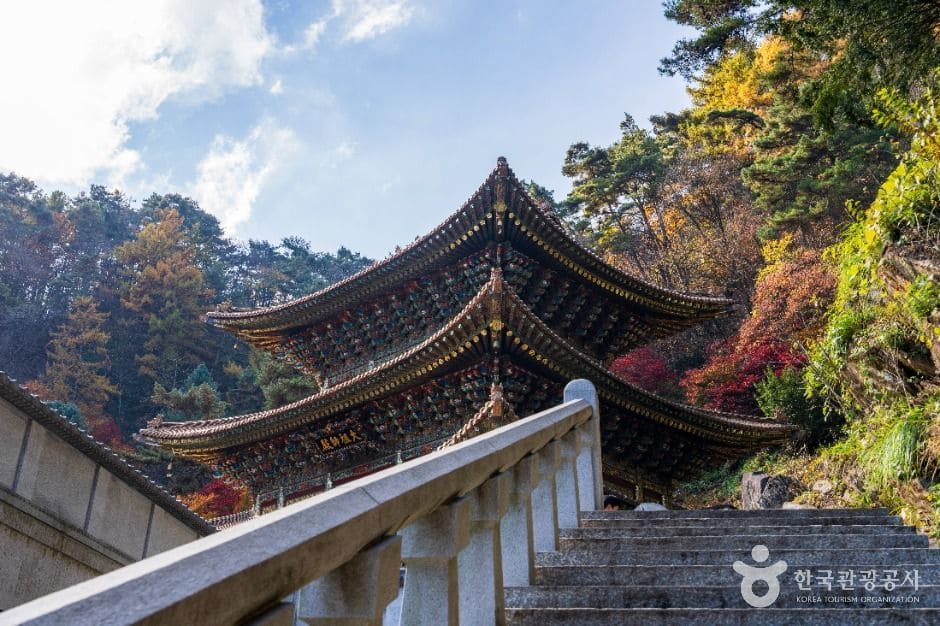
5. The Buddha Jewel: Tongdosa Temple (통도사)
Nestled beneath a canopy of ancient, twisted pines near Yangsan, this vast compound enshrines the actual historical relics of the Buddha in a magnificent stone stupa rather than a traditional indoor statue.
- Direction: 108 Tongdosa-ro, Habuk-myeon, Yangsan-si, Gyeongsangnam-do
- Explore on Google Map↗
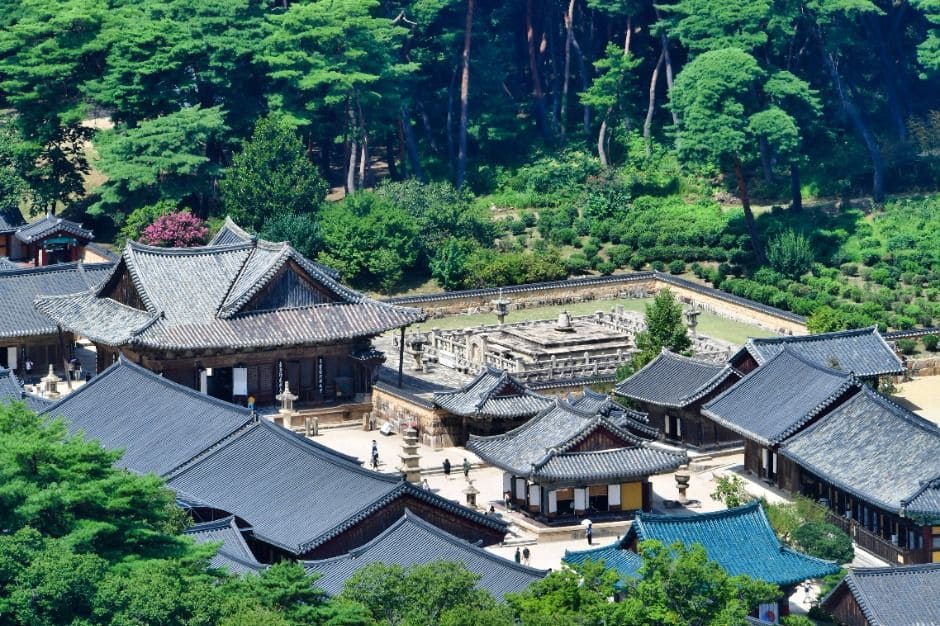
6. The Dharma Jewel: Haeinsa Temple (해인사)
Cradled within the dramatic peaks of Gayasan, this temple houses the Tripitaka Koreana (a UNESCO world heritage, 팔만대장경)—over 81,000 wooden printing blocks of Buddhist scriptures carved as a prayer against medieval invasions. It remains the ultimate symbol of Hoguk Bulgyo.
- Direction: 122 Haeinsa-gil, Gaya-myeon, Hapcheon-gun, Gyeongsangnam-do
- Explore on Google Map↗
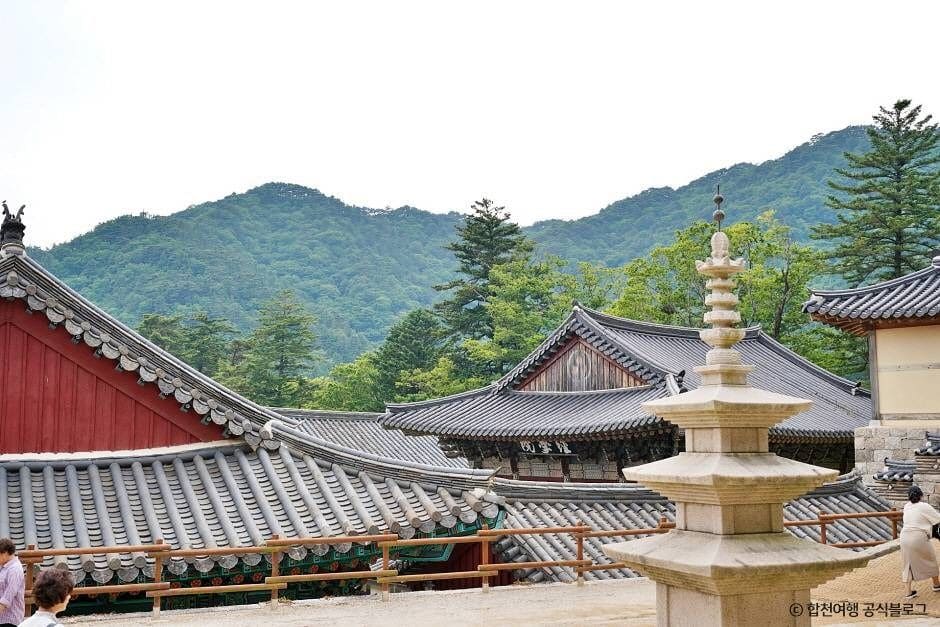
7. The Sangha Jewel: Songgwangsa Temple (송광사)
Located in serene Suncheon, this temple represents the pure soul of monastic community and zen practice. Elegant wooden pavilions bridge over crystal-clear mountain streams where the sound of the evening Moktak (wooden fish gong, 목탁) echoes through the valley.
- Direction: 100 Songgwangsaan-gil, Songgwang-myeon, Suncheon-si, Jeollanam-do
- Explore on Google Map↗
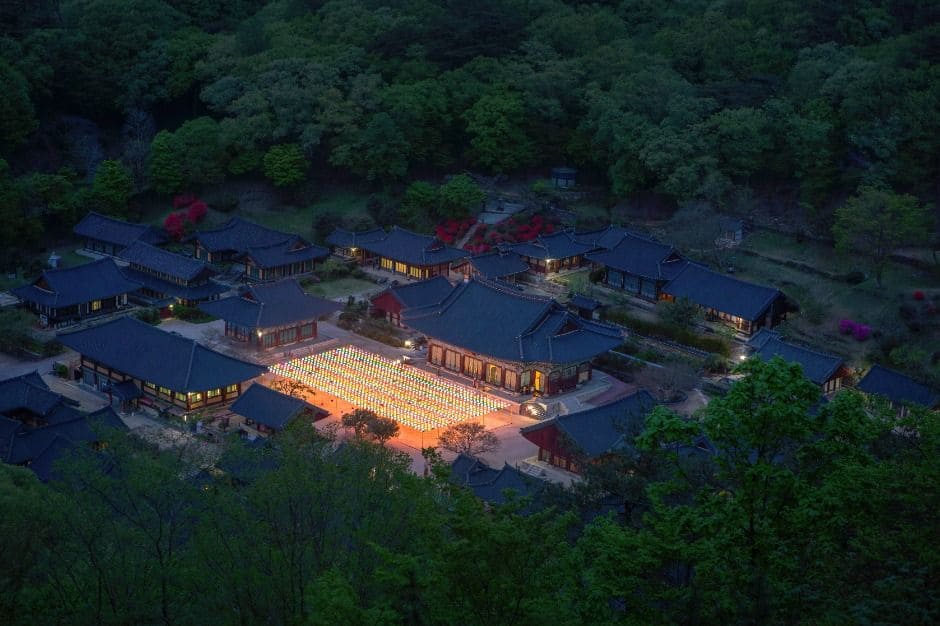
A Quiet Note on Temple Etiquette
Korean temples are not museums, but living monastic communities and active places of practice. Visitors are encouraged to move quietly, dress respectfully, and remain mindful of ongoing rituals and meditation.
To help preserve the atmosphere of the temples:
- Outside food and drinks are generally discouraged
- Unauthorized photography and drone filming may be restricted
- Pets are typically not permitted inside temple grounds
- Children should remain accompanied by guardians
- Visitors wearing overly revealing clothing may be restricted, especially from entering communal dining areas (Gongyanggan, 공양간)
Above all, remember that these mountain sanctuaries remain spaces of spiritual practice for resident monks and practitioners.
🛎️ THE TRAVELER’S BRIEF
Ready to experience the quiet majesty of these sanctuaries for yourself?

🎬 Korean Buddhism in Cinema
- Spring, Summer, Fall, Winter… and Spring (2003, 봄 여름 가을 겨울 그리고 봄) Directed by: Kim Ki-duk
A meditative journey through Buddhist philosophy, desire, karma, and enlightenment - Why Has Bodhi-Dharma Left for the East? (1989, 달마가 동쪽으로 간 까닭은?) A contemplative masterpiece exploring Zen practice, silence & monastic life
- Mandala (1981, 만다라) Two monks wander through Korea questioning faith, suffering & spiritual truth
🪷 Temple Life & Spiritual Heritage
- Little Forest (2018, 리틀 포레스트) Though not explicitly Buddhist, the film reflects Korea’s quiet philosophy of mindfulness and seasonal living
- Korean Temple Stay Meditation, tea ceremonies & monastic rituals in Korea’s sacred mountains
- Korean Seon (Zen) Buddhism A tradition centered on inner cultivation, silence & direct spiritual experience
🛏️ Hotels in Myeongdong
Choose your preferred booking partner.





You May Also Like
- National Museum of Korea Guide
- The Ceramic Trail of Korea – Where Earth Meets Fire and Time
- Feel the sensation: Gugak Korean traditional music
- Traditional Korean Culture
- Healing Korea—YeongWol travel guide 2026
- Healing Korea—Sancheong : The City of Breath
- Jeongseon—Korea’s Autumn Sanctuary
More to Explore on KHOREA
Discover more stories across Korea — choose a category that inspires you.