Feel the sensation: Gugak Korean traditional music | KHOREA
4 minutes read
Discover the minimalist beauty and timeless rhythm of Korean traditional music
The Soul of Sound
Unlocking the Minimalist Magic of Korean Traditional Music
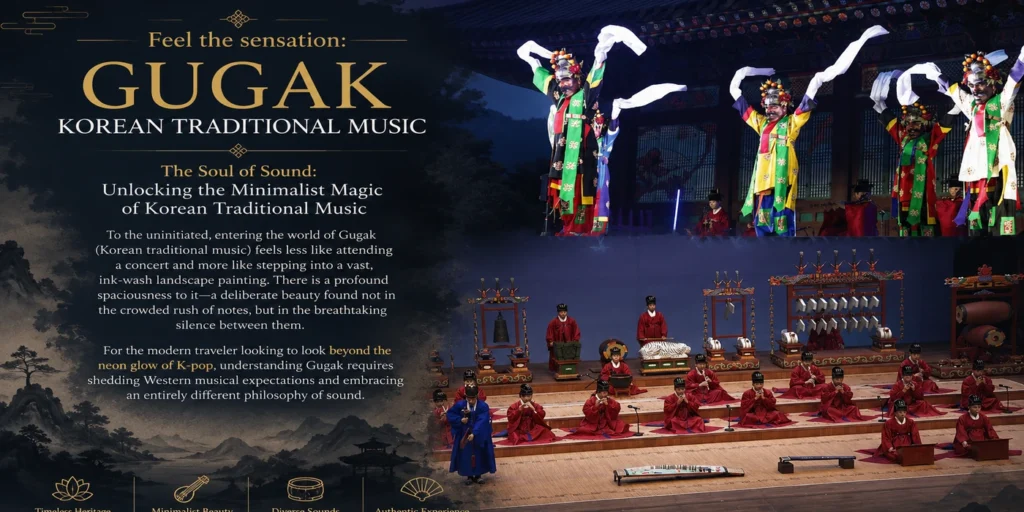
To the uninitiated, entering the world of Gugak (Korean traditional music) feels less like attending a concert and more like stepping into a vast, ink-wash landscape painting. There is a profound spaciousness to it—a deliberate beauty found not in the crowded rush of notes, but in the breathtaking silence between them.
For the modern traveler looking to look beyond the neon glow of K-pop, understanding Gugak requires shedding Western musical expectations and embracing an entirely different philosophy of sound.
The Pentatonic Palette: Why Five Notes Are More Than Enough
Western listeners often expect harmony to move forward. Gugak lingers instead. A single note may breathe, bend, tremble, and fade before the next one arrives.
Traditional Korean music weaves its magic using just five primary tones, roughly corresponds to the Western Do, Re, Mi, Sol, Ra, though the tuning is beautifully fluid. But why limit the palette to just five notes? The answer is deeply rooted in ancient cosmology and philosophy.
The Harmony of the Cosmos: Rather than pursuing dense harmonies, Gugak often revolves around five core tones rooted in ancient East Asian cosmology, Ohaeng↗. The result feels spacious, meditative, and deeply elemental.
The Art of Sigimsae (시김새): In Korea, a note is a living thing, not a fixed point on a staff. Notes do not simply begin and end. They sigh, bend, vibrate, and dissolve like brushstrokes across paper. Because musicians weren’t preoccupied with complex, multi-note chord progressions, they poured their artistry into Sigimsae—the dynamic ornamentation of a single tone. A single note is vibrated, bent, dropped, or shaded to convey a universe of emotion, from devastating grief (Han, 한) to transcendent joy (Heung, 흥).
The Instruments
Crafting Sound from the Earth
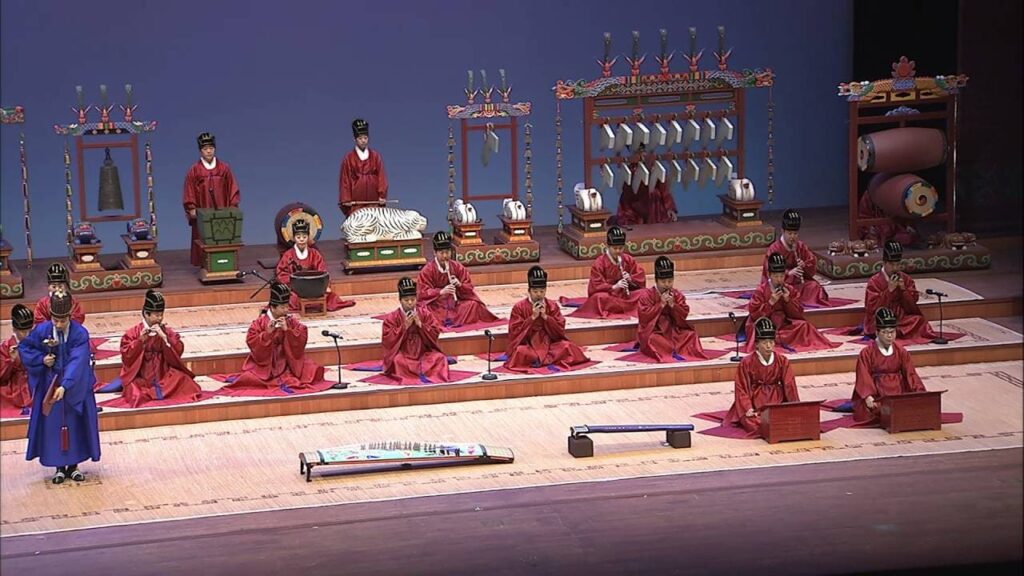
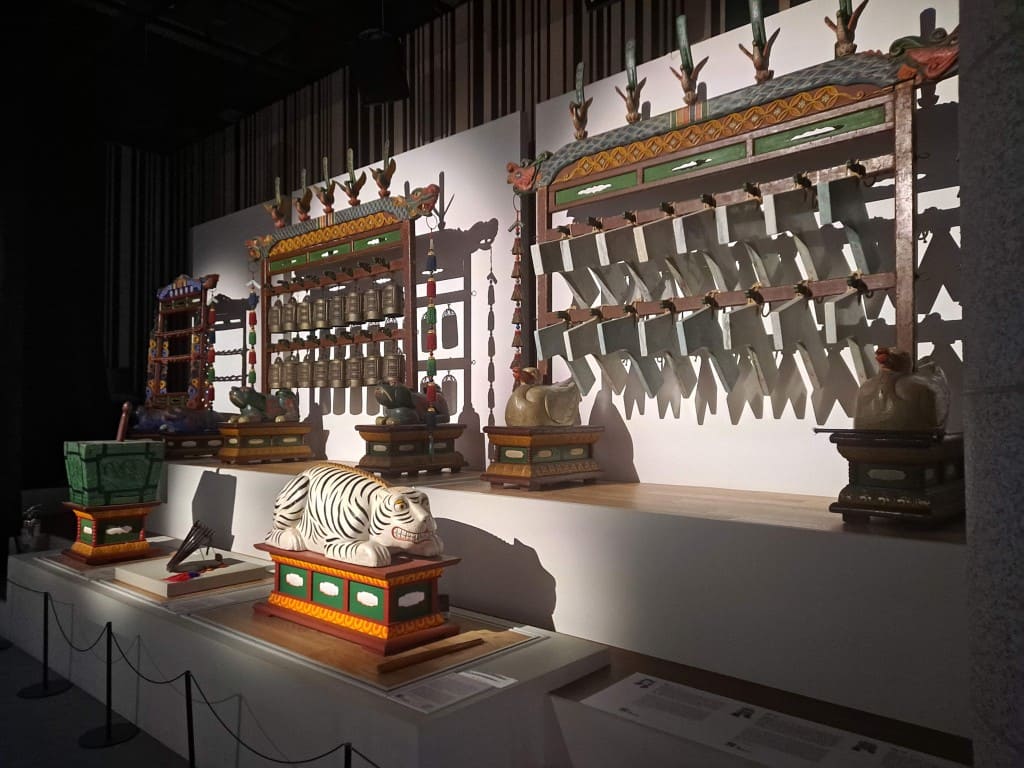
Korean instruments are not just tools for making music; they are literal extensions of the natural world. Traditionally categorized by the materials they are made of (silk, bamboo, clay, metal), they possess an earthy, breathy timbre that feels strikingly organic.
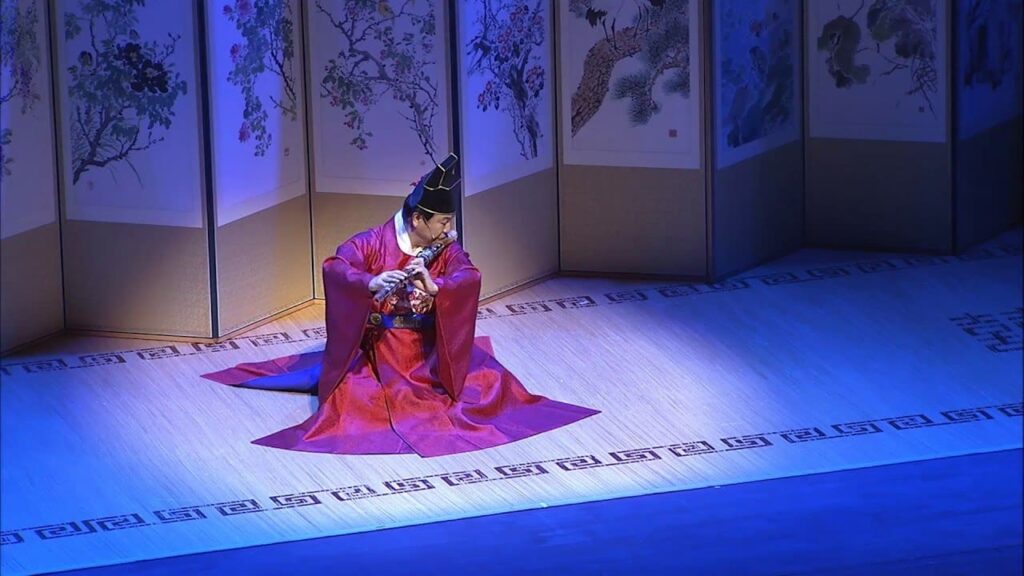
On certain nights in Seoul, after the rush of Myeongdong and the neon pulse of Gangnam begin to fade, the sound of a lone daegeum can make the entire city feel centuries older.
Instrument
Type
The Aesthetic
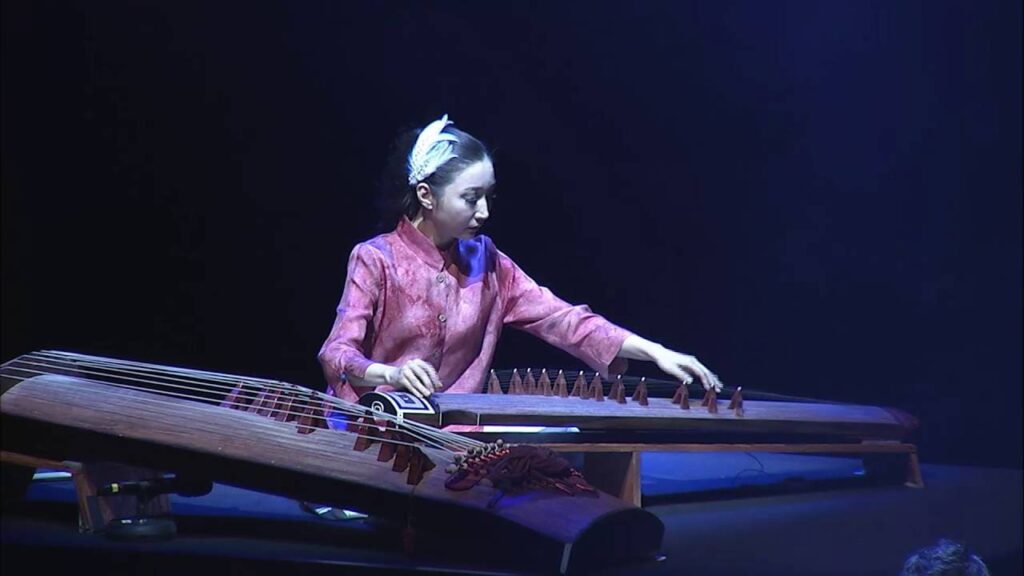
Gayageum (가야금)
12-string Zither
Its strings ripple with elastic, almost liquid vibrato. It sounds like running water.
Geomungo (거문고)
6-string Zither
The scholar’s instrument. Historically favored by aristocrats for meditation.
Daegeum (대금)
Bamboo Flute
The breath of the wind. The bamboo membrane creates a raspy edge that feels startlingly human.
Haegeum (해금)
2-string Fiddle
The vocal mimic. It can sound uncannily like a human voice crying or laughing. Held vertically on the knee.
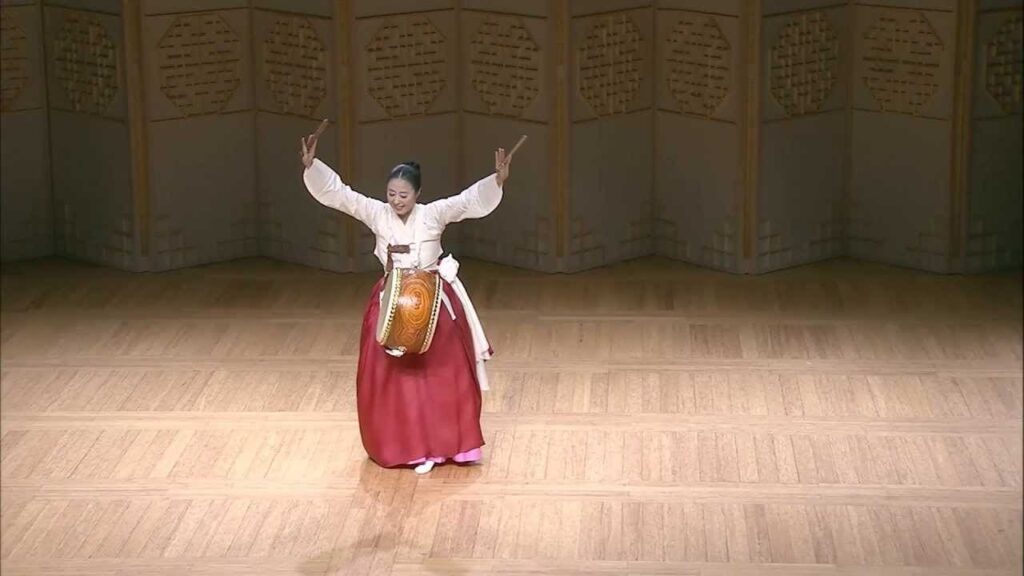
Janggu (장구)
Hourglass Drum
The heartbeat. The universal rhythmic anchor of Gugak, represents the cosmic balance— clarity and turbidity of sound.
Questions Many Travelers Quietly Ask (And the Answers)
“What is the best entry point for a beginner?”
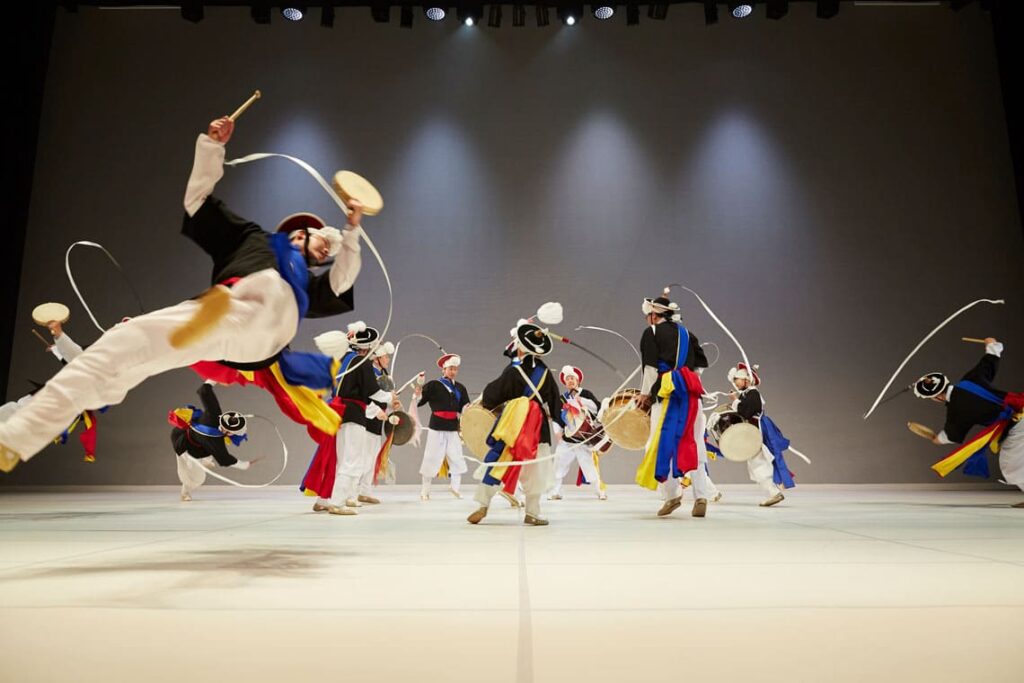
If you love high-energy rhythms, seek out Samulnori (a thrilling percussion quartet).
If you prefer intimate storytelling, try Pansori—often described as the “Korean blues”—where a single vocalist and a drummer perform an epic musical narrative that can last up to eight hours.
For pure instrumental meditation, listen to Sanjo, a genre of brilliant, fast-paced solo improvisations accompanied by the janggu.
“Why does it sometimes sound ‘out of tune’ to Western ears?”
It isn’t out of tune; it is tuned to nature. Western music relies on “equal temperament,” a mathematical compromise that standardizes intervals. Korean music uses “just intonation,” prioritizing the natural harmonic resonances of the instruments. Furthermore, the intentional pitch-bending (Nongyeon) is a highly sophisticated technique, not a mistake. It is the musical equivalent of a master calligrapher’s brush stroke.
“Where can I experience this live in Seoul today?”
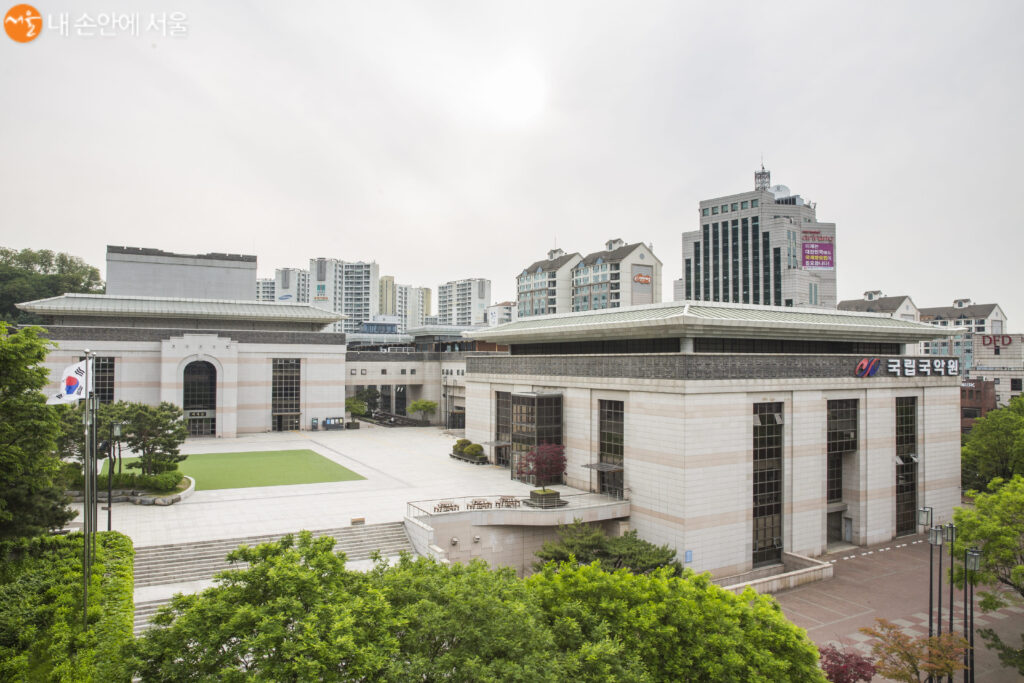
Skip the generic tourist theaters and head to the National Gugak Center↗ in Seocho-dong. It is the Vatican of traditional Korean music, featuring world-class acoustics and museums.
Final Note
Long after the performance ends, what remains is not a melody you can easily hum, but a sensation — of wind through bamboo, distant mountains, and a silence that somehow feels alive.
Experience Korea’s traditional music and royal court performances at the National Gugak Center
Map of National Gugak Center
🎼 Gugak & Korean Traditional Music in Film
In Korean traditional music, emotion is not merely performed — it is endured, remembered, and carried through the voice.