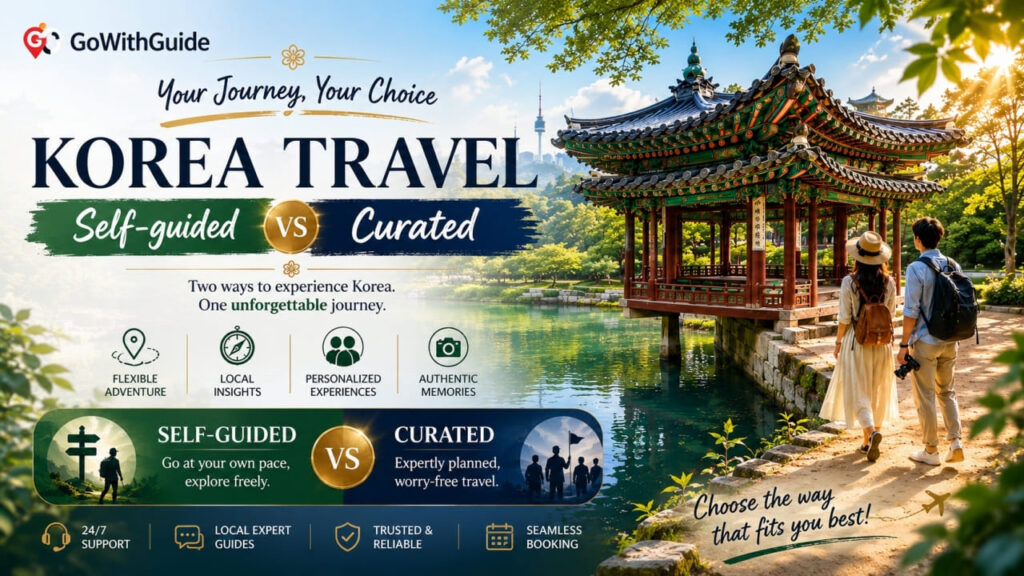
Korea Travel comparison - Self guided vs Guided
The Art of Arrival: South Korea by Instinct or by Invitation
There is a particular elegance to traveling through South Korea.
Not merely because the country is visually striking — though it certainly is — but because Korea rewards intention. Every alleyway, palace corridor, mountain trail, and late-night noodle counter carries layers beneath the surface.
The real question, then, is not simply where to go.
It is how you wish to encounter it.
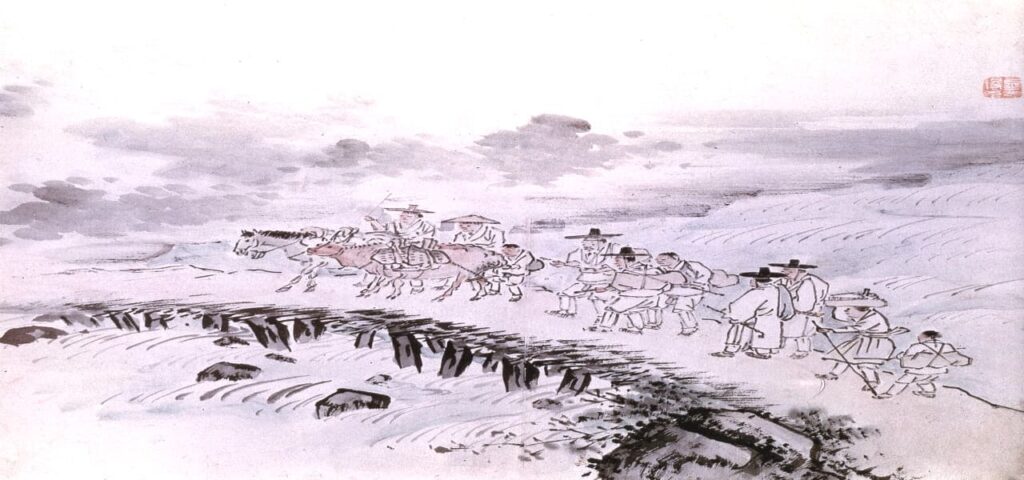
The Self-Curated Korea
For the Traveler Who Values Discovery Above Structure
There is undeniable romance in designing your own Korean journey.
Perhaps you begin the morning wandering through the quiet hanok-lined hills of Bukchon before descending into the polished rhythm of Gangnam. By evening, you find yourself seated alone at a tiny counter inside a hidden pojangmacha — or a moody backstreet izakaya — listening to rain strike neon pavement outside.
That freedom is the true luxury of independent travel.
South Korea’s infrastructure makes this unusually achievable. High-speed KTX trains glide across the country with near-surgical efficiency, while Seoul’s subway system feels less like public transportation and more like urban choreography.
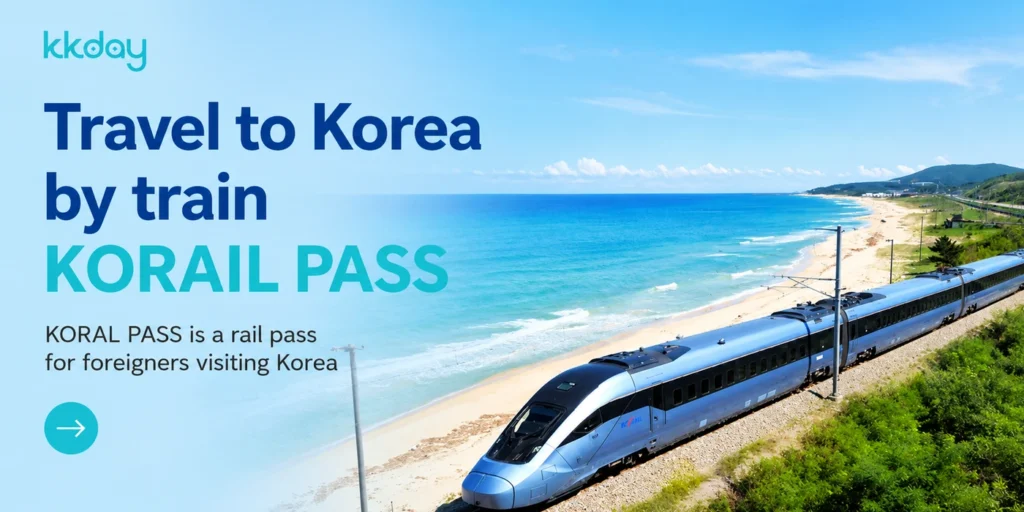
And yet, DIY travel in Korea is not entirely frictionless.
South Korea still operates a uniquely domestic digital ecosystem, though this is rapidly evolving alongside the country’s growing international tourism industry.
Platforms once considered difficult for foreign travelers — from restaurant reservations to navigation apps — are increasingly offering English-language interfaces, overseas payment support, and global-friendly booking systems. Services like Catch Table, alongside the expanding English support on Naver Map and Kakao Map, have significantly lowered the barrier for independent travel in recent years.
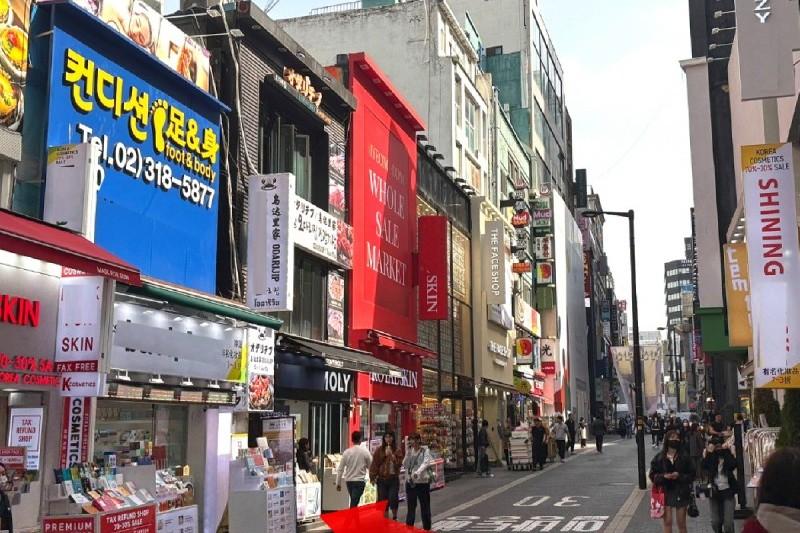
Yet traces of Korea’s historically domestic-first infrastructure still remain, particularly at highly exclusive restaurants, regional services, or verification-heavy platforms. For many travelers, Korea today feels less inaccessible than it once did — and more like a country actively transitioning into a truly global travel experience.
More importantly, independent travelers sometimes encounter Korea visually rather than emotionally.
A palace without context becomes architecture.
A temple without narrative becomes atmosphere.
Beautiful, certainly. But incomplete.
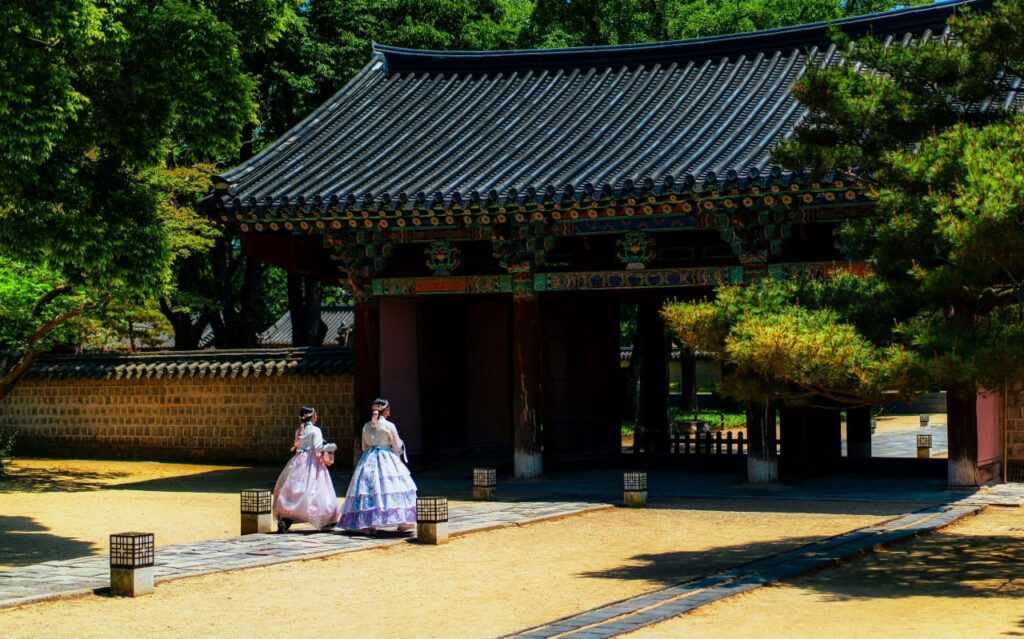
The Curated Korea
For the Traveler Who Seeks Depth Without Interruption
A truly exceptional guided journey in Korea is not about convenience alone.
It is about access.
Not merely entering places, but entering stories.
The finest private guides in Korea function less like tour operators and more like cultural interpreters. They explain why Joseon palaces were built according to geomantic philosophy. They decode subtle dining etiquette at a traditional tea ceremony. They reveal how modern Seoul still carries emotional scars and resilience from the Korean War beneath its futuristic skyline.
Luxury, in this sense, becomes the removal of friction.
No deciphering ticket systems.
No logistical fatigue.
No wondering whether you missed something important hidden in plain sight.
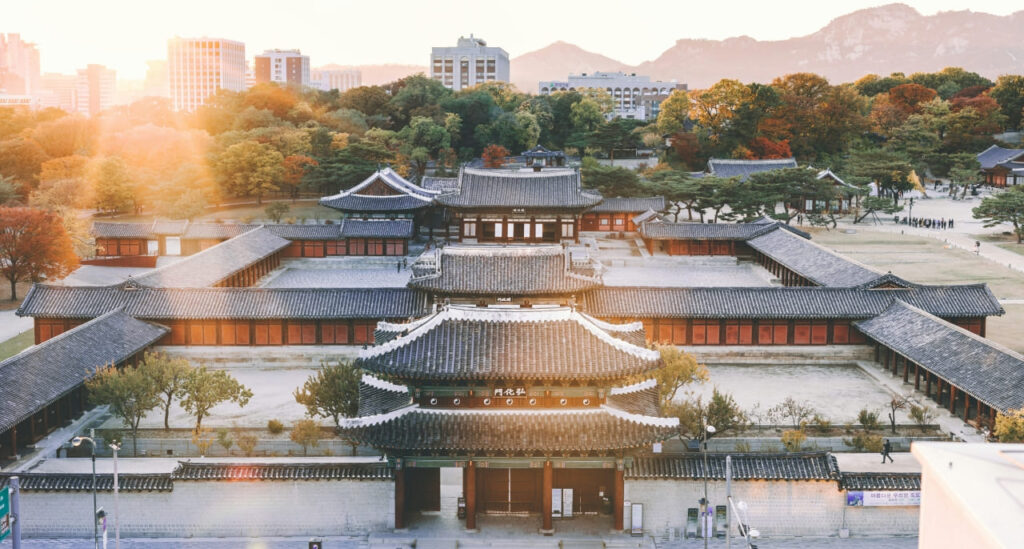
Instead, the journey flows with cinematic ease.
A private chauffeur through mist-covered mountain roads in Gyeongju.
A reservation at an impossible-to-book hanwoo omakase.
An after-hours museum viewing arranged quietly through local connections.
Of course, curated travel has its own trade-offs.
Even the most bespoke itinerary carries momentum. Spontaneity softens when schedules exist. And occasionally, the polished perfection of a luxury experience can insulate travelers from the wonderfully imperfect human moments that make Korea memorable — ordering unknown dishes at a traditional market, laughing through broken translations, or discovering an unexpected café simply because you got lost.
The Most Sophisticated Travelers Choose Both
The wisest way to experience Korea is rarely absolute.
Seasoned travelers often begin with several days of guided immersion — allowing historians, chefs, drivers, and local insiders to unlock the deeper cultural framework of the country.
Only afterward do they transition into unstructured wandering.
Because once Korea begins to make emotional sense, wandering through it becomes infinitely richer.
A palace becomes memory rather than monument.
A bowl of gukbap becomes regional identity rather than comfort food.
A quiet alley in Seochon suddenly feels cinematic rather than incidental.
And that is when Korea reveals its greatest luxury:
Not extravagance, perhaps.
But intimacy.
🛏️ Hotels in Myeongdong
Choose your preferred booking partner.





You May Also Like
- Seoul’s Five Grand Palaces & Myeongdong Itinerary
- Gwanghwamun—The Gate of Light & Eternal Echoes
- The Layered City: A Journey Through Seoul’s Hidden Histories
- Kdrama Hotels: Stay Where the Stories Were Filmed (Part 1)
- Seoul Food Tours: Where to Eat Beyond the Guidebooks
- Korea in Autumn: A Curated Travel Guide 2026
- 2027 FISU Universiade—When the World Comes to Korea
- Dream & Adventure: Amusement Parks in Korea
More to Explore on KHOREA
Discover more stories across Korea — choose a category that inspires you.