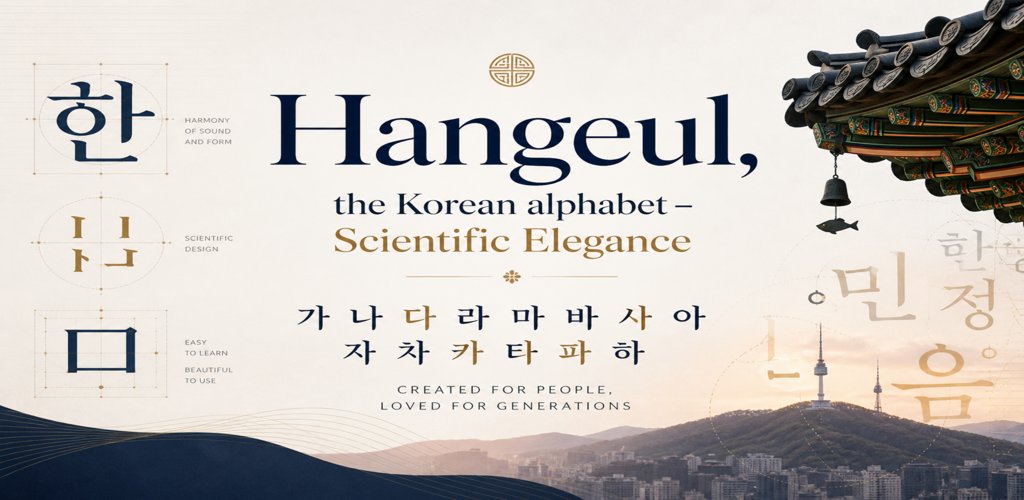
Discover the scientific design and beauty of Hangeul, the Korean alphabet
In an era when literacy was reserved for the elite, written communication in Korea relied heavily on classical Chinese alphabet—an elegant yet complex system inaccessible to the common people.
King Sejong
Korea’s most remarkable cultural legacies—Hangeul (한글), the Korean alphabet—graciously conceived under the visionary reign of King Sejong the Great (세종대왕) in the 15th century.
Recognizing this profound barrier, King Sejong embarked on a mission both humanitarian and revolutionary: to create a writing system that would be simple, logical, and universally accessible.
In 1443, after years of scholarly research and careful design, he introduced a new script, later published in 1446 as the Hunminjeongeum (훈민정음), meaning “The Proper Sounds for the Instruction of the People.”
His intention was beautifully clear—“so that even those who cannot read may easily learn and use it in their daily lives.”
Hangeul – Scientific Elegance
What distinguishes Hangeul is its extraordinary scientific elegance.
Each consonant reflects the shape of the speech organs when producing the sound:
ㄱ — the shape of the tongue blocking the throat
ㅁ — the outline of the mouth
ㅅ — the form of the teeth
Meanwhile, vowels are inspired by the philosophical harmony of the universe—heaven (•), earth (ㅡ), and human (ㅣ)—a subtle nod to East Asian cosmology.
Today, Hangeul is celebrated worldwide as one of the most efficient and innovative writing systems ever devised.
Its creation is not merely a linguistic milestone, but a profound expression of compassion, intellect, and visionary leadership.
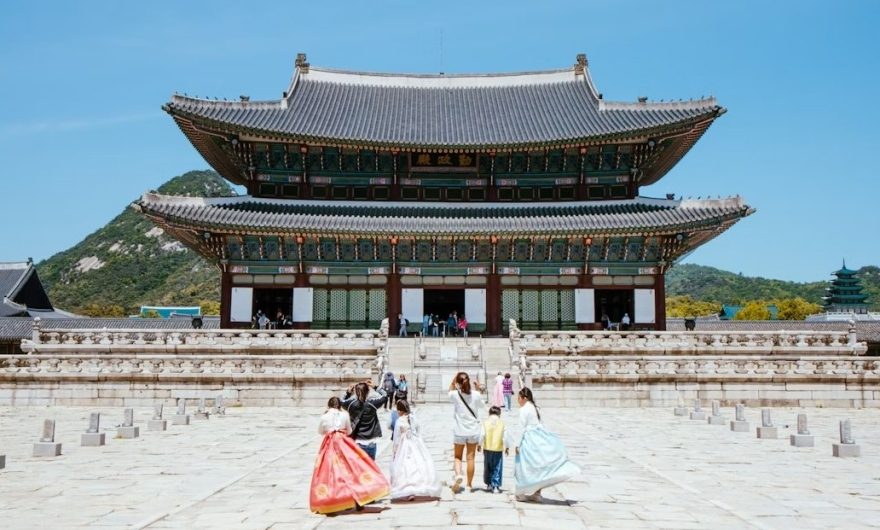
Should you wish to explore further, you may enjoy visiting Gyeongbokgung Palace (경복궁), where King Sejong once ruled, or the National Hangeul Museum, offering an immersive journey into the beauty and philosophy behind this timeless script.
📍 Places to Experience Hangeul
- Gyeongbokgung Palace (경복궁) The royal palace where King Sejong once ruled
A place where history and architecture come alive - National Hangeul Museum Explore the philosophy, design, and beauty of Hangeul
Interactive exhibits for a deeper cultural experience
🎬 Films & Dramas about King Sejong
- Deep Rooted Tree (2011, 뿌리깊은 나무) Starring: Han Suk-kyu
Story of Hangul creation and political struggle - Jang Yeong-sil (2016, 장영실) Starring: Song Il-gook
Scientific achievements during King Sejong’s reign - Forbidden Dream (2019, 천문) Starring: Han Suk-kyu
Story of King Sejong & astronomy innovation
Hotels in Myeongdong
Stay within walking distance of Seoul’s most popular shopping streets.



You May Also Like
- From Kingdoms To Korea — History Timeline
- National Museum of Korea Guide
- Feel the sensation: Gugak Korean traditional music
- Sejong Center for the Performing Arts – Seoul
- The Layered City: A Journey Through Seoul’s Hidden Histories
- Seoul’s Five Grand Palaces & Myeongdong Itinerary
More to Explore on KHOREA
Discover more stories across Korea — choose a category that inspires you.