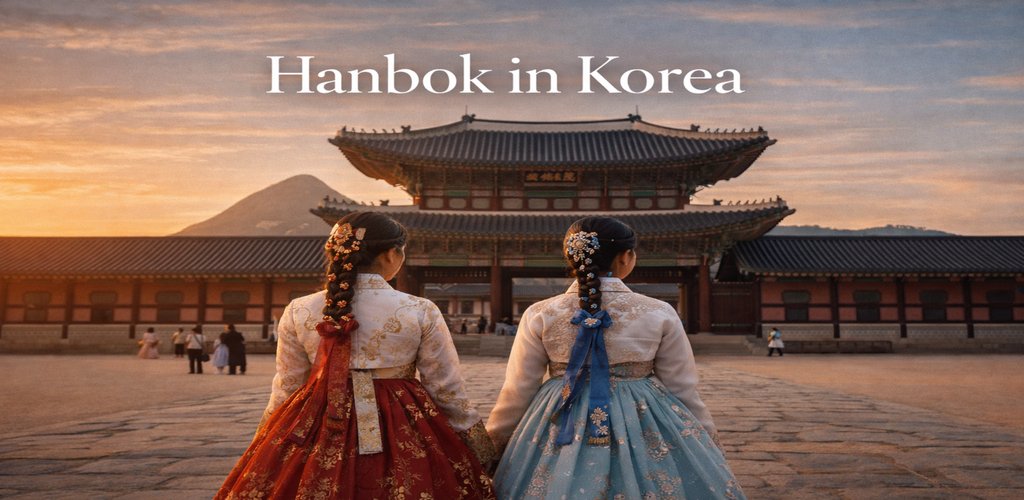
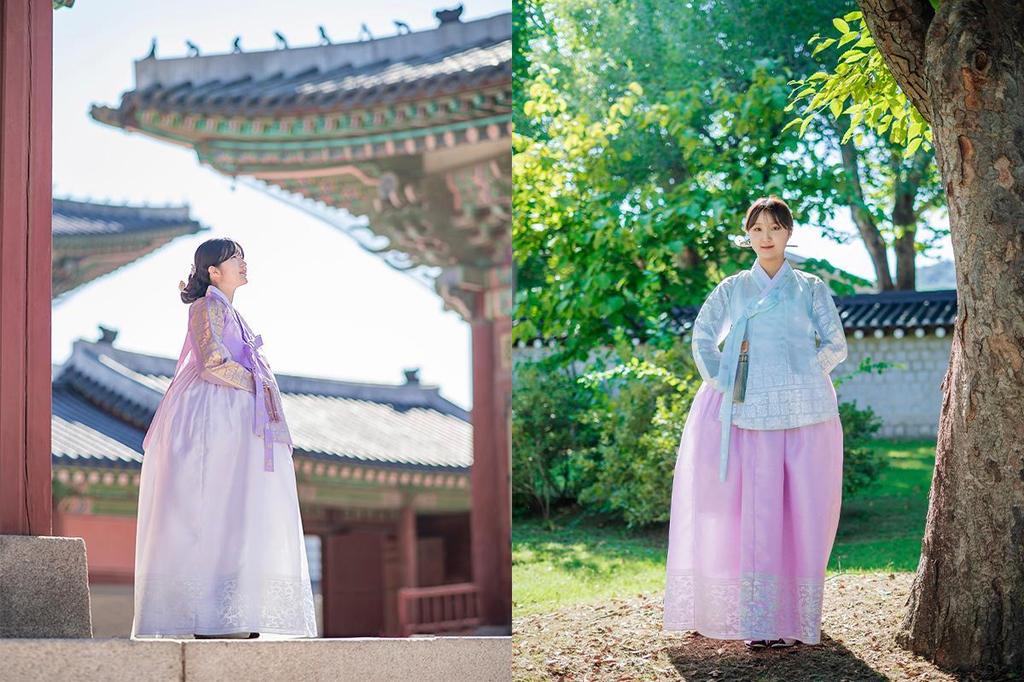
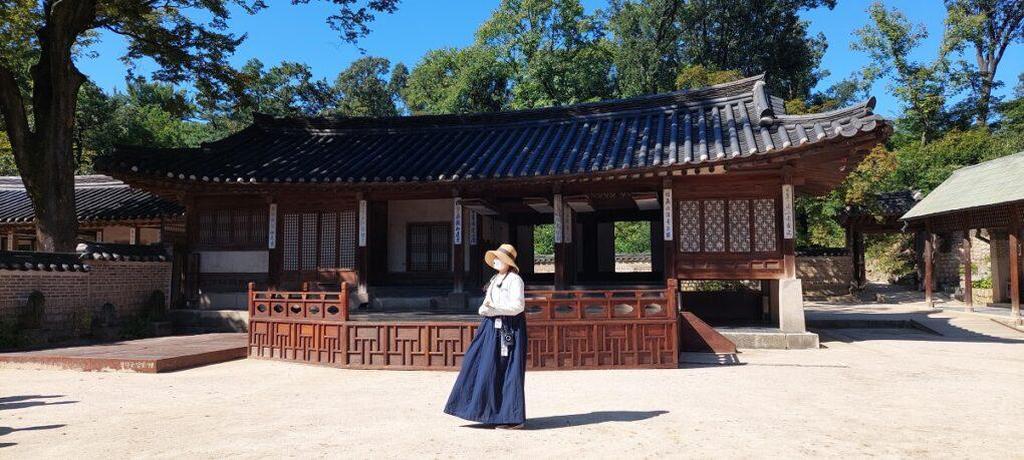
Two women wearing hanbok at Gyeongbokgung Palace in Seoul.
Wearing Tradition, Hanbok in Modern Seoul
Where to Wear, Rent, and Experience Traditional Korean Dress
In South Korea, tradition is not something you observe from a distance—it is something you can step into.
Few experiences capture this more vividly than wearing a hanbok, the traditional Korean dress that has evolved from royal courts into a modern cultural expression. For travelers exploring a Korea cultural experience, hanbok offers something rare: the ability to become part of the setting, not just witness it.
What Makes Hanbok Unique
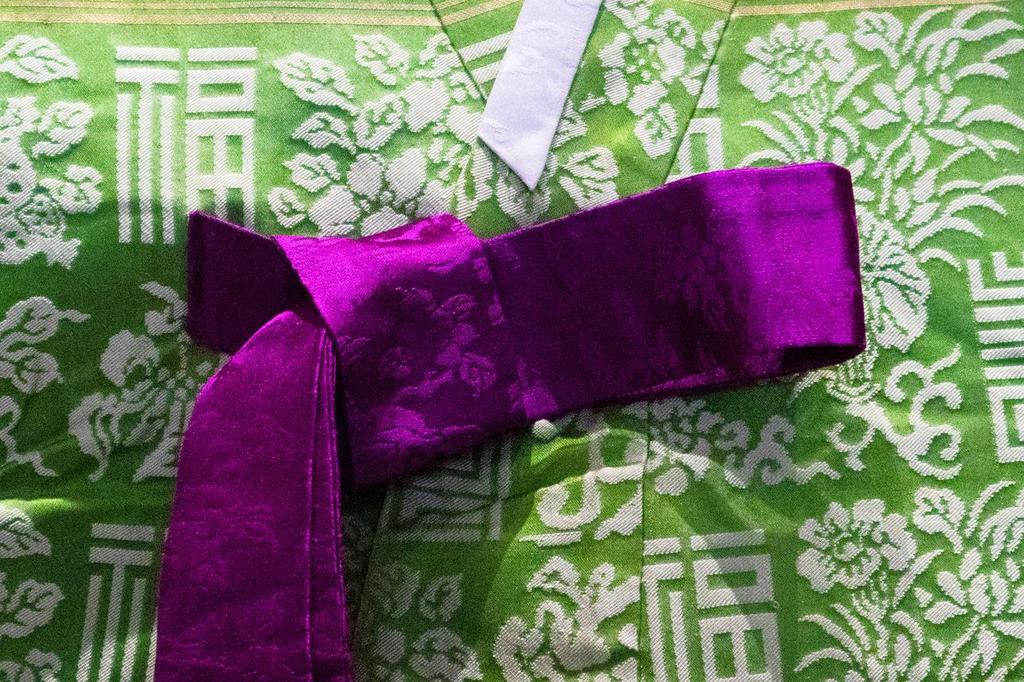
Defined by its clean lines and fluid silhouette, hanbok is designed to move with the body. The structure is simple—yet intentional. Soft curves replace rigid tailoring, and vibrant colors reflect both season and symbolism.
Unlike many traditional garments, hanbok feels surprisingly contemporary. Its minimalism aligns naturally with modern aesthetics, which is why it continues to appear in Korean fashion, photography, and design.
For visitors searching what is hanbok or traditional Korean clothing, the answer is not just historical—it is stylistic, evolving, and still relevant.
Where to Wear Hanbok in Seoul
The experience of wearing hanbok is shaped as much by place as by the garment itself.
At Gyeongbokgung Palace, flowing skirts and structured jackets echo the architecture around you, creating a sense of visual continuity.
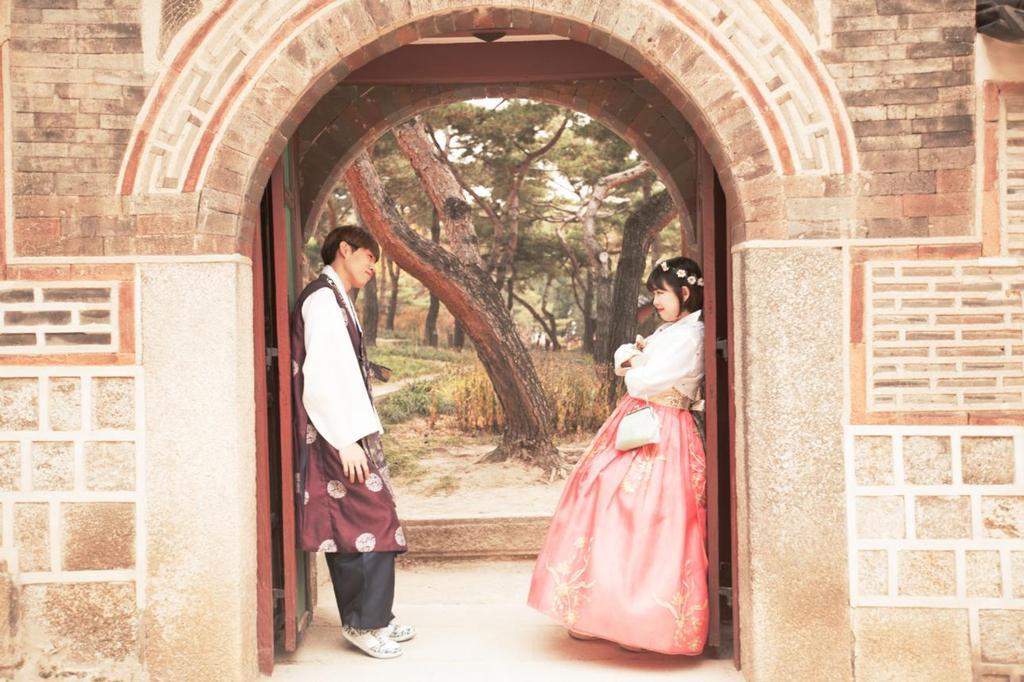
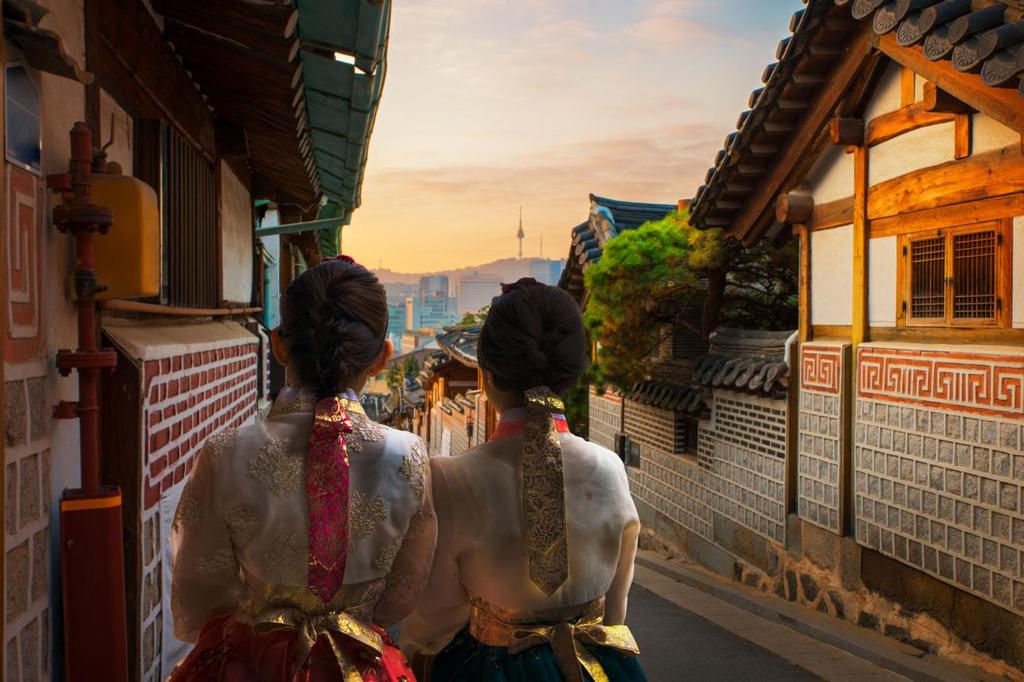
Nearby, Bukchon Hanok Village offers a quieter, more intimate setting—narrow alleys, wooden doors, and filtered light that feels almost cinematic.
For those building a Seoul itinerary, these locations are not just photo spots—they are immersive environments.
How to Rent Hanbok in Seoul
Renting hanbok in Seoul is simple, accessible, and surprisingly refined.
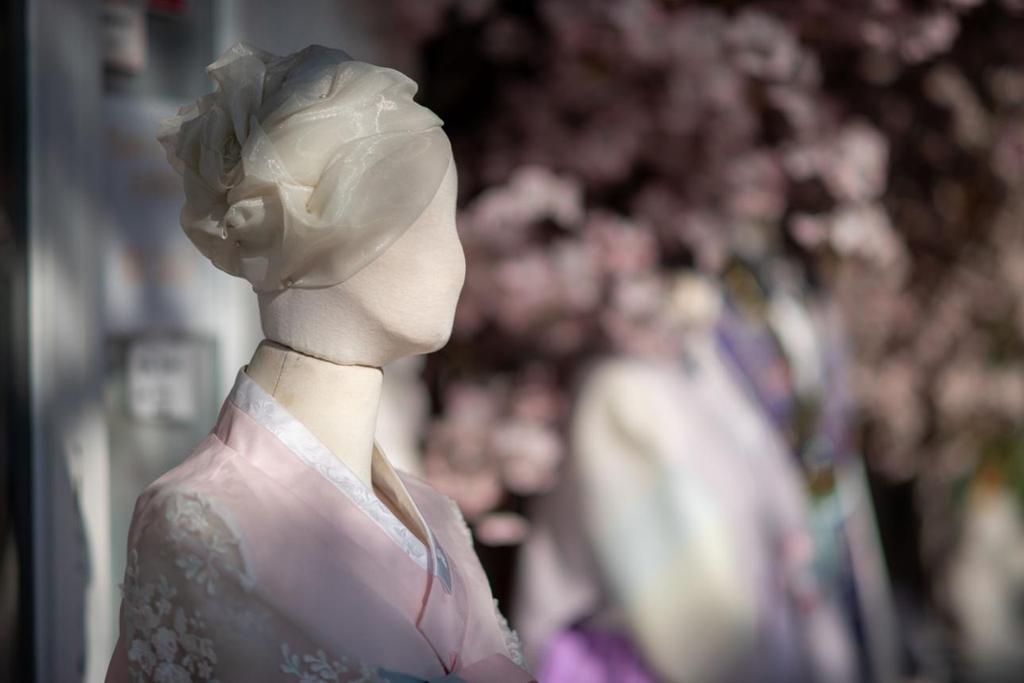
In areas around major palaces, particularly near Myeongdong and Bukchon, numerous rental boutiques offer curated selections—from traditional designs to modern reinterpretations.
Most experiences include:
- Full outfit rental (jeogori and chima or baji)
- Hair styling and accessories
- Flexible rental times (2–4 hours or full day)
For travelers searching hanbok rental Seoul, the process is seamless—and often more affordable than expected.

A Modern Cultural Experience
What makes hanbok particularly compelling today is how naturally it fits into modern Korea.
It is no longer confined to ceremonies or museums. Instead, it appears in editorial shoots, contemporary fashion, and even casual travel experiences.
For visitors, this creates a unique overlap: a historical garment that feels entirely current. Whether worn for a morning at the palace or an evening walk through the city, hanbok transforms the way Korea is experienced—visually, emotionally, and culturally.
Why Hanbok Matters Now
Hanbok is more than tradition—it is participation.
In a destination where so much can be observed, this is one of the few experiences that invites you to step inside the narrative. It slows your movement, shifts your perspective, and connects you—however briefly—to a different rhythm of life.
And in doing so, it becomes not just something you remember,
but something you felt, firsthand.
🎬 Hanbok in K-Dramas
- Love in the Moonlight (2016, 구르미 그린 달빛) Starring: Park Bo-gum, Kim Yoo-jungColorful hanbok styles & palace romance scenes
- Kingdom (2019, 킹덤) Starring: Ju Ji-hoon, Bae DoonaTraditional Joseon attire with darker royal aesthetics
- Mr. Sunshine (2018, 미스터 션샤인) Starring: Kim Tae-ri, Lee Byung-hunElegant hanbok blended with modern influences
🎥 Hanbok in Korean Films
- Masquerade (2012, 광해) Starring: Lee Byung-hunRoyal court hanbok & ceremonial attire
- The Royal Tailor (2014, 상의원) Starring: Han Suk-kyu, Park Shin-hyeHanbok craftsmanship, design & royal fashion
- The King and the Clown (2005, 왕의 남자) Starring: Lee Joon-giTraditional performance costumes & court dress
🛏️ Hotels near Gyeongbokgung Palace
Choose your preferred booking partner.





You May Also Like
- Kdrama Hotels: Stay Where the Stories Were Filmed (Part 1)
- The Korean Bread Trail
- Tteok Trail: Where Korea Pauses
- The Ceramic Trail of Korea
- Korean Coffee Beyond the Coffee Belt
- Traditional Korean Culture: A Timeless Experience in Modern Korea
More to Explore on KHOREA
Discover more stories across Korea — choose a category that inspires you.