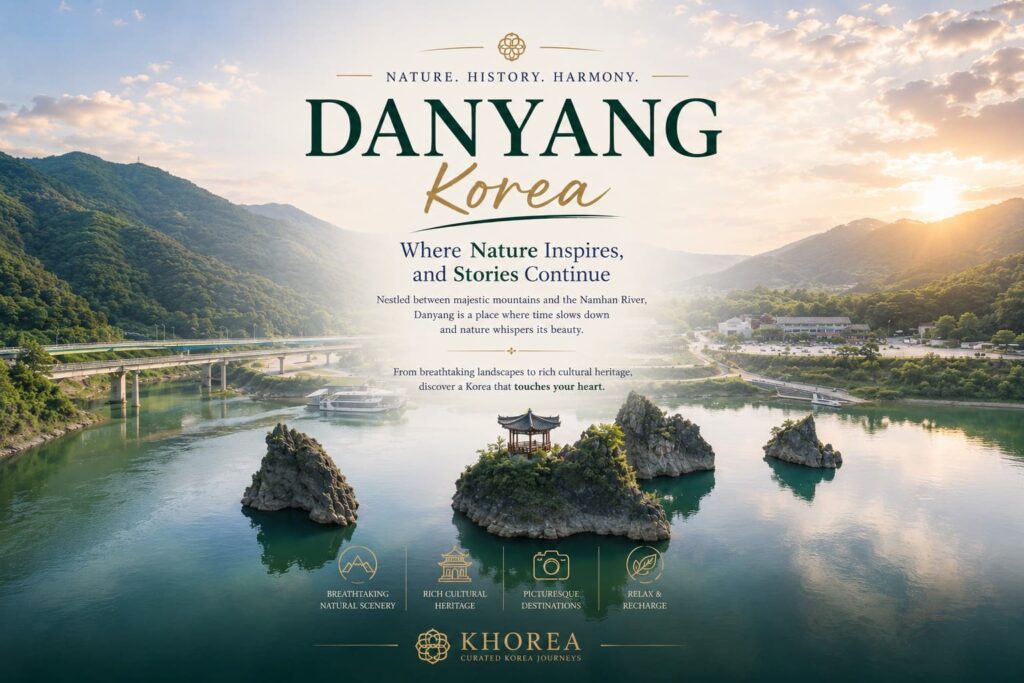
Danyang - Hidden Riverside of Korea
Danyang — Korea’s Hidden Riverside Mountain Escape
Not luxury in the conventional sense,
but the rare luxury of silence, mountains, and human warmth.
In Korea, nature is not merely scenery — it is something deeply woven into everyday life.
The Korea most travelers never expect.
There are places in Korea that shine brightly through neon lights and crowded streets.
And then there are places like Danyang — where the mountains breathe quietly beside the river, and time seems to move more slowly.
Located in the heart of central Korea, Danyang County is a destination many international travelers have never heard of. Yet for countless Koreans, it has long been one of the country’s most beloved countryside escapes.
Not because it is luxurious in the conventional sense.
But because it offers something increasingly rare in modern travel:
Silence. Misty rivers. Mountain temples. Slow mornings. And landscapes that still feel deeply connected to old Korea.
Where Mountains Meet the River
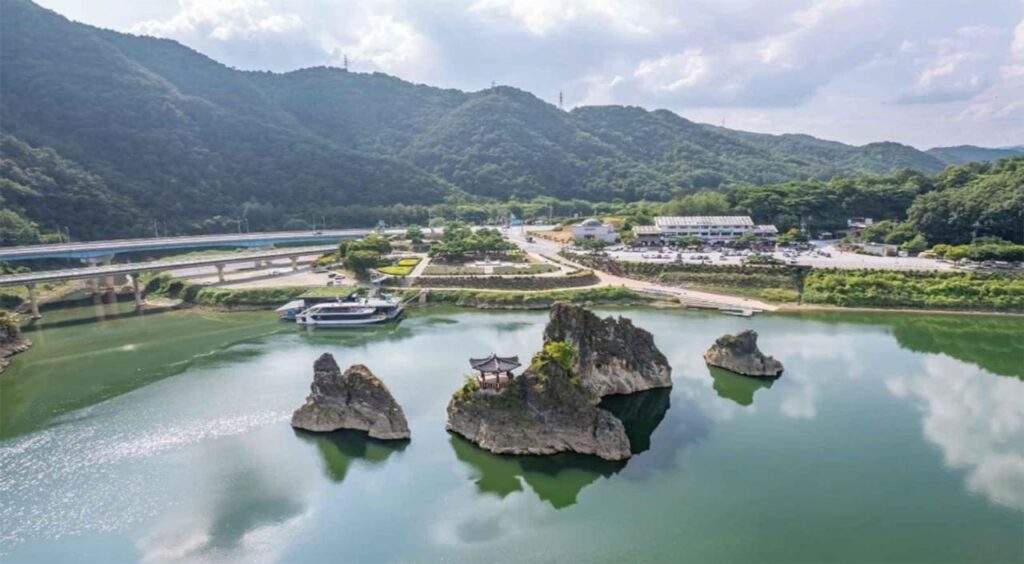
What makes Danyang unforgettable is the way nature shapes the entire region.
The calm flow of the Namhan River curves between dramatic cliffs and forested mountains, creating scenery that often feels closer to a traditional Korean ink painting than reality.
At sunrise, soft fog drifts above the water.
In autumn, the mountains burn with red and gold foliage.
Even in winter, the quiet stillness of the river carries a distinct beauty.
This is not a destination designed around speed.
Danyang invites travelers to pause.
Dodamsambong — A Landscape That Defines Korea
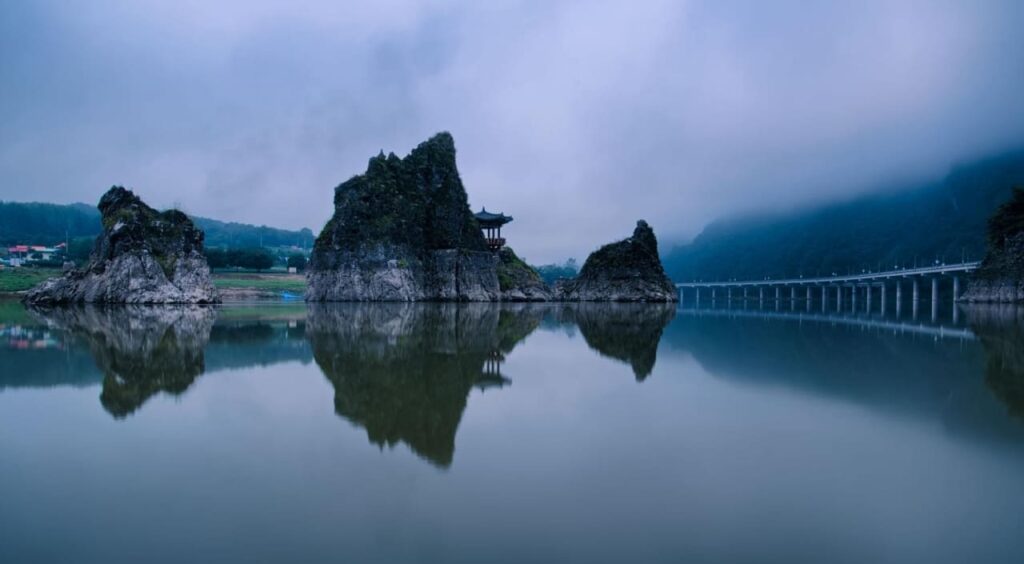
Among Danyang’s most iconic sights is Dodamsambong Peaks.
Three rocky peaks rise quietly from the river, creating one of the most recognizable natural landscapes in Korea.
For centuries, scholars and artists admired this scenery for its balance and serenity. Even today, many Korean travelers consider it one of the country’s most poetic views.
The atmosphere changes beautifully with the seasons:
Spring mornings wrapped in fog
Deep green summer reflections
Fiery autumn mountains
Snow-covered winter silence
Rather than feeling grand or overwhelming, Dodamsambong feels contemplative — a place to simply stand still and absorb the scenery.
Skywalks, Cliffs, and Open Air
Danyang also reveals a more adventurous side of Korea.
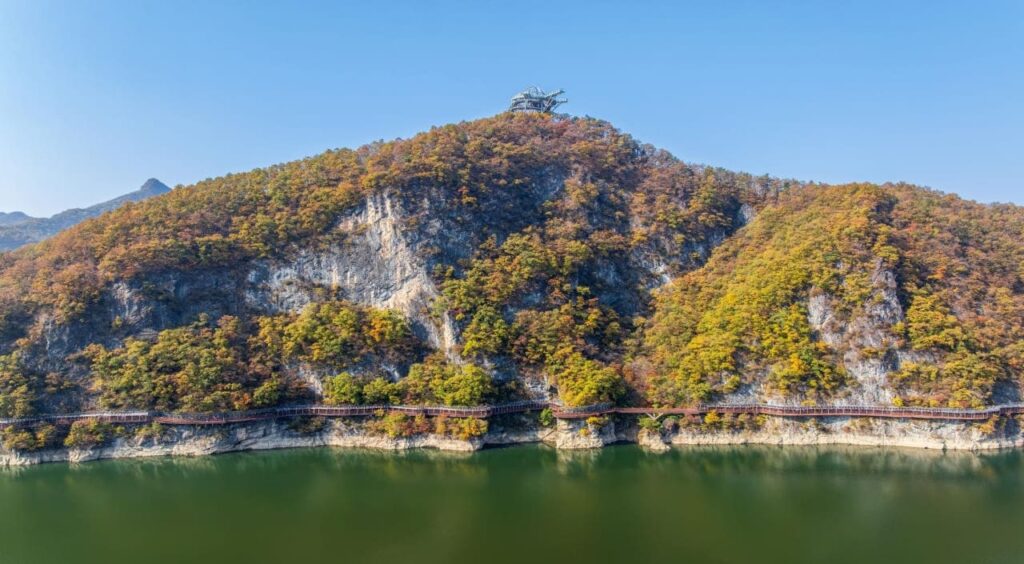
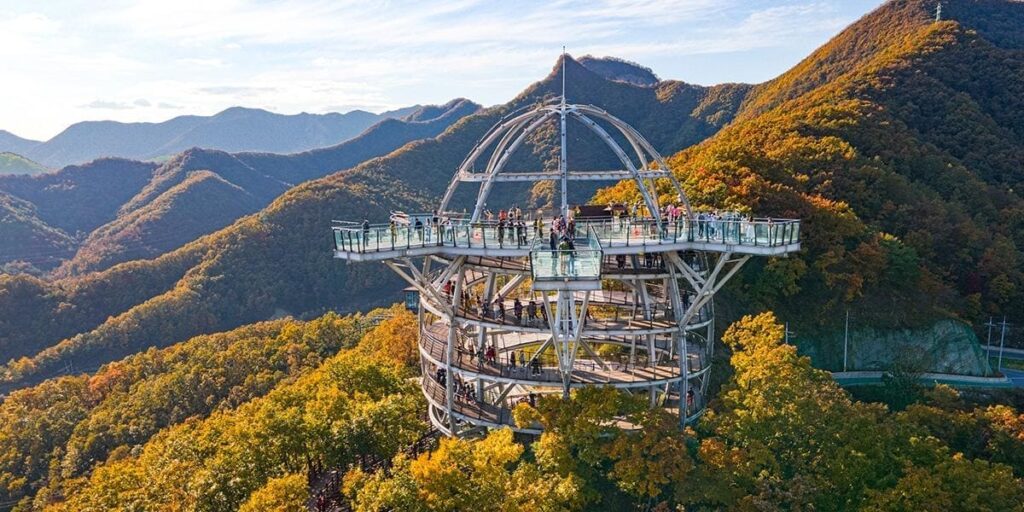
Mancheonha Skywalk offers panoramic views above the river valley, with glass walkways extending dramatically over the cliffs.
The contrast is striking:
Ancient mountains below, modern engineering above.
For younger Korean travelers, Danyang has also become famous for:
Paragliding over the mountains
Riverside cycling roads
Scenic driving routes
Suspension bridges and observatories
Yet even these attractions never fully overpower the calm atmosphere of the region.
Guinsa Temple and the Spiritual Mountains of Korea
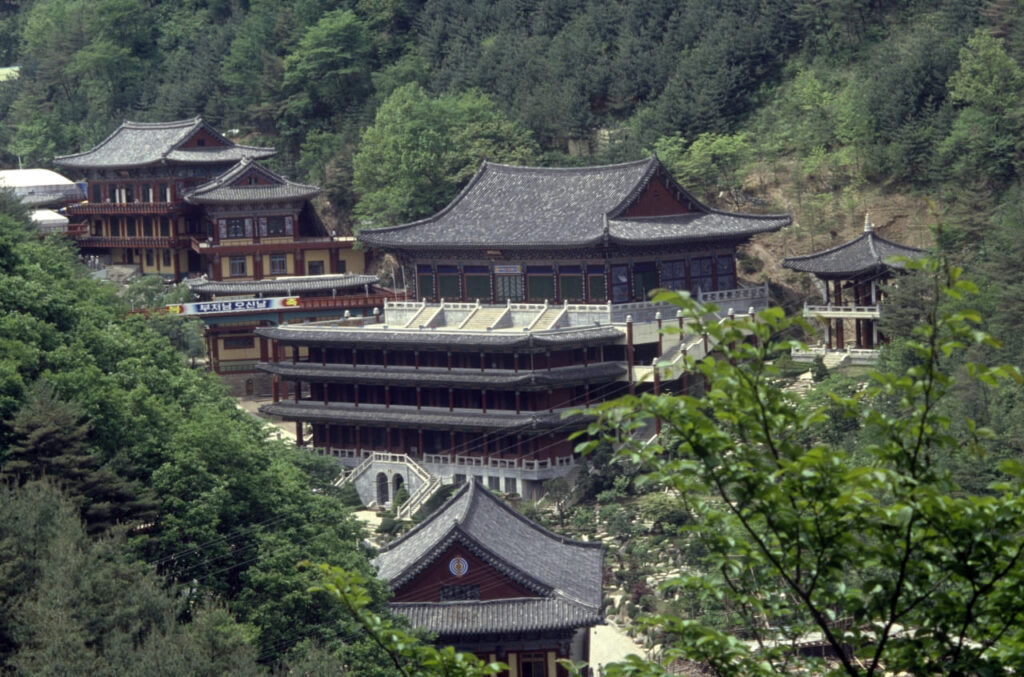
To understand Danyang more deeply, travelers should also experience Guinsa Temple.
Unlike many temples built quietly on isolated hillsides, Guinsa rises dramatically through a mountain valley, almost forming an entire temple city within the forest.
The atmosphere feels distinctly Korean:
Mountain mist drifting between temple roofs
The sound of distant bells
Long stairways climbing into the valley
Monks and visitors moving quietly through the complex
For many Korean families, places like Guinsa are not simply tourist attractions. They are spaces connected to reflection, memory, and spiritual tradition.
Even travelers unfamiliar with Korean Buddhism often describe the experience as unexpectedly moving.
The Charm of Slow Korean Travel
One of Danyang’s greatest strengths is something difficult to manufacture:
Authenticity.
The local markets remain deeply local.
Small restaurants still serve regional dishes shaped by the mountains and river.
Guesthouses are often run by people who genuinely care about the region rather than mass tourism.
This is the kind of Korea many travelers never encounter in Seoul.
A quieter Korea.
A slower Korea.
A deeply human Korea.
And perhaps that is why so many domestic travelers continue returning to Danyang year after year.
A Gateway to Central Korea
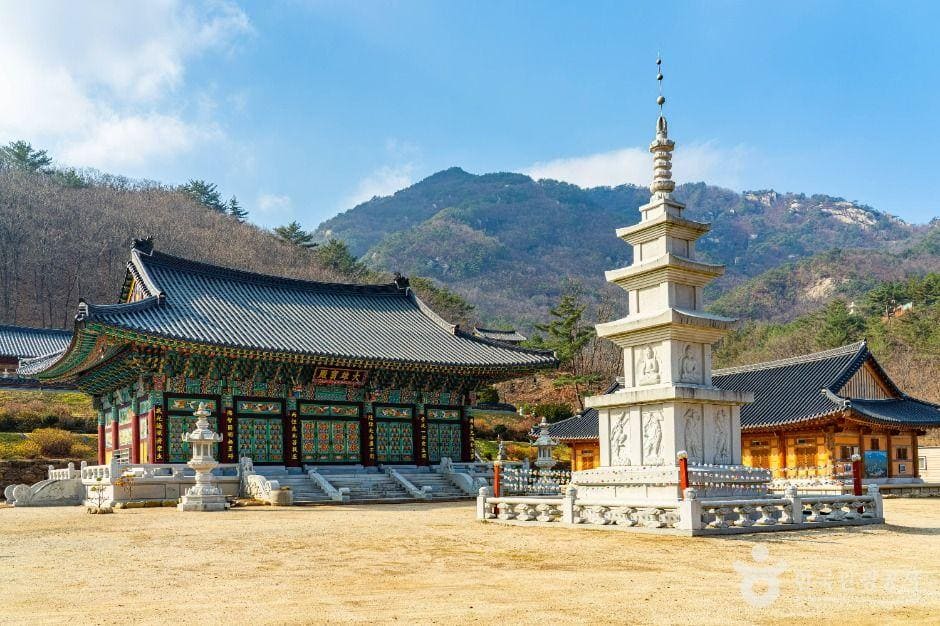
For travelers wishing to explore deeper into Korea’s countryside, nearby Jecheon also offers beautiful lakes, mountain temples, and wellness-focused retreats connected to Korea’s traditional healing culture.
Together, Danyang and Jecheon reveal another side of the country — one shaped not by speed, but by nature, reflection, and balance.
Final Thoughts
Danyang is not a destination that competes for attention loudly.
Instead, it stays with travelers quietly.
In the sound of the river at dusk.
In the sight of mountain fog at sunrise.
In the stillness of a temple deep within the valley.
Not merely a place to visit,
but a place to breathe.
For travelers exploring deeper into central Korea, nearby Jecheon offers lakes, mountain temples, and slower healing retreats.
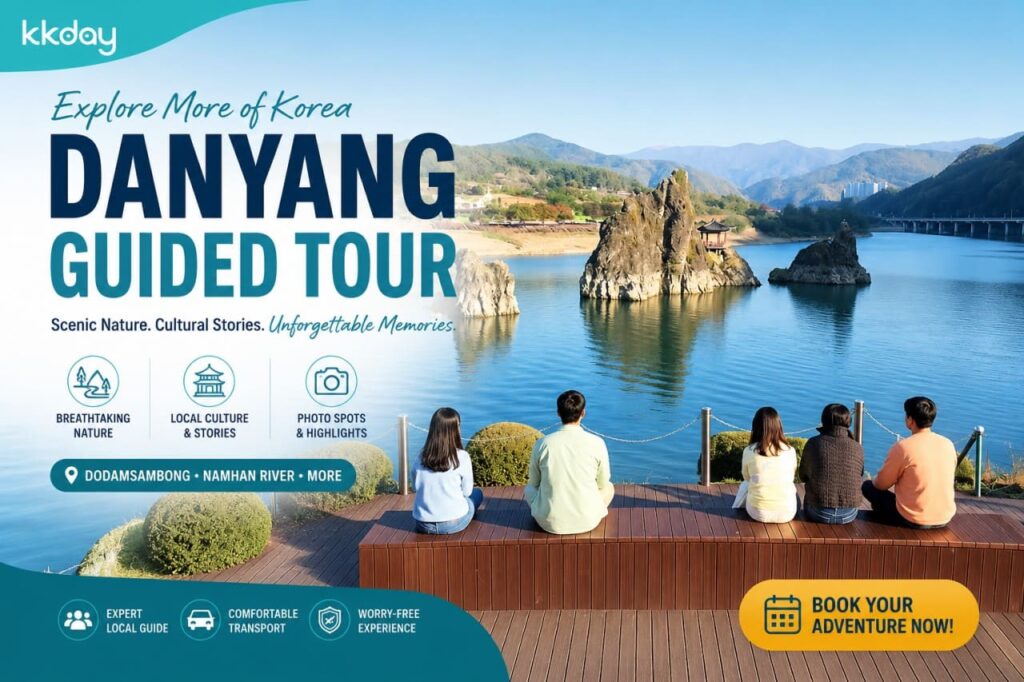
Book Your Danyang Guided Tour – kkday
You May Also Like
- Danyang Jungle Guesthouse : A Second Home in Korea
- Korea Travel : Self-guided vs Curated
- Is Korea Expensive? Seoul Travel Cost Breakdown
- Korea Travel Guide 2026 – Complete Itinerary, Cities & Travel Tips
🌿 Korea’s Natural Beauty in Film & Drama
🎬 Korea’s Landscapes in Film & Drama
-
Little Forest (2018, 리틀 포레스트)
Starring:
Kim Tae-ri
Seasonal countryside life, quiet meals & the healing rhythm of rural Korea -
Hometown Cha-Cha-Cha (2021, 갯마을 차차차)
Starring:
Kim Seon-ho,
Shin Min-a
Seaside villages, ocean sunsets & the warmth of coastal Korea -
Our Blues (2022, 우리들의 블루스)
Starring:
Lee Byung-hun,
Shin Min-a
Jeju Island’s windswept coastlines, markets & everyday island life
🌿 Landscapes That Shape Korea
- Seoraksan National Park Granite peaks, autumn forests & Korea’s most iconic mountain scenery
- Jeju Island Volcanic coastlines, camellia forests & Korea’s island of slow living
- Suncheon Bay Reed fields, tidal wetlands & peaceful southern landscapes
More to Explore on KHOREA.COM
Discover more stories across Korea — choose a category that inspires you.