Bonghwa Apples, Without Advertising
In August 2026, a Bonghwa county officer spent KRW 329,000 of his own money to place a 15-second Korean-language advertisement on a digital billboard in New York’s Times Square. The message was deliberately simple: “Bonghwa apples are delicious, but we don’t advertise.” The goal was not to sell apples in America, but to make people in Korea curious about Bonghwa.

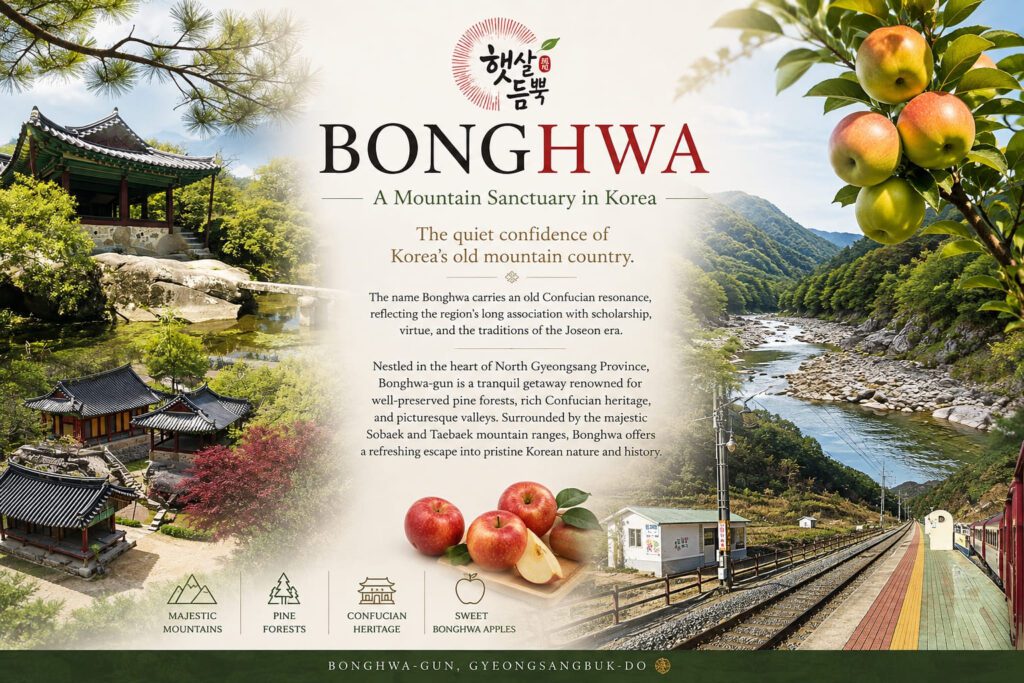
The quiet confidence of Korea’s old mountain country.
The name Bonghwa carries an old Confucian resonance, reflecting the region’s long association with scholarship, virtue, and the traditions of the Joseon era.
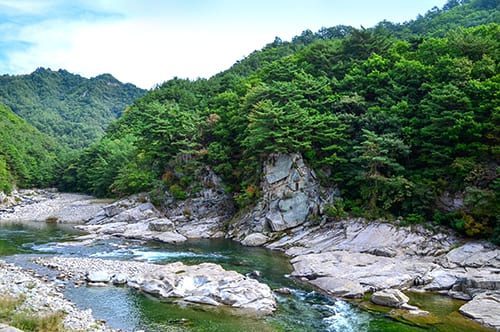
Nestled in the heart of North Gyeongsang Province, Bonghwa-gun is a tranquil getaway renowned for well-preserved pine forests, rich Confucian heritage, and picturesque valleys. Surrounded by the majestic Sobaek and Taebaek mountain ranges, Bonghwa offers a refreshing escape into pristine Korean nature and history.

History & Cultural Heritage
Bonghwa’s identity was shaped not only by its mountains, but also by the scholars who sought quiet places for study and retreat. During the Joseon Dynasty, it served as a vital intellectual hub, home to distinguished Confucian scholars who built private academies (seowon) and retreats along its pristine rivers.
The region played an important historical role in preserving traditional architecture, scholarly traditions. Today, Bonghwa retains this historic charm, seamlessly blending ancient heritage with its signature natural landscapes.
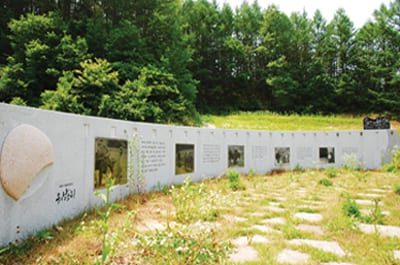

Quiet Legacies: Joseon-Era Figures of Bonghwa
Bonghwa, a land shaped by deep valleys and ancient pine trees, has long been a sanctuary for minds that valued integrity over ambition. Here are the stories of individuals who left deep footprints in Korean history, defined by their quiet resolve and commitment to their ideals.
- Sambong Jeong Do-jeon (1342–1398)—The Architect of a New Era
The mastermind behind the founding of the Joseon Dynasty.Rooted in the Bonghwa Jeong clan, he designed the philosophical and legal foundations of Seoul. A visionary scholar who believed that a nation’s true strength lies in the well-being of its people. - Seong I-seong (1595–1664)—The Real-Life Inspiration Behind a Legend
A revered government official known for his absolute honesty and humility.He served as a secret royal inspector, traveling the country to protect commoners from corruption.Historical records reveal he was the actual model for Lee Mong-ryong, the romantic hero of Korea’s classic love story, The Tale of Chunhyang. - Lee Su-hyeong (1435–1528)—A Life of Quiet Defiance
A loyal scholar who chose exile over compromised values when the young King Danjong was deposed.Turning his back on political glory, he retreated to the secluded forests of Bonghwa to live a simple, honorable life.His legacy remains a symbol of unyielding fidelity and peace found in nature. - Hong Woo-jeong (1595–1654)—The Hermit Scholar
A prominent intellectual who chose a life of isolation after the Qing invasion of Joseon.He spent his remaining days in Bonghwa, dedicating himself to poetry, philosophy, and the rustic beauty of the countryside.Often called Sungjeong Cheosa, meaning a noble scholar who lived in harmony with the earth.


Top Tourist Attractions
- Baekdudaegan National Arboretum: A vast mountain arboretum dedicated to conserving Korea’s forest ecosystems, known for its Tiger Forest and extensive collection of alpine and native plants.
- Tiger Forest: Home to the Baekdusan tiger, the Korean tiger associated with the Amur tiger lineage, this special conservation area helps preserve one of Korea’s most enduring cultural symbols.
- Cheongryangsan Provincial Park: Famous for its dramatic rock peaks, historic temples like Cheongryangsa.

Film & Drama Locations
- Buncheon Railway Station & V-train: A fairytale-themed station in the Baekdudaegan mountains that transforms into a Santa Village year-round, serving as the gateway to scenic canyon train tours.
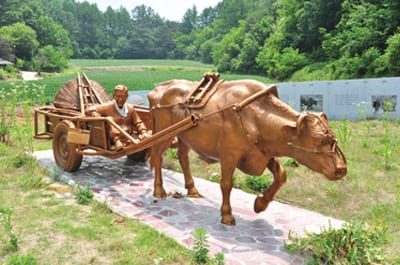
The location of Miracle: Letters to the President (2021)
113-2 Buncheon-ri, Socheon-myeon, Bonghwa-gun
- Daksil Village (Cheongamjeong): A 500-year-old historic clan village surrounded by scenic streams, preserved traditional houses, and centuries-old Korean pine trees.
The location of Jeong Do-jeon (2014), Dong Yi (2010), Painter of the Wind (2008), Untold Scandal (2003).
931 Yugok-ri, Bonghwa-eup, Bonghwa-gun
- The location of Old Partner (2008):
84-41 Sanjeong-gil, Sangun-myeon, Bonghwa-gun



Local Specialties & Culinary Highlights
Bonghwa Apples Go Global: Bonghwa’s premium apples have even been showcased on a digital billboard in New York’s Times Square, bringing one of the region’s best-known agricultural products to an international audience.
| Dish / Specialty | Description |
|---|---|
| Bonghwa Premium Apples | Renowned for their crisp texture, high sugar content, and exceptional quality thanks to the high-altitude climate. |
| Pine-Mushroom Beef | Local hanwoo beef paired with Song-i mushrooms are among Bonghwa’s best-known specialties. |
| Sol-ip Dwaeji (Pine-Needle Charcoal-Grilled Pork Belly) | Pork belly is grilled over charcoal with pine needles, giving the meat a subtle, distinctive aroma. |
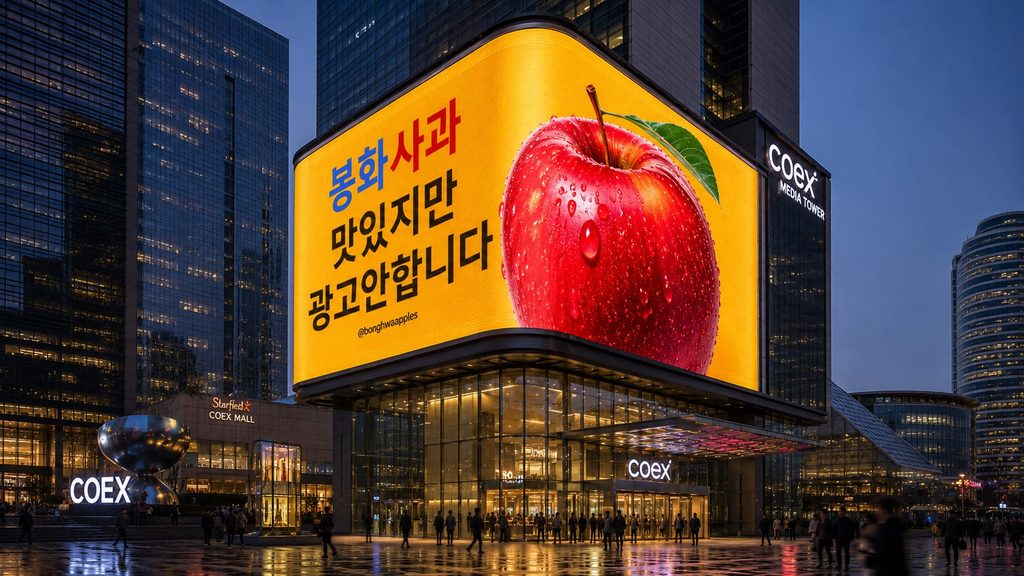
An AI-generated image by ChatGPT, created with a simple wish: that Bonghwa apples will one day be known around the world.
How to Get to Bonghwa from Seoul
Traveling from Seoul to Bonghwa by train is convenient and offers scenic views of the Korean countryside:
- Step 1 (KTX-Eum): Board the KTX at Cheongnyangni Station and ride to Yeongju Station(approx. 1 hour 35 minutes to 1 hour 50 minutes).
- Step 2 (Local Train): Transfer at Yeongju Station to a local train bound for Bonghwa or Buncheon. (approx. 20 to 40 minutes).


Perhaps there was something in the apples.
For centuries, Bonghwa has produced remarkable scholars and men of principle. One might almost wonder whether the region’s crisp, sun-ripened apples had something to do with it.



You May Also Like
- Andong – Where Korea Learned to Listen
- Healing Korea—Yeongju : prosperous town
- MunGyeong—The Soulful Mountain Pass of KOREA
- Gyeongju—The City Where Korea Remembers Itself
- Namwon – Memory of Emotion
- Myeongdong to Pohang & Gyeongju
More to Explore on KHOREA
Discover more stories across Korea — choose a category that inspires you.