
About Muju
Nestled in the heart of Korea’s central highlands, Muju-gun (무주군) is a serene destination renowned for its well-preserved natural landscapes, crisp mountain air, and rich ecological heritage. Surrounded by soaring peaks and pristine waters, Muju offers a perfect escape from urban life—whether you are chasing vibrant autumn foliage, winter snowscapes, or starry night skies.
Muju Gucheondong (무주 구천동): A famous 36-km-long valley in Deogyusan, Muju, which also lends its name to the surrounding area. One legend says that the name Gucheondong comes from “Gucheondun,” describing the valley as so deep and peaceful that nine thousand living Buddhas could appear. Another story traces the name to the Gu and Cheon families who once lived in the valley.

Why Visit Muju
- Pristine Eco-Tourism: Muju is renowned for its clean natural environment and wild firefly habitats, making it one of Korea’s best-known destinations for firefly ecotourism.
- All-Season Outdoor Adventures: From hiking up Deogyusan National Park to skiing down winter slopes, Muju caters to every outdoors enthusiast.
- The Global Hub of Taekwondo: Experience authentic Korean martial arts heritage at the state-of-the-art Taekwondowon.

Key Dimensions of Muju
1. Geography & Climate
Located in the eastern part of Jeonbuk State, Muju is a mountainous county dominated by the Deogyusan range and its surrounding valleys.
- Topography: Mountainous terrain with clear river valleys formed by the Namdaecheon Stream.
- Climate: Cool, continental highland climate. Winters bring generous snowfall (ideal for skiing), while autumns showcase vivid red and gold foliage across the mountains.

2. History & Cultural Heritage
- Naedori & Historic Passages: The famed Rajetongmun Gate (a natural rock gate) is traditionally associated with the historic boundary between Silla and Baekje.
- Traditional Living: Muju has preserved the tradition of building temporary Seopdari, traditional bridges made from logs and earth that were once built across rivers during the dry season.

3. Culture & Major Events
Muju is synonymous with environmental protection and martial arts culture.
- Muju Firefly Festival (September): Held in Muju’s firefly habitat, this popular festival offers nighttime programs and guided experiences centered on wild fireflies and the region’s dark skies.
- Taekwondowon: A world-class complex dedicated to Taekwondo, featuring live demonstrations, interactive exhibits, and training programs.

Top Tourist Attractions
| Attraction | Description & Highlights |
|---|---|
| Deogyusan National Park | A famous national park for snowy ridge hikes, colorful fall foliage, and the historic Anguksa Temple. |
| Muju Deogyusan Resort | A popular mountain resort offering winter skiing and year-round gondola rides to Hyangjeokbong Peak. |
| Bandiland (Firefly Land) | An eco-park featuring an insect museum, live firefly exhibits, and an astronomical observatory. |
| Meoru Wine Tunnel | A repurposed tunnel inside Jeoksang Mountain where visitors can sample and purchase local wild grape (Meoru) wine. |

Local Gastronomy & Food
Muju’s highland geography and clean water systems nurture distinct regional flavors:
- Eotang Guksu (Fish Soup Noodles, 어탕 국수): A savory, spicy noodle soup traditionally made by simmering freshwater fish into a rich broth and serving it with noodles.
- Wild Vegetable Rice Bowls (Sanchae Bibimbap, 산채 비빔밥): Prepared with fresh, fragrant mountain herbs harvested directly from Deogyusan National Park.
- Wild Mountain Grape Wine (Meoruju, 머루주): A sweet, distinctive regional wine made from Meoru, Korea’s wild mountain grape.

How to Get There from Seoul
Muju is easily accessible from Seoul via express bus or high-speed train (KTX) combined with local transport.
By Express Bus – Direct & Easiest
Seoul Nambu Bus Terminal ──(Direct Express Bus / ~2.5 to 3 hrs)──> Muju Intercity Bus Terminal
By KTX + Bus
Seoul Station / Yongsan Station ──(KTX / ~1 hr)──> Daejeon Station ──(Intercity Bus / ~1 hr)──> Muju
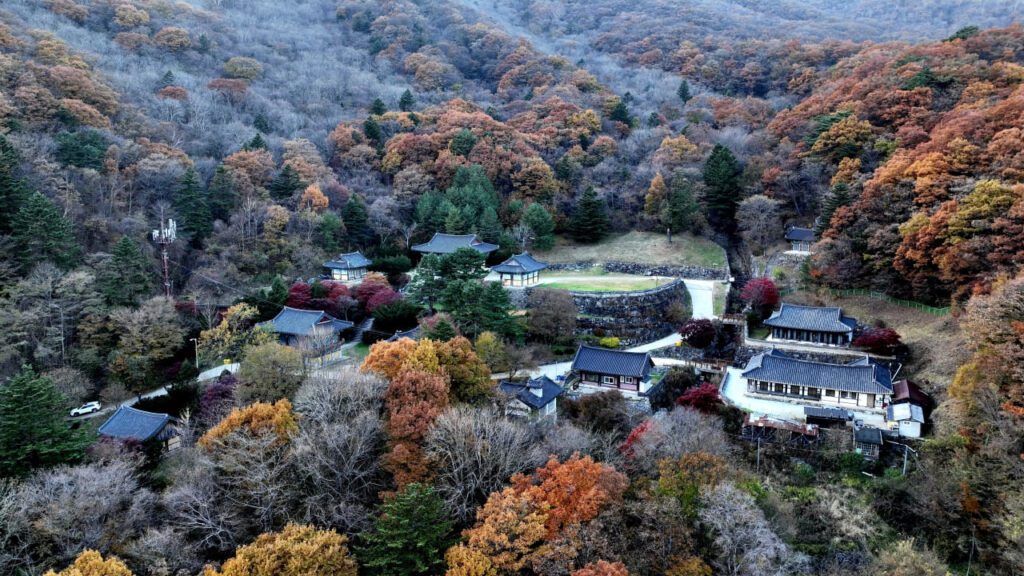
Where forests grow deep,
stories become quieter.
🎬 K-Dramas & Movies Connected with Muju
- Summer Scent (2003, 여름향기) Starring: Song Seung-heon, Son Ye-jin
Parts of the drama were filmed around Muju Deogyusan Resort, where forests and mountain scenery perfectly matched its gentle romance. - Bridal Mask (2012, 각시탈) Starring: Joo Won, Jin Se-yeon
Selected scenes were filmed at Muju Deogyusan Resort, whose period-friendly architecture has appeared in several historical productions. - Gangnam Blues (2015, 강남 1970) Starring: Lee Min-ho, Kim Rae-won
Interior scenes were filmed at Muju Deogyusan Resort, adding another cinematic connection to the region. - Escape from Mogadishu (2021, 모가디슈) Starring: Kim Yoon-seok, Zo In-sung
While not filmed in Muju, its breathtaking mountain landscapes and adventurous spirit pair beautifully with a journey through Deogyusan National Park. - Exhuma (2024, 파묘) Starring: Choi Min-sik, Kim Go-eun
Several memorable scenes were filmed in Muju, including locations near Boguksa Temple and the dramatic mountain landscapes of the county.
Hotels in Muju
Stay within walking distance of Eco-Haven.



You May Also Like
- Andong Maskdance Festival 2026
- Jeongseon—Korea’s Autumn Sanctuary
- Bonghwa: A Mountain Sanctuary in Korea
- MunGyeong—The Soulful Mountain Pass of KOREA
- Korea in Autumn: A Curated Travel Guide 2026
- Kdrama Hotels: Stay Where the Stories Were Filmed (Part 3)
- 2027 FISU Universiade—When the World Comes to Korea
More to Explore on KHOREA
Discover more stories across Korea — choose a category that inspires you.