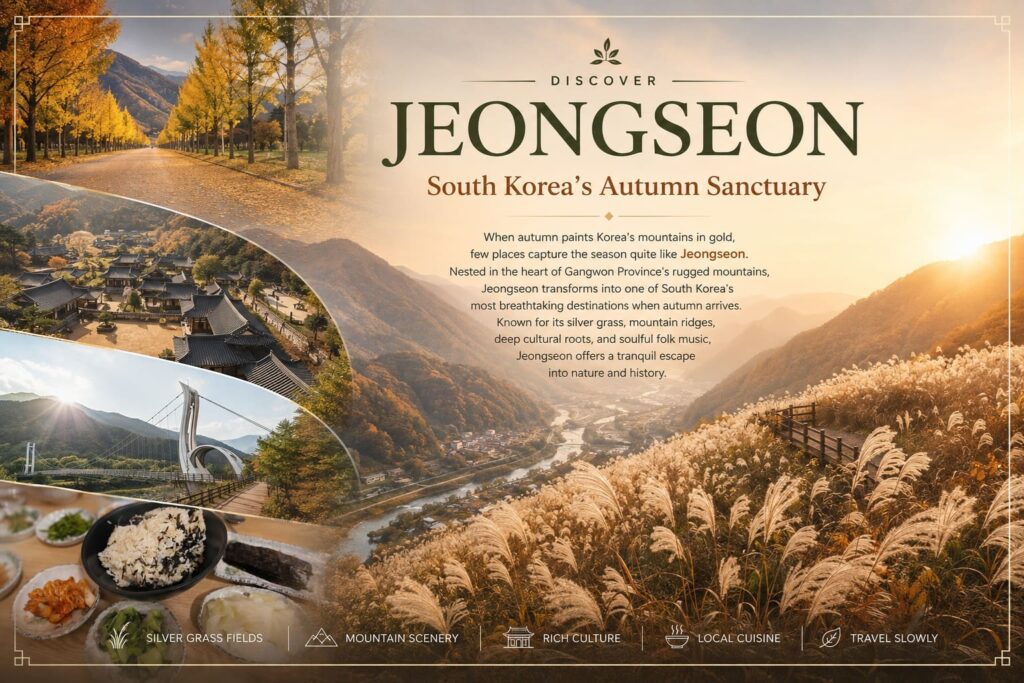
Jeongseon: Korea’s Mountain Sanctuary of Silver Grass and Arirang
Beyond its mountains and folk traditions, Jeongseon (정선) also preserves one of Korea’s most remarkable stories of industrial transformation.
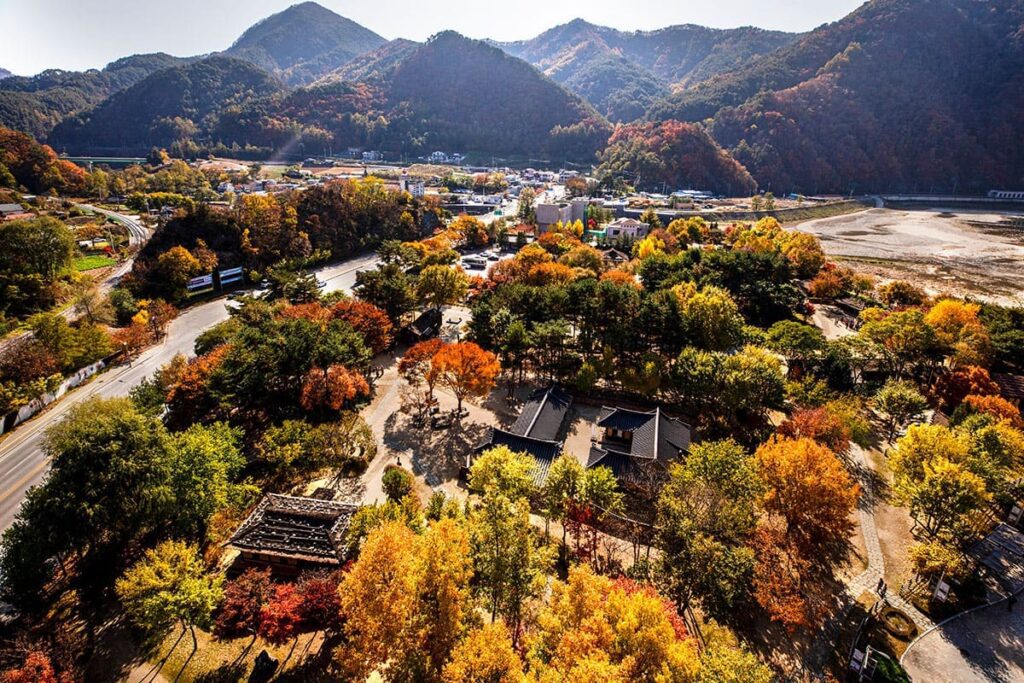
From Coal Mine to Cultural Canvas: Samtan Art Mine
Jeongseon was once the beating heart of South Korea’s coal mining industry. Throughout the 1960s to 1980s, the miners of Samcheok Coal Mine worked deep beneath the earth, fueling the nation’s rapid economic rise. When the mine permanently closed its shaft in 2001, its story didn’t end—it transformed. Through the vision of passionate artists, this historic industrial site was reborn into Samtan Art Mine, a one-of-a-kind cultural and artistic sanctuary.
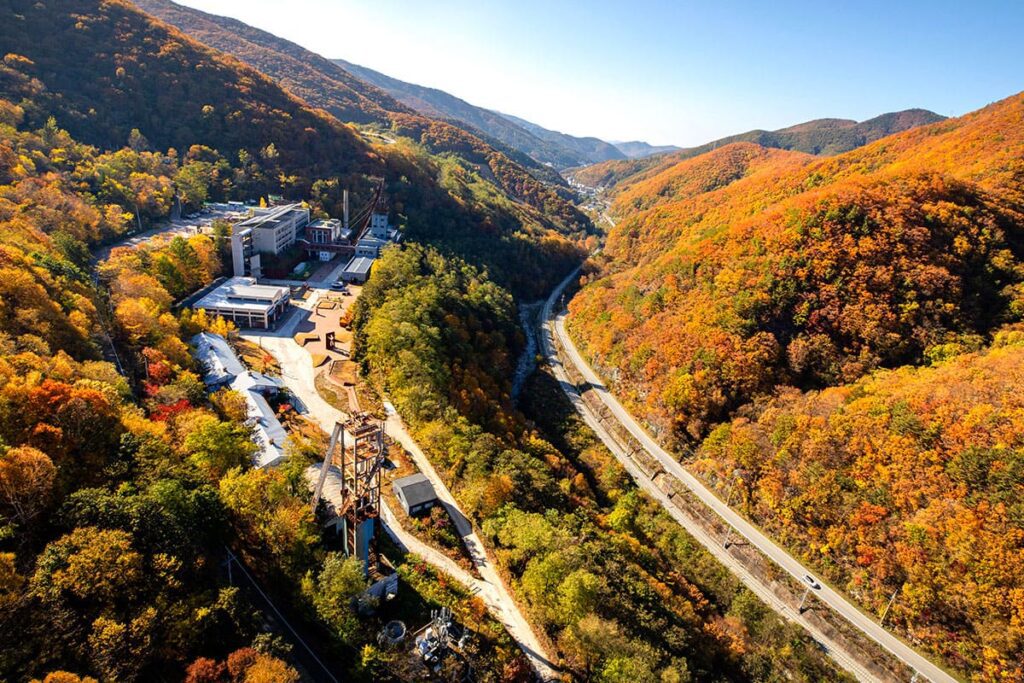
Highlights & Artistic Soul
Where History Meets Art: Stepping into Samtan Art Mine feels like stepping into a living museum. The raw, untouched spaces once used by miners—the shower rooms, wash facilities, machinery chambers, and underground rail tunnels—have been thoughtfully preserved and infused with contemporary artworks, sculptures, and vintage collections. The result is a hauntingly beautiful, industrial-chic atmosphere where history breathes through every gallery.
Cinematic Backdrop: Fans of Korean drama will immediately recognize its cinematic charm. Samtan Art Mine served as a primary filming location for the smash-hit series Descendants of the Sun, making it a favorite pilgrimage spot for international travelers.
At the crossroads of Korea’s modern industrial legacy and creative arts, Samtan Art Mine offers a deeply emotional journey—honoring the sweat and memory of the past while inspiring the imagination of today.
Why Visit Jeongseon in Autumn?
Autumn is undeniably Jeongseon’s peak season. Between late September and early November, the region’s landscape changes dramatically:
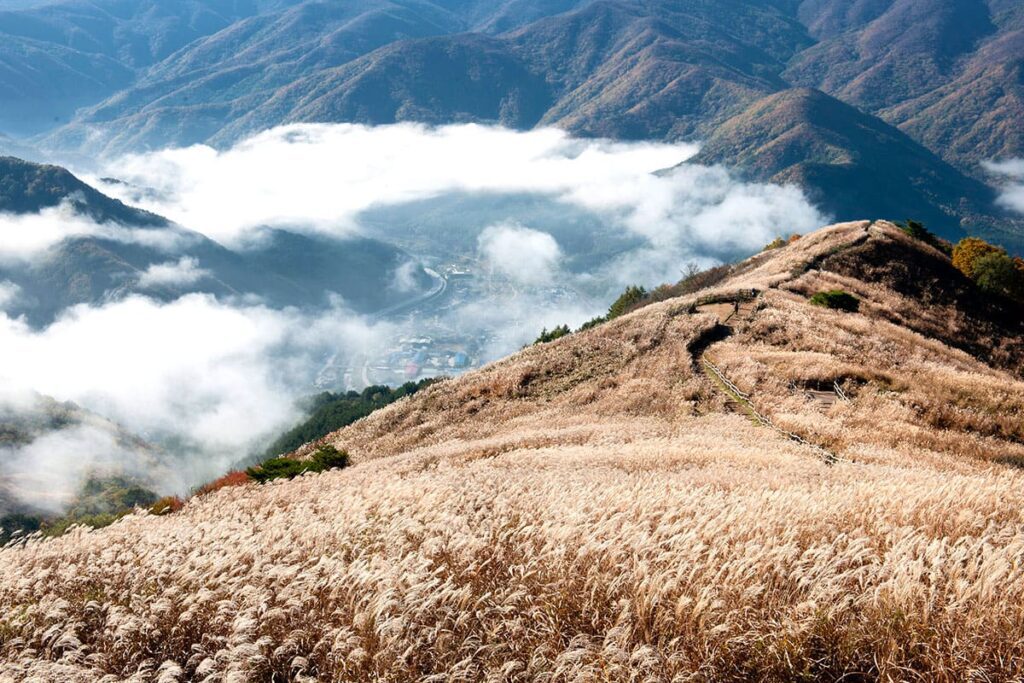
- Shimmering Silver Grass (Eoksae, 억새): Mindungsan Mountain becomes a rolling sea of waist-high, shimmering silver grass that glows gold in the autumn sunlight.
- Cultural Celebrations: Autumn hosts the annual Jeongseon Arirang Festival (typically late September/early October), bringing Korea’s oldest folk music tradition to life with live performances, parades, and street food.
- Vibrant Foliage: The steep valleys surrounding the Joyanggang and Donggang Rivers feature crimson, amber, and gold foliage against dramatic limestone cliffs.
- Pleasant Weather: Cool, crisp mountain breezes and clear blue skies provide perfect conditions for outdoor activities like rail-biking, trekking, and exploring traditional markets.
Getting to Jeongseon from Seoul: Transportation Guide
While Jeongseon is tucked deep in the mountains, reaching it from Seoul is straightforward once you know your options.
Transportation Note: There is no direct KTX bullet train line running straight into Jeongseon Town Center. However, you can easily combine high-speed rail with local transfers or take a direct intercity bus.
Option 1: Direct Express Bus (Easiest & Direct)
- Departure: Dong Seoul Bus Terminal (Gangbyeon Station) or Seoul Express Bus Terminal.
- Arrival: Jeongseon Bus Terminal.
- Duration: Approximately 2.5 to 3 hours.
- Why Choose This: Direct, affordable, and requires no transfers.
Option 2: KTX + Bus / Taxi Transfer (Fastest Rail Option)
- Route: Take the KTX-Eum (Gyeonggang Line) from Seoul Station or Cheongnyangni Station to Pyeongchang Station or Jinbu Station (approx. 1 hour 20 minutes).
- Transfer: From Jinbu or Pyeongchang, take a local intercity bus or taxi into Jeongseon Town (approx. 30–40 minutes).
- Why Choose This: Maximizes high-speed rail comfort for the majority of the journey.
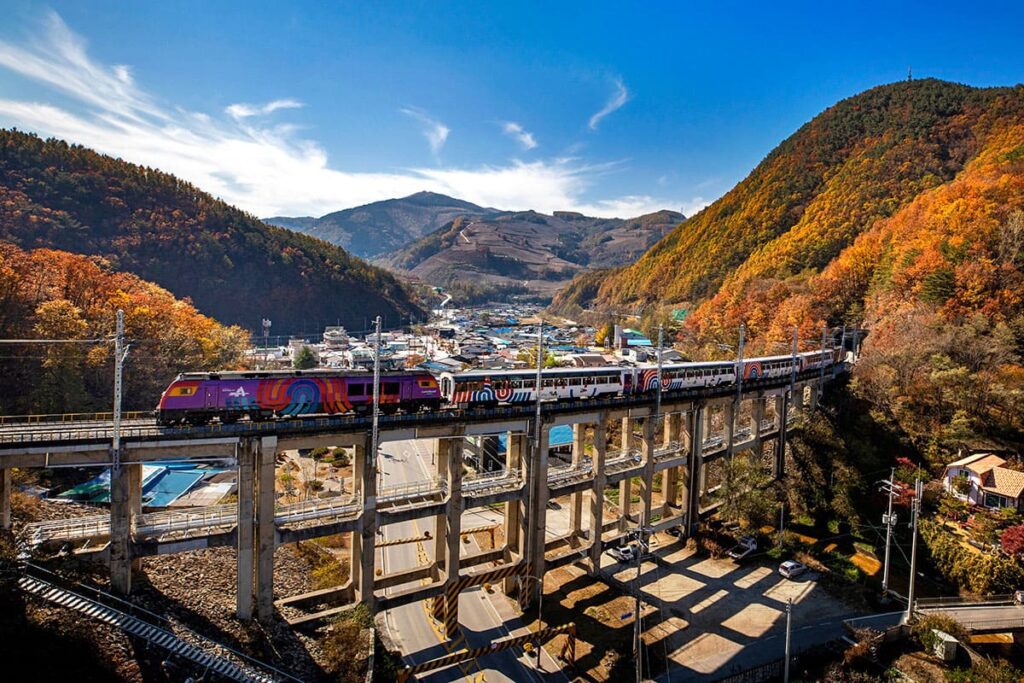
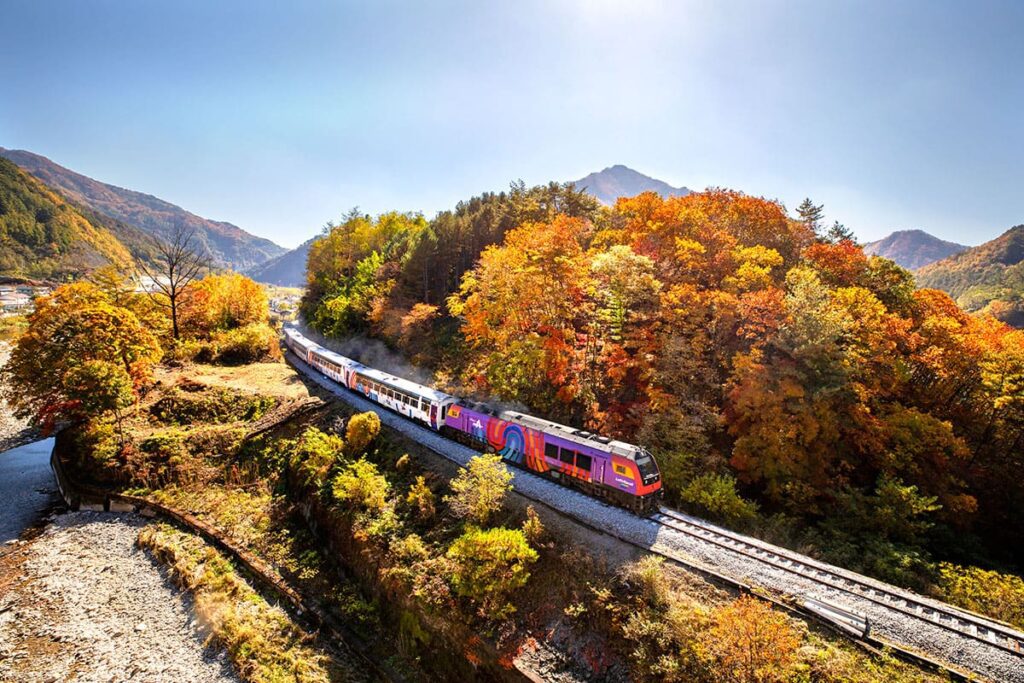
Option 3: Scenic Choice—Jeongseon Arirang Train (A-Train)
- Route: Board the scenic tourist train (A-Train) from Cheongnyangni Station or Wonju/Mindungsan Station directly into Jeongseon Station.
- Why Choose This: Features large view windows designed for sightseeing through Gangwon’s mountain passes and river valleys.
History & Regional Folklore
Historically, Jeongseon’s dense mountains and secluded geography made it a place of refuge and quiet contemplation. During the transition between the Goryeo Dynasty and the Joseon Dynasty in the late 14th century, Goryeo loyalists hid in Jeongseon’s deep valleys to escape political persecution. Isolated from their families, they poured their longing and grief into songs. Those songs eventually evolved into Jeongseon Arirang, the musical soul that still defines the region today.
The Legend of Auraji (아우라지)
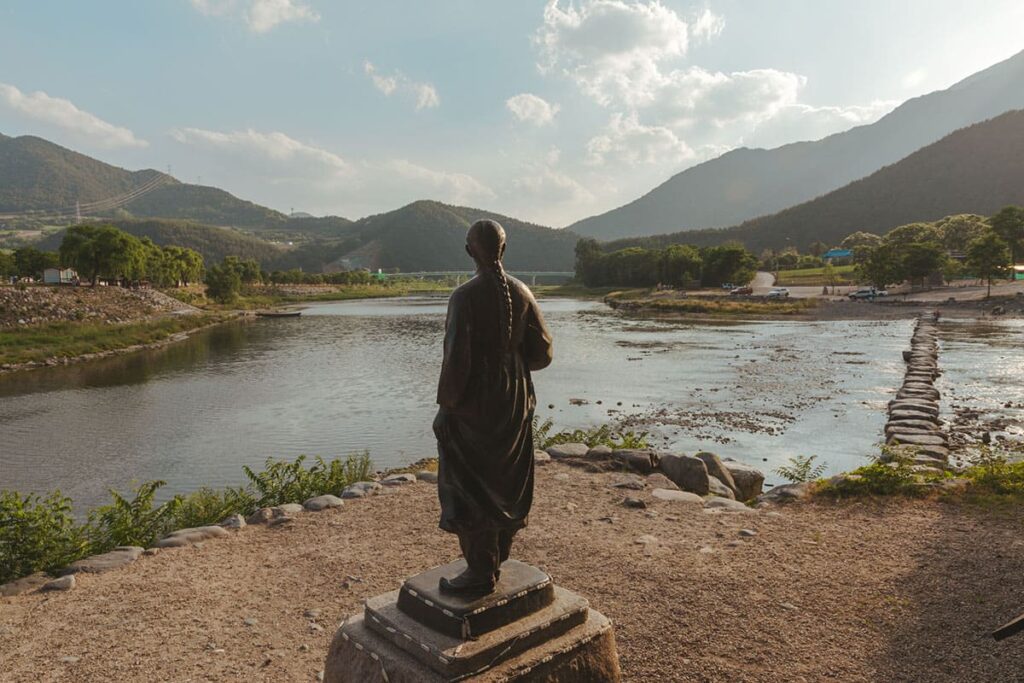
Auraji is the scenic confluence where two rivers—Songcheon (flowing from Pyunghchang) and Golji-cheon (flowing from Samcheok)—meet to form the Joyanggang River.
According to local legend, a young maiden from Yeoryang and a young man from Bakguji across the river fell deeply in love. Every day, they met at Auraji to gather camellia flowers. One day, heavy summer rains swelled the river, preventing the ferry from crossing. Unable to reach each other, the lovers stood on opposite banks, weeping and gazing across the raging water. Their tragic separation inspired lyrics in Jeongseon Arirang, and today, statues of the maiden and a crescent moon bridge stand at the site in memory of their devotion.

The Soul of Jeongseon: Jeongseon Arirang
Jeongseon Arirang (정선아리랑) is recognized as the root of all Arirang variations across the Korean peninsula and is designated as a UNESCO Intangible Cultural Heritage.
More than a folk song, it is the emotional voice of Korea’s mountain people.
Jeongseon Arirang features slow, melancholic melodies and improvised lyrics that convey Han (한)—a deep cultural emotion encompassing grief, resilience, longing, and hope. Historically sang by lumber raftsmen navigating the treacherous Donggang River to Seoul, these tunes carried the hum of daily life, love, and hardship through the valley echoing off the cliff walls.
Top Autumn Attractions
| Attraction | Highlight | Best Time to Visit |
|---|---|---|
| Mindungsan Mountain | A 1,118-meter peak famous for its tree-less summit covered in rolling fields of silver grass. | Mid-October to Early November |
| Auraji Riverside | The legendary meeting place of two rivers, surrounded by colorful foliage and walking paths. | Early to Late October |
| Jeongseon Railbike | A 7.2 km downhill pedal-kart ride along disused railway tracks through tunnels and scenic valleys. | Whole Autumn Season |
| Byeongbangchi Skywalk | A U-shaped glass walkway built over a 583-meter cliff, offering a view of the river winding around land shaped like the Korean peninsula. | Clear Autumn Mornings |
| Jeongseon 5-Day Market | A traditional market open on dates ending in 2 & 7, packed with local wild herbs, buckwheat treats, and live Arirang performances. | Market days (2nd, 7th, 12th, 17th, etc.) |
| Samtan Art Mine | Industrial heritage reborn as contemporary art | Year-round |
Where to Stay & Eat
Recommended Accommodations
- Park Roche Resort & Wellness: A luxury wellness retreat situated in Bukpyeong-myeon, focusing on yoga, spa, and meditation amidst mountain views.
- High1 Resort: A resort offering hotel rooms, condominiums, hiking trails (Haneulgil), and gondola rides over autumn foliage.
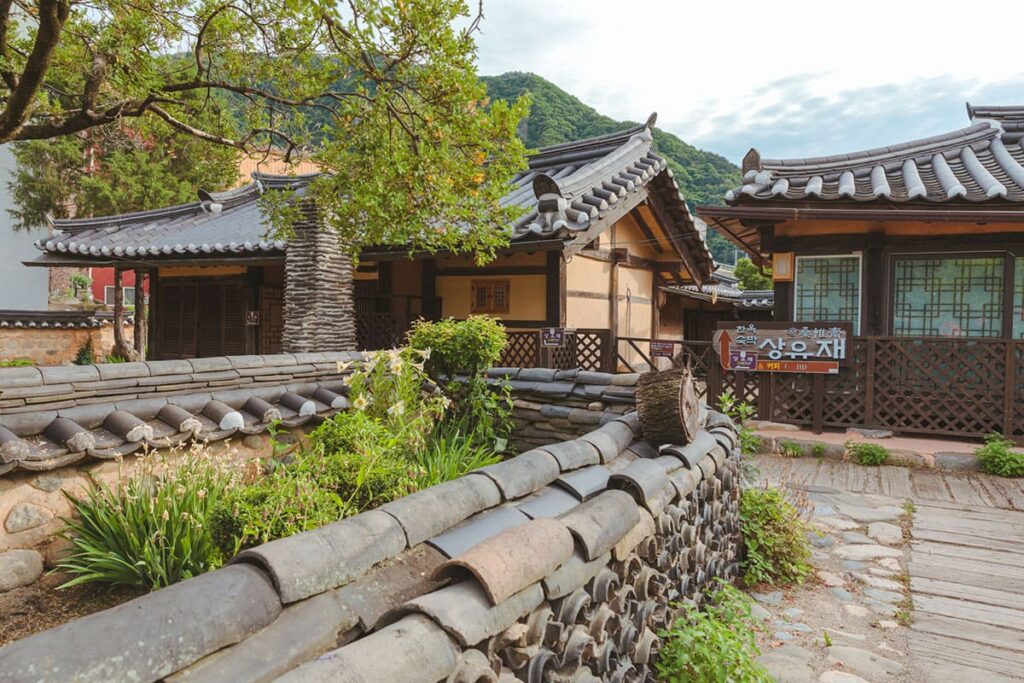
- Traditional Hanok Stays: Hanok guesthouses near Jeongseon Town or Auraji offer an authentic experience with underfloor heating (ondol).
Culinary Specialties
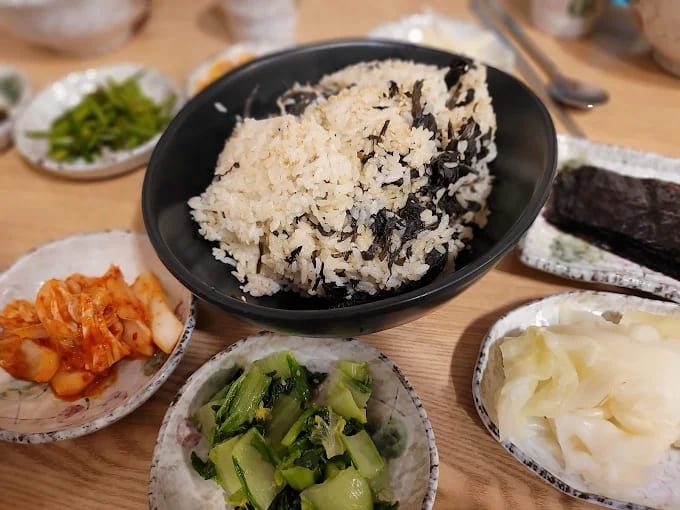
- Gondre Bap (곤드레밥): Rice cooked with seasonal thistle greens (gondre), seasoned with perilla oil and wild herb soy sauce.
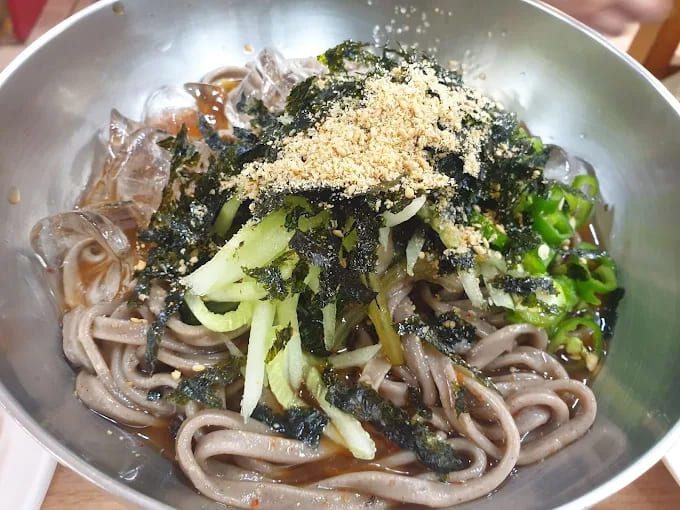
- Kotdeung-chigi Guksu (콧등치기 국수): Thick, chewy buckwheat noodles served in a warm, savory soybean or broth base. It gets its fun name (“nose-striking noodles”) because the elastic noodles famously slap the bridge of your nose as you slurp them up!
- Savory Buckwheat Pancakes (메밀전 / 메밀전병): Thin, savory pancakes stuffed with kimchi, pickled cabbage, or glass noodles, fresh from the Jeongseon 5-Day Market.
🎟️ KHOREA Travel Desk
Choose your preferred booking partner.
🛏️ Hotels in Jeongseon





The mountains remember every season.
Jeongseon remembers every song.
🎬 K-Dramas & Movies Connected with Jeongseon
- Taegukgi: The Brotherhood of War (2004, 태극기 휘날리며) Starring: Jang Dong-gun, Won Bin
The dramatic mountain landscapes of Gangwon Province helped create the film’s powerful wartime atmosphere, echoing the rugged beauty surrounding Jeongseon. - Little Forest (2018, 리틀 포레스트) Starring: Kim Tae-ri, Ryu Jun-yeol
Though filmed elsewhere, its celebration of mountains, seasonal harvests, and slow rural life perfectly matches the spirit of Jeongseon. - The King 2 Hearts (2012, 더킹 투하츠) Starring: Ha Ji-won, Lee Seung-gi
Several mountain and forest scenes capture the majestic scenery of Gangwon, making nature itself part of the story. - Spring, Summer, Fall, Winter… and Spring (2003) Starring: Oh Young-soo, Kim Young-min
A timeless meditation on nature, silence, and the changing seasons—an ideal companion to Jeongseon’s mountains and valleys. - The Host (2006, 괴물) Starring: Song Kang-ho, Byun Hee-bong, Bae Doona
Director Bong Joon-ho frequently contrasts urban life with Korea’s rivers and natural landscapes, making it an interesting companion piece after exploring Gangwon.
Where Arirang echoes through the valleys,
every journey slows to the rhythm of the mountains.
You May Also Like
- Korea in Autumn: A Curated Travel Guide 2026
- Healing Korea—YeongWol travel guide 2026
- Healing Korea – Pyeongchang Guide 2026
- Buyeo – Invitation to a slower world
- Healing Korea—Yeongju : prosperous town
More to Explore on KHOREA
Discover more stories across Korea — choose a category that inspires you.