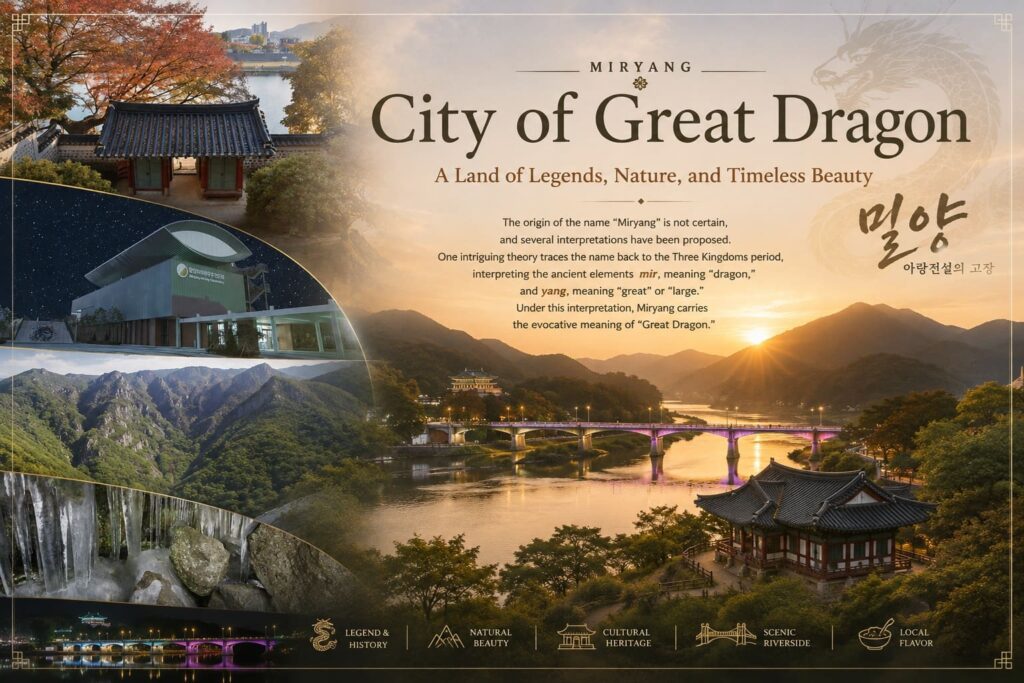
Miryang—City of Great Dragon
The origin of the name “Miryang” is not certain, and several interpretations have been proposed. One intriguing theory traces the name back to the Three Kingdoms period, interpreting the ancient elements mir, meaning “dragon,” and yang, meaning “great” or “large.” Under this interpretation, Miryang carries the evocative meaning of “Great Dragon.”
A Summer City with a Story to Tell
In Korea, summer once came with its own kind of entertainment: stories of ghosts, spirits of vengeful grief (gwisin, 귀신), and the supernatural, shared as a way to escape the sweltering heat. This tradition of nabryang (chilling, 납량), or seeking relief from the summer heat, gave rise to a distinctly Korean way of making the hottest nights a little more thrilling.
For this summer’s journey into the mysterious side of Korea, we begin in Miryang.
One of the hottest regions in Korea, Miryang is also home to a legendary ghost story, a mysterious natural phenomenon where ice appears in the height of summer, and centuries of history shaped by mountains, rivers, Buddhism, and Confucian culture.
Here, the boundary between legend and landscape can feel remarkably thin.
Gwisin (a spirit of vengeful grief, 귀신)
- In Korean folklore and popular imagination, a gwisin is often portrayed with blood-red lips, dressed in white burial clothes, and with long, disheveled hair falling across a pale face.
- But a gwisin is more than a ghost.
- It is a spirit of vengeful grief—a soul unable to find peace, bound to this world by an unresolved death.
The Legend of Arang
Miryang is famous for the tragic yet enduring Legend of Arang, a story that has shaped local folklore and cultural traditions for generations.
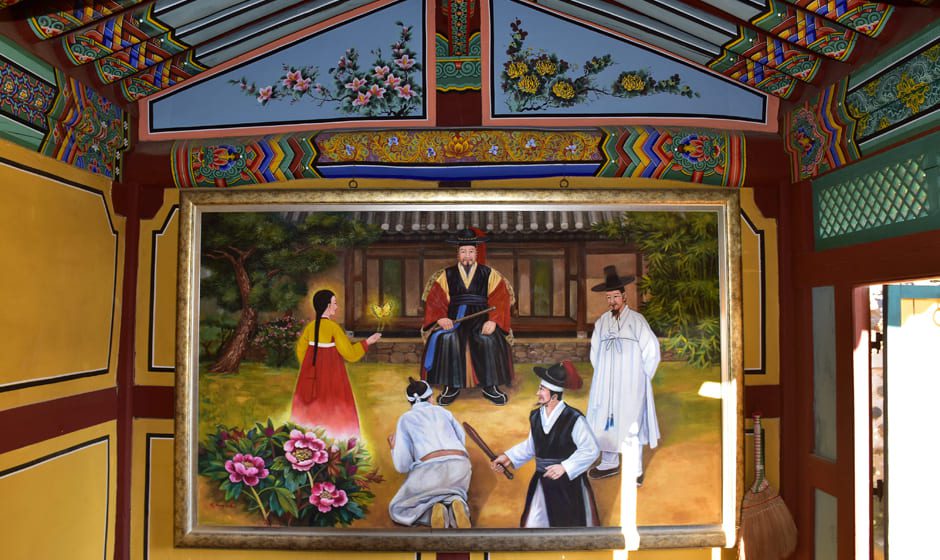
Arang was the beautiful daughter of a Miryang magistrate. A government servant with wicked intentions approached her, but when she resisted him, she was killed.
After her death, a strange curse was said to have fallen upon Miryang. Newly appointed magistrates mysteriously died on their first night in office, and eventually no one dared to accept the position.
Arang was not merely a ghost. She was a gwisin—a spirit of vengeful grief, unable to find peace after an unjust death.
Then an impoverished brush merchant volunteered. On his first night as magistrate, the gwisin of Arang appeared before him.
But Arang did not return simply to frighten the living.
She returned because her death had not been heard.
The magistrate calmly listened to her story. Arang promised to reveal her murderer by transforming into a butterfly and landing on the guilty man’s hat the following morning.
The next day, the magistrate gathered the government servants together. True to her promise, a butterfly flew in and landed on the hat of the guilty servant.
Under interrogation, he confessed to the crime.
The magistrate recovered Arang’s remains, gave her an honorable burial, and established Aranggak Shrine (아랑각) to commemorate her and comfort her spirit.
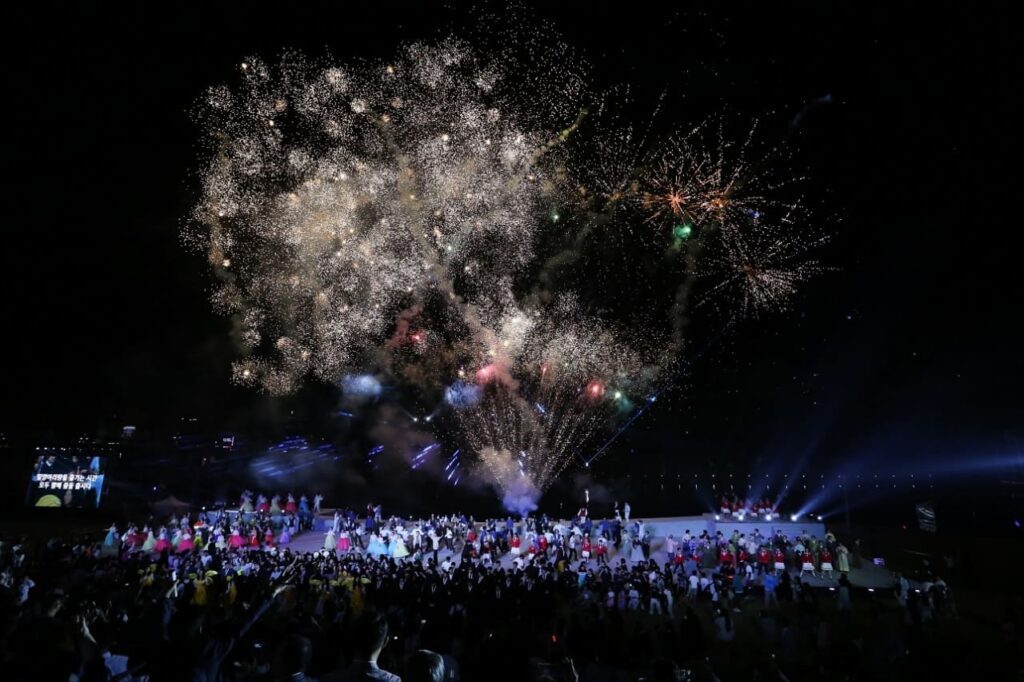
The legend remains deeply woven into Miryang’s cultural identity, and Arang continues to be remembered through local rituals and the annual Miryang Arirang Festival.
History & Cultural Identity
Miryang has a long history as an important center of administration, agriculture, and Confucian scholarship. The city is also associated with historic figures such as Samyeongdaesa, the renowned warrior monk of the Joseon Dynasty, while preserving the enduring legend of Arang, one of Korea’s best-known local ghost stories.
Today, Miryang balances its historical heritage with vibrant local traditions, most famously represented by Miryang Arirang, a celebrated regional variation of Korea’s beloved folk song.
Regional Characteristics
Surrounded by mountains often referred to as part of the Yeongnam Alps, and nourished by the Nakdong and Miryang Rivers, Miryang has long benefited from fertile land and abundant water.
These natural advantages have made the region an important agricultural hub, particularly known for its sweet apples and fresh vegetables.
And yet, Miryang’s natural landscape has another, much stranger side.
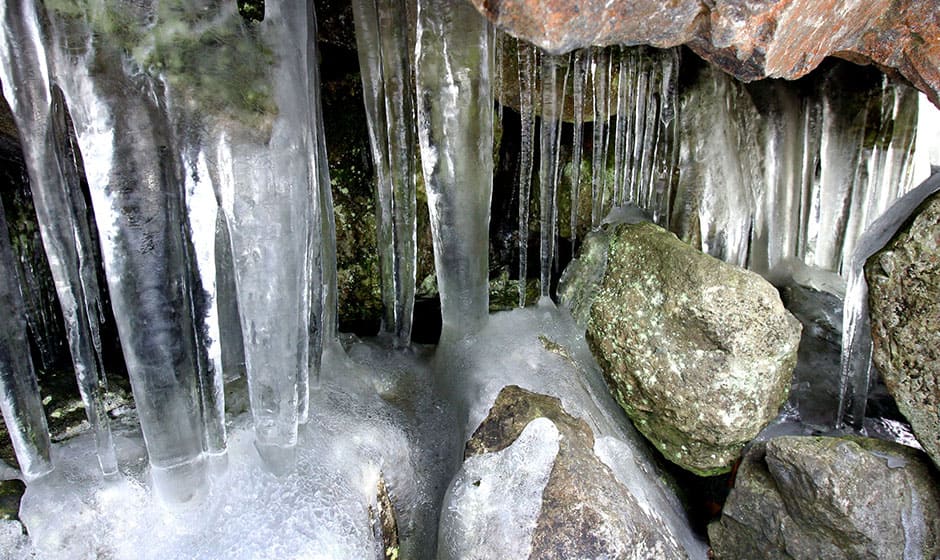
At Ice Valley (얼음골), ice forms during the height of summer heat.
Key Attractions
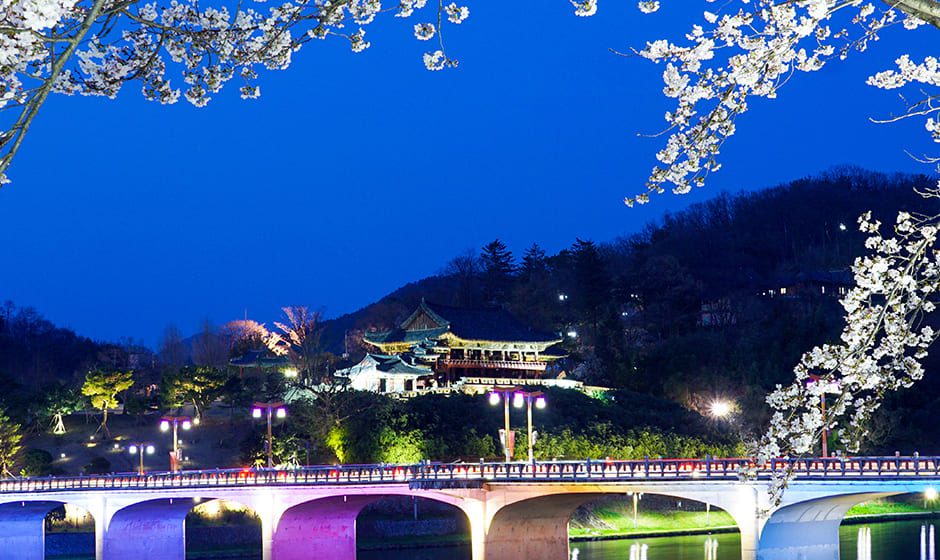
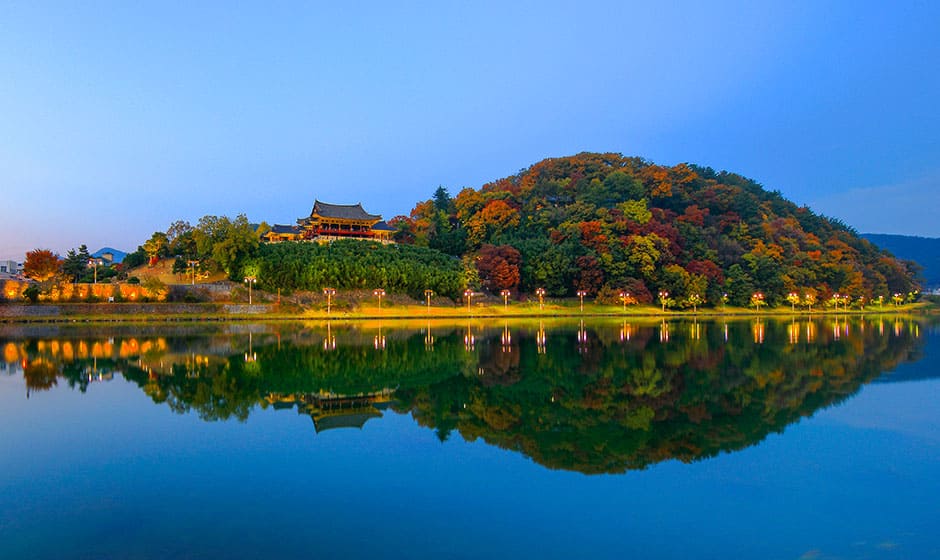
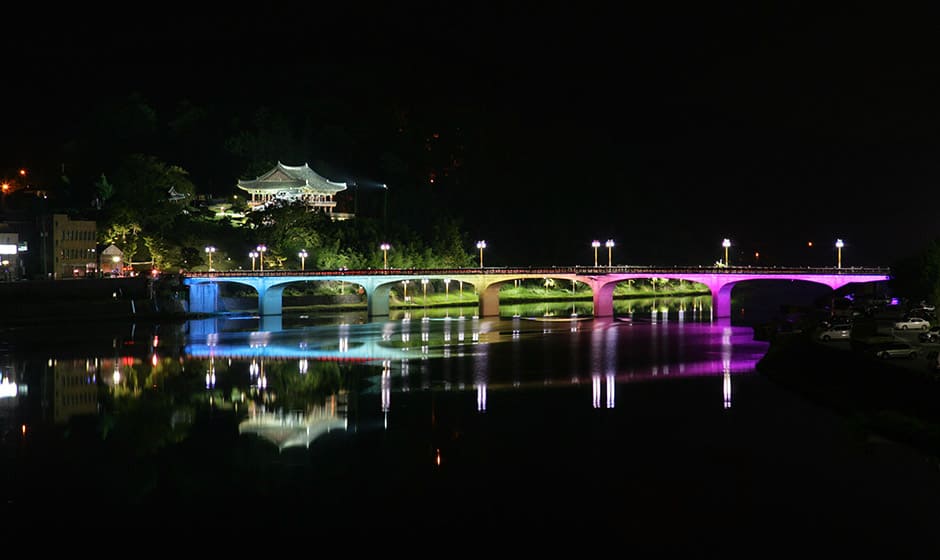
- Yeongnamnu Pavilion (영남루): Perched on a cliff overlooking the Miryang River, this magnificent pavilion is one of the city’s most iconic historic landmarks, offering sweeping views of the river and surrounding landscape.
- Aranggak Shrine (아랑각): Situated below Yeongnamnu Pavilion, this historic shrine commemorates Arang, the heroine of Miryang’s famous legend. Visitors can see her portrait and learn about the cultural origins of the annual Miryang Arang Festival.
- Ice Valley (얼음골): A remarkable natural phenomenon where ice forms during the hottest part of summer. The unusual microclimate of this mountain valley has long fascinated visitors.
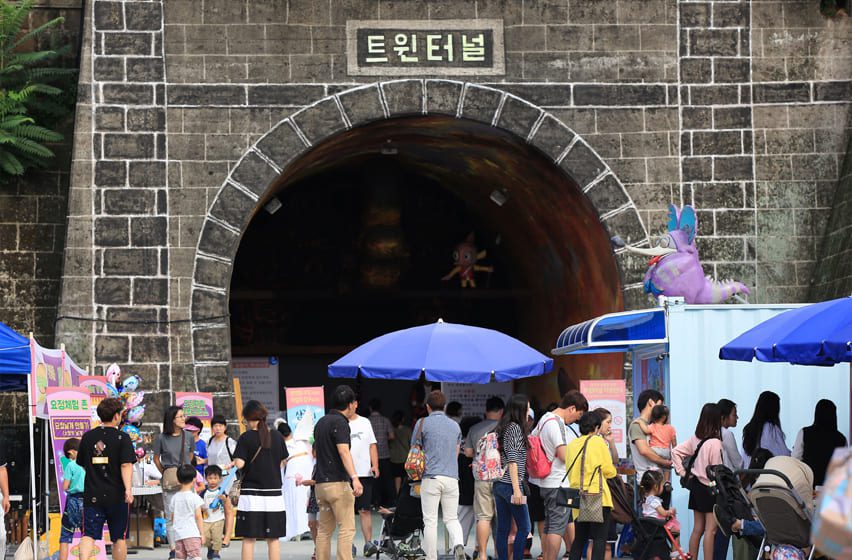
- Samryangjin Twin Tunnel (트윈터널): A former railway tunnel transformed into a colorful light-filled attraction, featuring artistic installations and themed exhibits suitable for families and casual visitors.
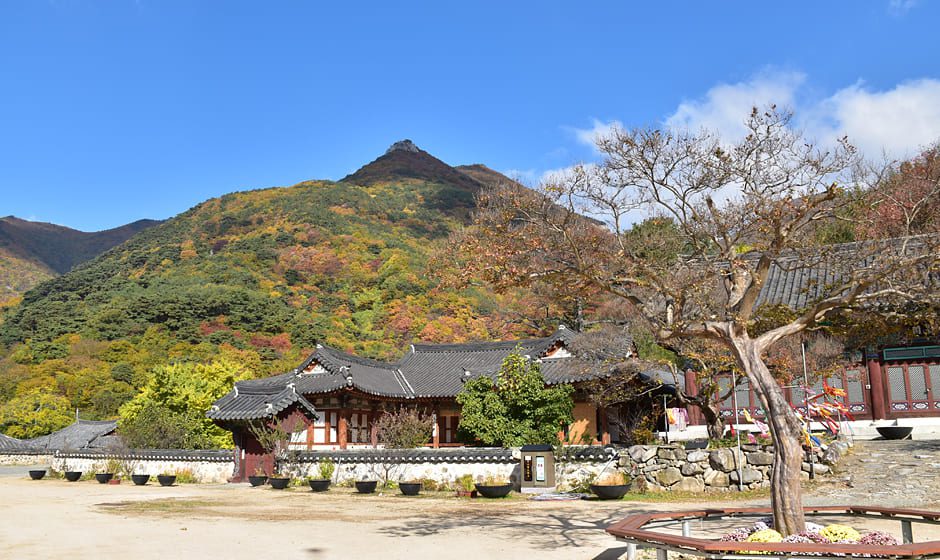
- Pyochungsa Temple (표충사): Nestled at the foot of Jaeyaksan Mountain, this historic Buddhist temple offers tranquil surroundings and a deep connection to the legacy of Samyeongdaesa.
Aranggak Shrine
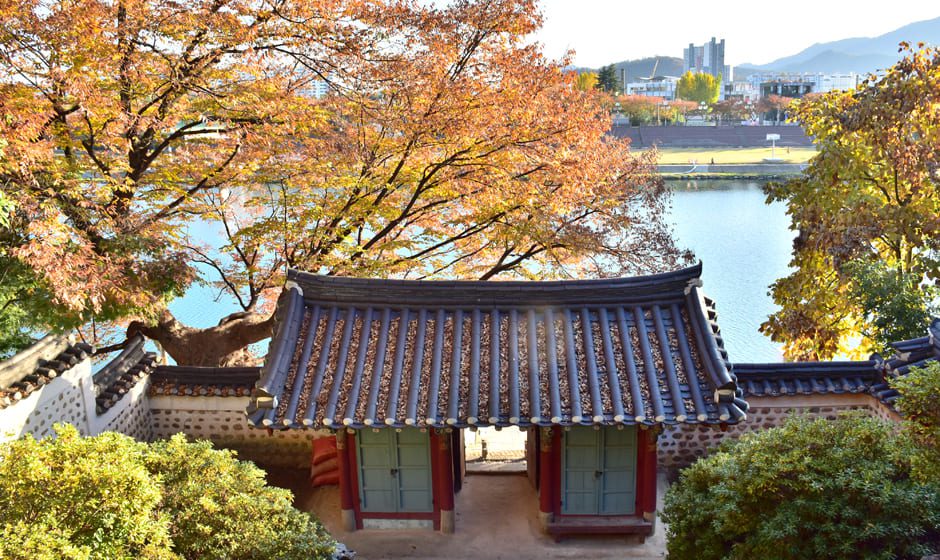
- Located below Yeongnamnu Pavilion along the Miryang River, Aranggak Shrine is a place dedicated to remembering Arang and honoring her story.
- Inside the shrine, a portrait of Arang is enshrined.
- Every spring, the Miryang Arirang Festival includes the traditional Arang-je, a memorial ceremony held in connection with her legend.
- For visitors, Aranggak offers something more than a ghost story. It is a glimpse into the way Korean communities have preserved stories of injustice, memory, dignity, and the hope that the truth will eventually be heard.
Local Cuisine
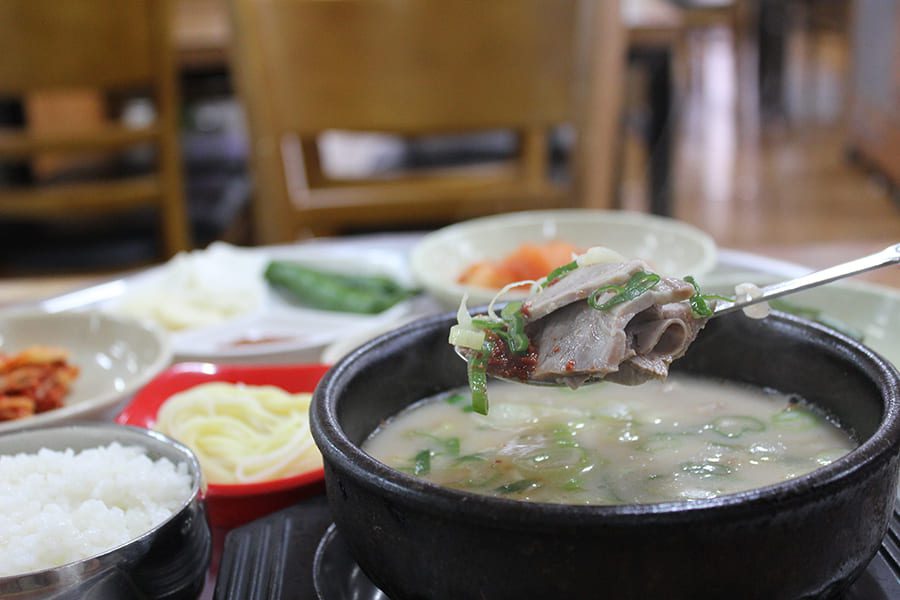
- Miryang Dwaeji Gukbap (Pork and Rice Soup): Miryang is widely regarded as one of the historic homes of dwaeji gukbap. Compared with the richer style often associated with Busan, Miryang’s version is generally known for its clearer, deeply savory broth, served with sliced pork and rice.
- Miryang Apples: Known for their sweetness and crisp texture, Miryang apples are one of the region’s signature agricultural products and are enjoyed fresh as well as in juices and desserts.
How to Get There from Seoul via KTX
Traveling from Seoul to Miryang is convenient by Korea’s high-speed rail network.
- Departure Station: Seoul Station (서울역)
- Arrival Station: Miryang Station (밀양역)
- Travel Time: Approximately 2 hours and 20 minutes to 2 hours and 40 minutes, depending on the service
- Service: Some KTX trains operate directly between Seoul Station and Miryang Station
- Booking: Tickets can be reserved in advance through the official Korail website or the Korail Talk mobile app.
Miryang After Dark
Perhaps that is what makes Miryang such an intriguing beginning for a summer journey into Korea’s legends.
The city does not simply tell a ghost story.
It tells a story about memory.
A woman who could not speak in life returns in death to tell the truth. A magistrate chooses to listen. A community remembers her name.
And somewhere beyond the legend, the mountains remain still, the Miryang River continues to flow, and the summer heat gathers around the mysterious Ice Valley.
In Miryang, even a ghost story has a human heart.
In Miryang,
the river remembers.
So do the legends.
🎬 K-Dramas & Movies Connected with Miryang
- Secret Sunshine (2007, 밀양) Starring: Jeon Do-yeon, Song Kang-ho
Lee Chang-dong’s internationally acclaimed masterpiece explores grief, forgiveness, and redemption. Set in Miryang, the city itself becomes an emotional landscape rather than merely a backdrop. - The Age of Shadows (2016, 밀정) Starring: Song Kang-ho, Gong Yoo, Han Ji-min
Inspired by the true story of Kim Won-bong and the Korean independence movement. Miryang was one of the hometowns closely associated with many independence activists, giving the city deep historical significance. - Chicago Typewriter (2017, 시카고 타자기) Starring: Yoo Ah-in, Im Soo-jung, Ko Kyung-pyo
Moving between the present day and the Japanese colonial era, the drama beautifully portrays the spirit of Korea’s independence movement, echoing Miryang’s patriotic heritage. - Mr. Sunshine (2018, 미스터 션샤인) Starring: Lee Byung-hun, Kim Tae-ri, Yoo Yeon-seok
Although not filmed in Miryang, its story of resistance and sacrifice resonates strongly with the city’s rich independence history and preserved heritage villages. - Kingdom (2019, 킹덤) Starring: Ju Ji-hoon, Ryu Seung-ryong, Bae Doona
Traditional villages and mountain scenery evoke the same timeless atmosphere found around Miryang’s historic countryside, making it a fitting companion for travelers exploring Korea’s folklore.
Some stories are written in history.
Others continue to whisper after sunset.
Stay in Miryang
Wake up just steps from Heritage, Nature, and Legends.



You May Also Like
- Korea in Autumn: A Curated Travel Guide 2026
- Jeongseon—Korea’s Autumn Sanctuary
- Healing Korea—YeongWol travel guide 2026
- Beyond Korea: Seoul to Taipei Travel Guide (2026)
- Seoul’s Five Grand Palaces & Myeongdong Itinerary
- The Layered City: A Journey Through Seoul’s Hidden Histories
More to Explore on KHOREA
Discover more stories across Korea — choose a category that inspires you.