
the 76th memorial day of Korean War
Why the Korean War Still Matters Today
More than seventy years later, the Korean War continues to shape global security, diplomacy, and life on the Korean Peninsula. Understanding the conflict helps explain not only modern Korea but also the origins of many geopolitical challenges that remain today.
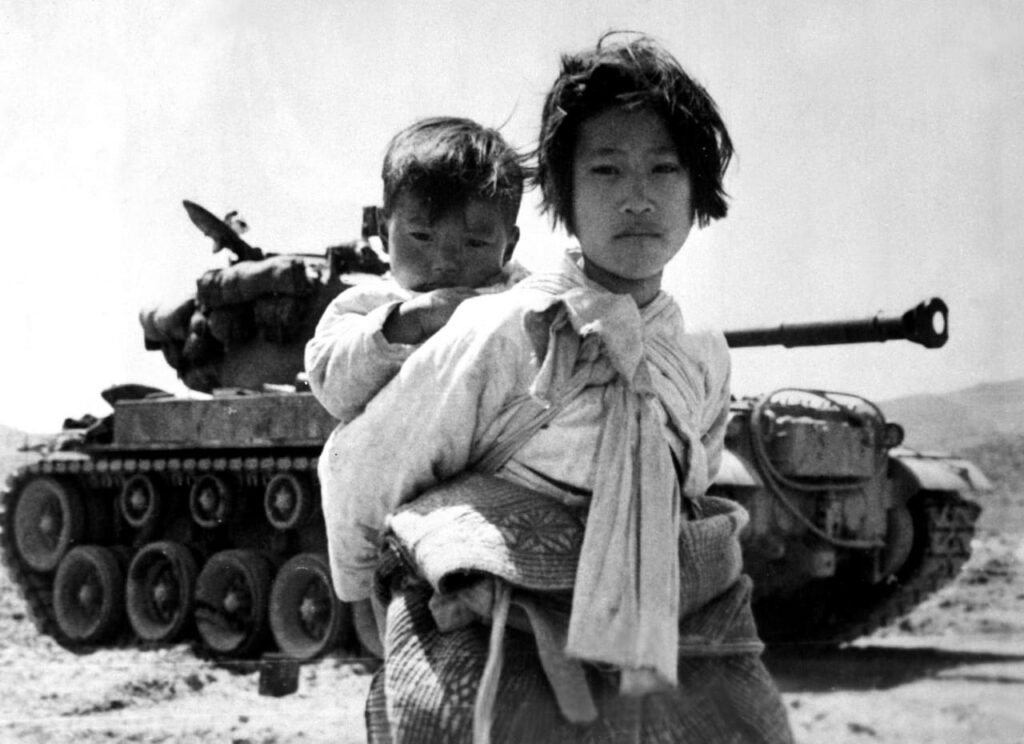
The Korean War was a brutal conflict lasting from June 25, 1950, to July 27, 1953, following North Korea’s invasion of South Korea. It was a major proxy war of the Cold War that resulted in a stalemate, leaving the peninsula divided at the Demilitarized Zone (DMZ) without an official peace treaty.
Quick Facts & Timeline
- The Division: Following WWII, the peninsula was split at the 38th parallel (latitude 38° N). The Soviet Union backed the North, while the United States supported the South.
- North Korean Invasion: On June 25, 1950, the North launched a surprise attack, capturing Seoul in just three days.
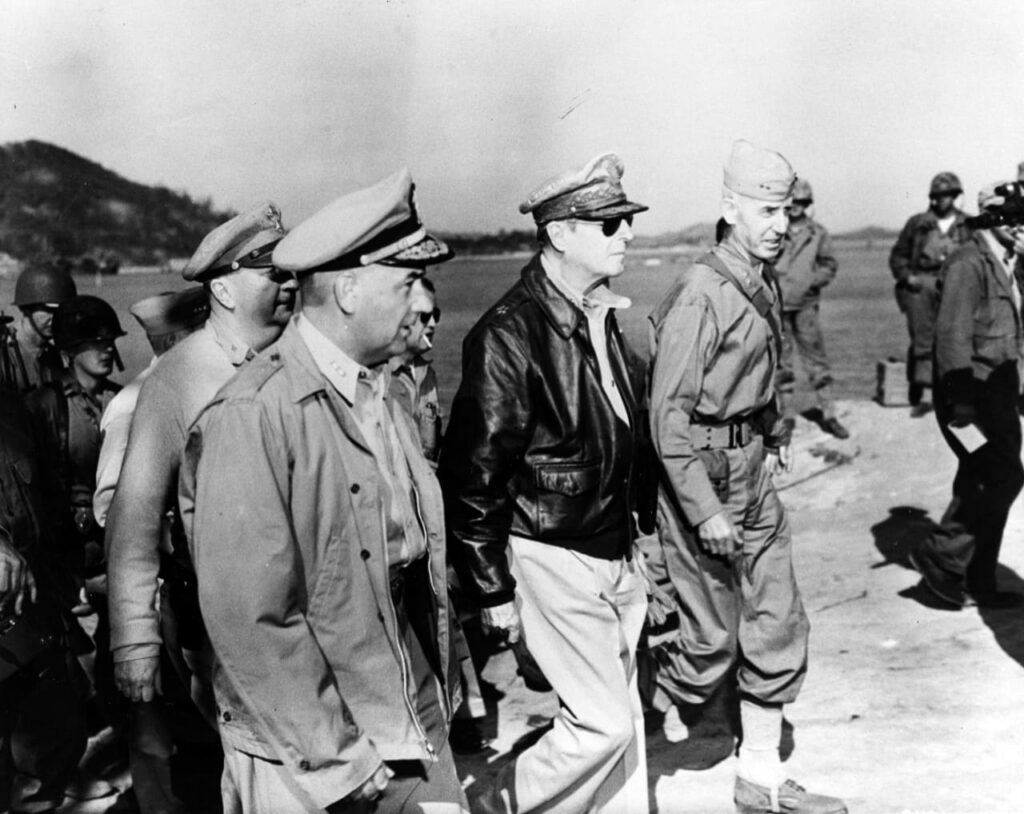
- UN Intervention: A United Nations (UN) coalition—led heavily by the U.S. and commanded by Gen. Douglas MacArthur—intervened, pushing back to the Chinese border.
- Chinese Pushback: In late 1950, China entered the war, driving UN forces back southward.
- The Armistice: Fighting effectively ceased on July 27, 1953, with the signing of the armistice. This established the 2.5-mile-wide DMZ.
The Human Cost
- Casualties: Approximately 3 million people died, including roughly 2 million civilians.
- Military Toll: The conflict claimed the lives of roughly 37,000 Americans, over 500,000 South Koreans, and hundreds of thousands of Chinese and North Korean troops.
For deeper dive into the military maneuvers, you can explore the Imperial War Museums overview.
Operation Chromite
The Inchon Landing (codenamed Operation Chromite) was a daring amphibious assault executed on September 15, 1950, that completely turned the tide of the early Korean War. Masterminded by U.S. General Douglas MacArthur, it caught North Korean forces completely by surprise and allowed United Nations (UN) forces to recapture Seoul, breaking the North’s momentum.
Strategic Context
- The Crisis: By September 1950, North Korea had pushed UN and South Korean forces into a tiny perimeter around Busan (the Busan Perimeter).
- The Gamble: MacArthur proposed landing forces far behind enemy lines at Incheon, despite extreme naval hazards like massive tidal shifts, muddy flats, and narrow channels.
- The Objective: Cut off North Korean supply lines and trap their army between Incheon and Busan.
Key Outcomes
- Seoul Recaptured: UN forces secured Incheon quickly and liberated Seoul by September 25, 1950.
- North Korean Collapse: Trapped and cut off from supplies, the North Korean army collapsed and retreated rapidly back across the 38th parallel.
- War Expansion: The success emboldened the UN coalition to cross into North Korea, which eventually triggered China’s entry into the conflict.
Visiting the Historic Sites Today
- Incheon Landing Operation Memorial Hall: A museum showcasing military equipment, historic photos, and a large memorial tower dedicated to the soldiers.
- Wolmido Island (Green Beach): One of the primary landing zones, now a vibrant waterfront park featuring a path that highlights the historical assault points.
- Jayu (Freedom) Park: South Korea’s first Western-style park, featuring a large bronze statue of General Douglas MacArthur overlooking the port.

The War and Modern Global Politics
The Korean War profoundly reshaped global geopolitics by reinforcing Cold War alliances, accelerating military modernization, and establishing the framework for later proxy conflicts. The structural choices made between 1950 and 1953 created geopolitical divisions and alliances that remain active.
1. The Blueprint for Proxy Wars and Containment
- The “Hot” Cold War: The conflict proved that the U.S. and the Soviet Union could engage in a violent confrontation via third-party states without triggering a direct nuclear World War III.
- Validation of Containment: The war reinforced the importance of the U.S. containment strategy, although debates over rollback continued throughout the Cold War. However, by successfully defending South Korea, it validated the U.S. policy of containment, anchoring it as the driving logic behind interventions in places like Vietnam.
- Bypassing Congress: U.S. President Harry Truman bypassed Congress without seeking a formal declaration of war by classifying the intervention as a United Nations “police action”. This set a lasting precedent for future U.S. presidents to deploy military force globally without formal declarations of war.
2. Radical Expansion of Global Military Alliances
- The Militarization of NATO: Before 1950, NATO was primarily a political treaty. The invasion of South Korea panicked Western leaders into turning NATO into a highly structured, heavily armed integrated military command.
- The Rearmament of Defeated Powers: To counter communist expansion in Asia and Europe, the U.S. pushed for the rapid rearmament of West Germany and integrated Japan as a vital Pacific security hub.
- Pacific Bilateral Treaties: The war directly prompted Washington to sign a series of critical mutual defense pacts with South Korea, Japan, and Taiwan, locking the U.S. into a permanent military presence in East Asia.
3. Rise of China and the Reshaping of East Asia
- A New Military Superpower: By pushing UN forces back from its border, the newly formed People’s Republic of China established itself as a formidable regional military power, drastically elevating Mao Zedong’s prestige.
- The Taiwan Strait Standoff: In response to the war, the U.S. sent its Seventh Fleet to protect the Republic of China (Taiwan), preventing a planned communist invasion and locking in a territorial dispute that persists.
4. The Modern “New Cold War” Legacy
The geopolitical lines drawn by the war never dissolved. The lack of a permanent peace treaty maintains a volatile status quo, which has evolved into a “New Cold War” dynamic:
- The Nuclear Flashpoint: North Korea’s evolution into a nuclear-armed state—which formalised a hostile “two-state” doctrine—remains a primary driver of Indo-Pacific security policy.
- Deepening Autocratic Blocs: Pyongyang has leveraged its strategic position to secure advanced military technology, heavily strengthening its economic and defense ties with Russia and China.
- Middle Power Dilemmas: South Korea has emerged as a global economic and democratic power, balancing its long-standing security alliance with the United States while maintaining deep economic ties with China.
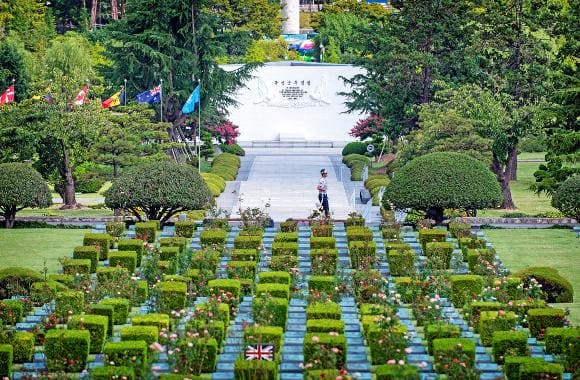
UN Countries Supported Korea
During the Korean War, a total of 22 nations stepped forward under the United Nations flag to support South Korea. According to the United Nations Memorial Cemetery in Korea (UNMCK), these allies are officially categorized into 16 combat aid nations and 6 medical support nations:
1. Combat Support Nations (16 Countries)
These countries deployed frontline troops, warships, aircraft, or armaments to engage directly in military combat:
- United States (Deployed the largest international force)
- United Kingdom
- Canada
- Turkey (now Türkiye)
- Australia
- Philippines
- Thailand
- Netherlands
- Colombia
- Greece
- New Zealand
- Ethiopia
- Belgium
- France
- South Africa (Provided elite air support)
- Luxembourg
2. Medical Support Nations (6 Countries)
These countries provided non-combat humanitarian aid, setting up field hospitals, mobile surgical units, or hospital ships to treat wounded soldiers and civilians:
- Sweden (Operated a major Red Cross field hospital)
- India (Deployed the renowned 60th Parachute Field Ambulance)
- Denmark (Dispatched the hospital ship Jutlandia)
- Norway (Operated the Norwegian Mobile Army Surgical Hospital—NORMASH)
- Italy (Provided Red Cross hospital units despite not being a UN member at the time)
- Germany (Dispatched a Red Cross medical team and hospital units near the end of the war)
60% of the World Contributed
Additional countries also supported South Korea through humanitarian assistance, financial aid, food supplies, industrial materials, and logistics.
More than 60% of the world’s independent nations contributed in some form to South Korea’s defense and recovery.
1. Significant Food & Agricultural Providers
In the early 1950s, South Korea faced severe famine and agricultural collapse. Key nations stepped in with massive supply donations:
- Burma (now Myanmar): Provided vital shipments of rice.
- Pakistan: Donated thousands of tons of wheat and grain.
- Taiwan (Republic of China): Dispatched food, coal, and emergency medical kits.
- Cuba: Contributed heavily with raw sugar shipments.
2. Americas & Caribbean Support
- Argentina, Brazil, Chile, Peru, Venezuela, Ecuador, Uruguay, Colombia, Panama, Costa Rica, Guatemala, Honduras, El Salvador, Haiti, and the Dominican Republic.
- These nations shipped clothing, raw construction materials, financial checks, and leather goods to aid internal refugees.
3. Middle East & African Support
- Saudi Arabia, Iran, Israel, Egypt, Lebanon, and Syria.
- These countries provided medical goods, petroleum products, and financial assistance to help rebuild destroyed transport routes.
4. European & Asian Material Support
- Switzerland, Austria, Iceland, Cambodia, Indonesia, and Vietnam provided varied economic relief packages, monetary grants, and reconstruction tools.
- Japan: Served as the primary logistical springboard and repair hub for the entire UN Command.
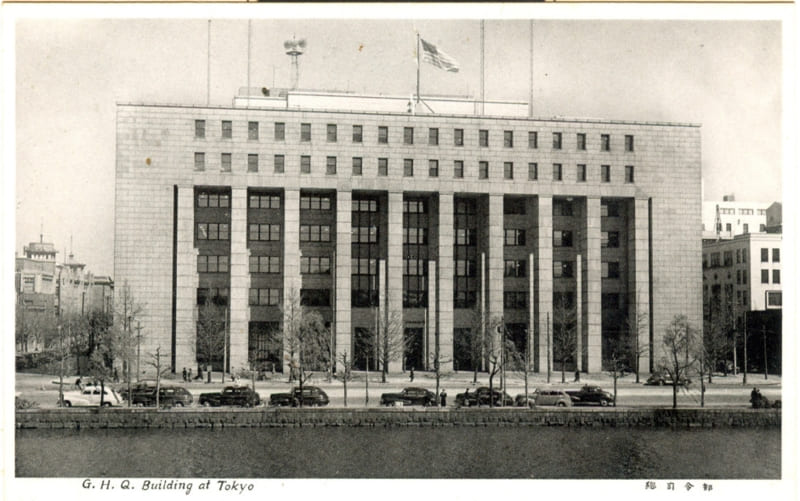
Japan as the UN’s Strategic Rear Base
During the Korean War, Japan functioned as the principal logistical hub and rear staging area for the United Nations Command (UNC), a reality recognized by General Douglas MacArthur’s statement that without Japan, the Korean War could not have been fought.
Following World War II, Japan was under U.S. military occupation (SCAP). When the war erupted in June 1950, the U.S. seamlessly weaponized Japan’s intact geographic location, industrial capacity, and infrastructure to sustain the frontline across the peninsula.
1. The Supreme Headquarters (GHQ) and Legal Hub
- Command Center: The entire military strategy for the war was commanded out of Tokyo. General MacArthur ran both the Allied Occupation of Japan and the UN Command from the Dai-Ichi Building in Tokyo.
- The UN-Japan Agreement: Even after Japan officially regained its sovereignty in 1952 via the San Francisco Peace Treaty, a special UN-Japan agreement was signed. This granted UN forces the continued right to utilize seven major military bases on Japanese soil to support operations in Korea.
2. The Procurement Boom (Special Procurements)
The U.S. military poured billions of dollars into the Japanese economy through a system known as Tokuju (Special Procurements), effectively jump-starting Japan’s post-WWII economic rebirth:
- Vehicle and Weapon Repair: Rather than shipping broken tanks, trucks, and artillery back to the United States, thousands of tons of damaged frontline equipment were shipped to Japan, repaired by Japanese laborers in revitalized factories, and sent straight back to Korea.
- Mass Production: Japanese factories mass-produced military uniforms, combat boots, sandbags, barbed wire, communications gear, and optical equipment for UN troops.
- The Shipping Fleet: Over 300 Japanese ships and thousands of Japanese crew members—including specialized minesweepers—were secretly chartered by the U.S. military to transport ammunition and troops to Korean ports like Busan and Incheon.
3. Staging and Launchpad for Major Amphibious Assaults
Every major UN offensive used Japan as its primary launchpad:
- The Inchon Landing Launchpad: The historic amphibious assault at Incheon (Operation Chromite) was organized, loaded, and launched directly from the Japanese ports of Kobe, Yokohama, and Sasebo.
- Air Support Base: Strategic bombers and fighter jets took off daily from U.S. airbases in Japan—such as Kadena Air Base in Okinawa, Yokota Air Base near Tokyo, and Itazuke Air Base in Fukuoka—to conduct airstrikes over North Korea.
4. The Medical and R&R (Rest and Recuperation) Sanctuary
- Hospital Network: Hundreds of thousands of wounded UN soldiers were evacuated by air and sea from the Korean frontlines to massive military hospitals established in Fukuoka, Tokyo, and Osaka for life-saving surgeries and recovery.
- Rest and Recuperation (R&R): Japan served as the primary psychological buffer zone for the war. Frontline troops were rotated out of the trenches of Korea and flown to Tokyo, Kyoto, or safe zones in Japan for five-day R&R leaves to boost military morale.
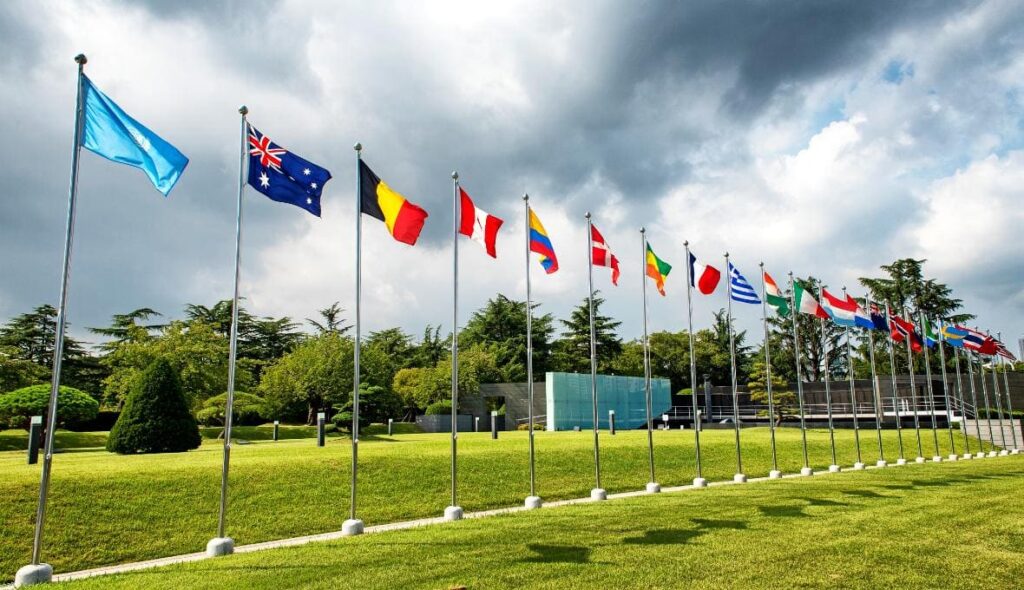
More than seventy years later, the Korean Peninsula remains technically at war. Yet from the devastation of the 1950s emerged one of the world’s most remarkable stories of recovery. Understanding the Korean War is not only about remembering a conflict—it is about understanding modern Korea itself.
To travel through Korea today is also to encounter the resilience, remembrance, and remarkable recovery that followed one of the twentieth century’s most devastating wars.
- Explore the DMZ: A Journey Along Korea’s Divided Border
- Visiting the Incheon Landing Operation Memorial Hall
- The UN Memorial Cemetery in Busan
- The War Memorial Of Korea of Korea in Seoul
Freedom is not free.
Peace is our most precious legacy.
Peace is our most precious legacy.
The Korean Peninsula remains technically at war.
Together, these stories remind us that the Korean War is not only a chapter of history—it is a legacy that continues to shape the Korean Peninsula today.
🎬 The Korean War on Screen
- Operation Chromite (2016, 인천상륙작전) Starring: Lee Jung-jae, Lee Beom-soo, Liam Neeson
The daring operation that paved the way for the successful Incheon Landing, one of the most decisive turning points of the Korean War. - Northern Limit Line (2015, 연평해전) Starring: Kim Moo-yul, Jin Goo, Lee Hyun-woo
Based on the true story of the Second Battle of Yeonpyeong (2002), honoring the sailors who defended Korea's Northern Limit Line decades after the Korean War. - Taegukgi: The Brotherhood of War (2004, 태극기 휘날리며) Starring: Jang Dong-gun, Won Bin
An epic story of two brothers whose lives are torn apart by the outbreak of the Korean War. - Welcome to Dongmakgol (2005, 웰컴 투 동막골) Starring: Shin Ha-kyun, Jung Jae-young, Kang Hye-jung
A timeless anti-war story where soldiers from opposing sides rediscover their shared humanity in an isolated mountain village. - Road No. 1 (2010, 로드 넘버원) Starring: So Ji-sub, Kim Ha-neul, Yoon Kye-sang
Love, sacrifice, and survival unfold along the road that symbolized the outbreak of the Korean War. - Comrades (2010, 전우) Starring: Choi Soo-jong, Lee Tae-ran
Based on true stories, portraying the courage, hardship, and camaraderie of soldiers during the Korean War.
🛏️ Hotels in Myeongdong
Choose your preferred booking partner.





You May Also Like
- DMZ Day Trip from Myeongdong (Self-Guided Itinerary)
- Incheon Day Trip Guide from Myeongdong
- Busan: The City That Carried a Nation
- Global Icons & the DMZ: Korean modern history
- Korea, Devotion to human welfare
More to Explore on KHOREA
Discover more stories across Korea — choose a category that inspires you.