A Journey Through Korea’s Natural Elegance
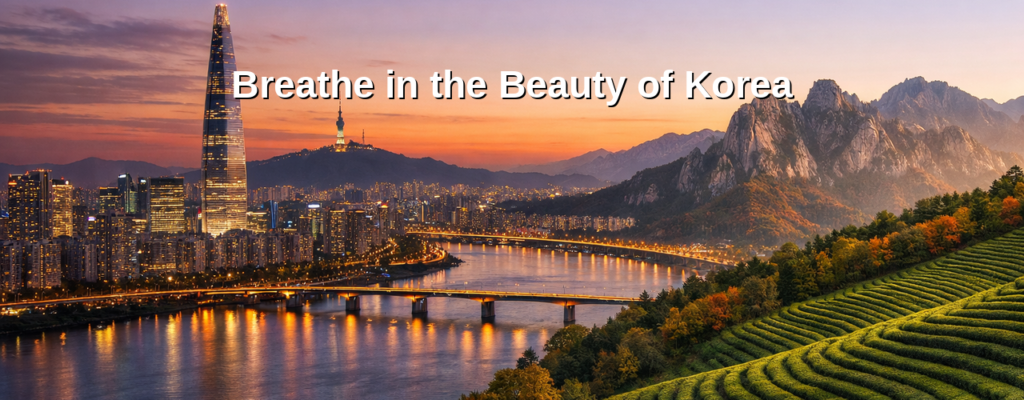
From tranquil coastlines to mist-covered mountain ranges, South Korea unfolds with a kind of beauty that feels both refined and deeply calming.
This is not a country of overwhelming grandeur or dramatic excess.
Instead, Korea reveals itself slowly—through soft morning light over the sea, the scent of pine forests after rain, quiet temple paths hidden among the mountains, and landscapes that invite travelers to move at a gentler pace.
Nature in Korea is rarely distant from everyday life.
Mountains rise behind cities.
Rivers flow beside walking paths and cafés.
A sunrise by the ocean can still be followed by a warm bowl of soup at a small local restaurant before the day fully begins.
Perhaps that is why Korea’s landscapes feel so approachable and deeply human.
They are not simply places to admire from afar,
but places woven naturally into daily life.
Along the East Coast, Where Korea Greets the Morning
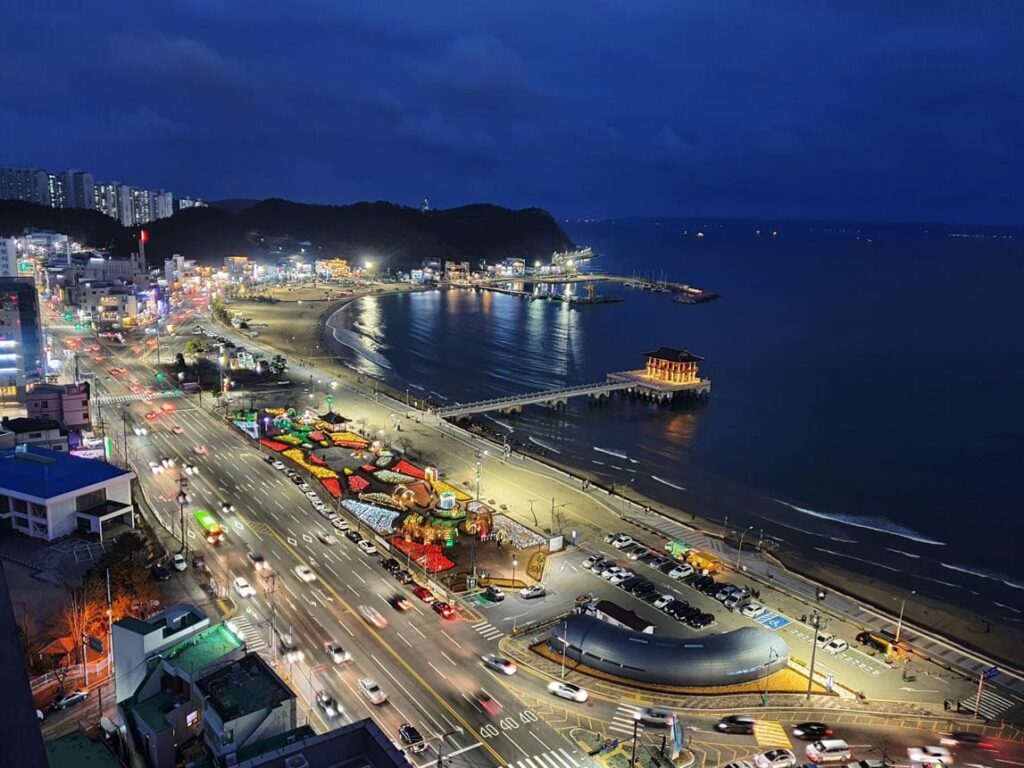
On Korea’s eastern shoreline, the coastal cities of Sokcho and Gangneung↗ awaken quietly before dawn.
Long before sunrise, travelers wrapped in light jackets begin gathering near the water with cups of hot coffee warming their hands against the cool sea air. Some arrive with cameras, while others simply stand silently facing the horizon.
Then slowly, the first light appears over the East Sea.
In Korea, watching the year’s first sunrise is more than a scenic activity—it is a tradition tied to reflection, hope, and new beginnings. Along the East Coast, that quiet sense of anticipation can still be felt on ordinary mornings.
Nearby cafés begin filling with travelers escaping Seoul for slow weekends by the sea, while surfers and early walkers move along beaches washed in pale golden light.
In winter, waves crash dramatically against snow-covered rocks.
In summer, the coastline softens into long afternoons of warm sunlight, ocean breezes, and evening walks beside the shore.
Here, nature feels cinematic yet comforting at the same time.
Tea Fields, Quiet Cafés, and Slow Afternoons
Further south, the rolling green tea plantations of Boseong stretch gracefully across the hillsides in near-perfect symmetry.
Morning fog drifts softly above the tea fields as visitors wander slowly between rows of vivid green leaves. Couples pause for photographs beneath cedar trees while nearby cafés serve green tea desserts overlooking the landscape.
There is no urgency here.
Travelers move slowly, lingering over conversations and quiet views rather than rushing toward the next destination.
Not far away, Suncheonman Bay Wetland Reserve offers another side of Korea’s natural beauty.
In the late afternoon, golden reed fields sway gently beneath the changing light while migratory birds circle above the wetlands. Wooden walking paths guide visitors quietly through the reserve as the entire landscape begins glowing in soft amber tones before sunset.
It is the kind of scenery that naturally lowers voices.

Islands, Sea Winds, and Life Along the Southern Coast
Along Korea’s southern coastline, ferries move slowly between emerald islands scattered across calm blue waters.
At Hallyeohaesang National Park, forested cliffs rise above fishing villages where daily life continues at an unhurried pace. Elderly residents sort fishing nets near quiet harbors while seafood restaurants prepare the morning’s catch only steps from the sea.
The beauty here is not polished or overly curated.
It feels lived in.
Further south, Jeju reveals yet another side of Korea’s landscape.
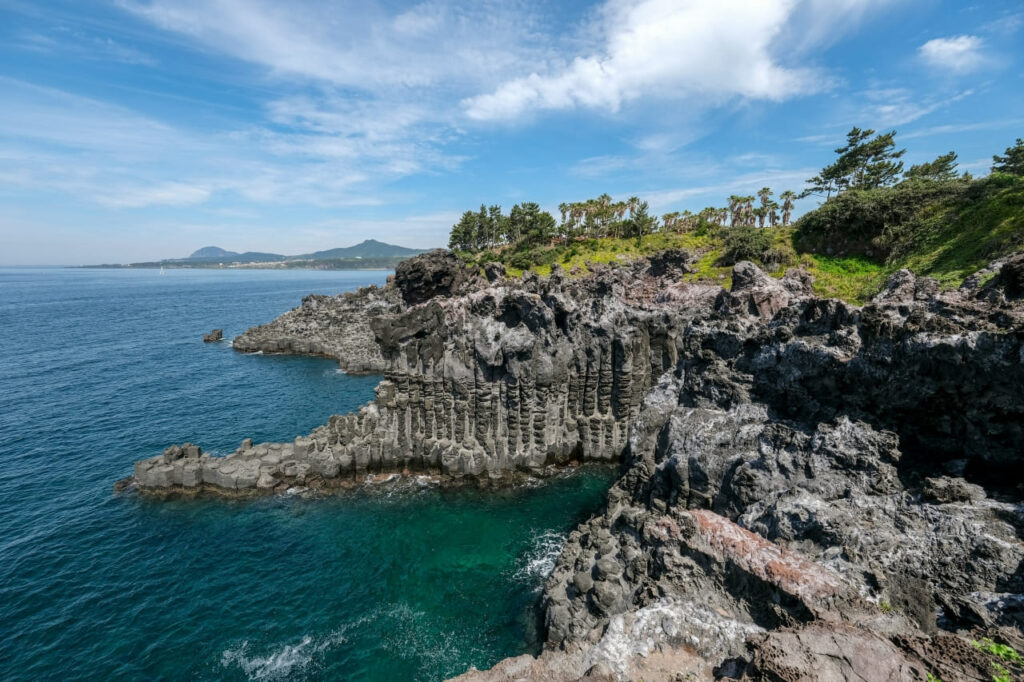
Travelers spend mornings walking beneath the shadow of Hallasan Mountain before exploring lava caves, volcanic cliffs, and coastal roads shaped by sea winds over centuries.
By evening, orange light settles softly across the island as seaside cafés begin glowing against the darkening ocean.
Some travelers gather quietly along the coastal roads to watch the sunset, while others end the evening with grilled seafood and local tangerine tea beside the water.
On Jeju, nature is not simply viewed.
It becomes part of the rhythm of the day.

Mountains, Temples, and the Beauty of the Seasons
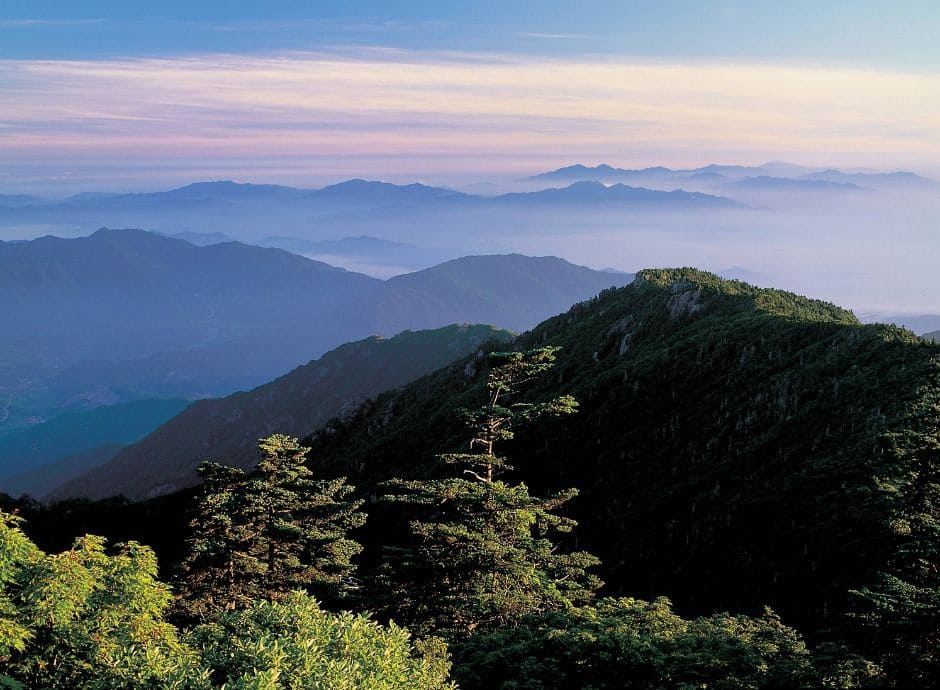
In the north, Seoraksan National Park↗rises sharply into the sky with granite peaks that have inspired Korean artists and poets for generations.
Yet Korea’s mountains are not only places of dramatic scenery.
They are places deeply connected to everyday Korean life.
On autumn mornings, hiking trails fill with travelers carrying small backpacks, warm coffee, and simple snacks as mountainsides transform into brilliant shades of red, gold, and deep orange. Friends pause together at scenic overlooks before continuing toward hidden temples and quiet valleys below.
In spring, fresh mountain air carries the sound of flowing water from melting snow.
In summer, dense forests provide cool shade from the heat.
And in winter, temple roofs disappear beneath fresh snow while silence settles gently across the mountains.
Throughout every season, Korea’s natural beauty feels closely tied to the rhythm of life itself.
Not distant wilderness,
but nature experienced slowly, regularly, and together.
A Country of Quiet Beauty
Perhaps that is what makes Korea feel different from many destinations.
Its beauty rarely announces itself loudly.
Instead, it reveals itself gradually—through changing seasons, quiet rituals, soft light, mountain air after rain, and small moments shared between people and place.
A sunrise watched quietly beside strangers.
A warm meal after a long coastal walk.
An afternoon spent listening to wind move through reed fields.
A mountain trail ending at a centuries-old temple hidden among the trees.
These are often the moments travelers remember most.
Not because they were extravagant,
but because they felt genuine.
And wherever the journey leads, Korea continues to offer something increasingly rare in modern travel:
A sense of balance.
Stillness.
And the quiet luxury of simply slowing down.

🌿 Korea’s Natural Beauty in Film & Drama
In Korea, nature is not merely scenery — it is something deeply woven into everyday life.
🎬 Korea’s Landscapes in Film & Drama
- Little Forest (2018, 리틀 포레스트) Starring: Kim Tae-ri
Seasonal countryside life, quiet meals & the healing rhythm of rural Korea - Hometown Cha-Cha-Cha (2021, 갯마을 차차차) Starring: Kim Seon-ho, Shin Min-a
Seaside villages, ocean sunsets & the warmth of coastal Korea - Our Blues (2022, 우리들의 블루스) Starring: Lee Byung-hun, Shin Min-a
Jeju Island’s windswept coastlines, markets & everyday island life
🌿 Landscapes That Shape Korea
- Seoraksan National Park Granite peaks, autumn forests & Korea’s most iconic mountain scenery
- Jeju Island Volcanic coastlines, camellia forests & Korea’s island of slow living
- Suncheon Bay Reed fields, tidal wetlands & peaceful southern landscapes
Hotels in Myeongdong
Stay within walking distance of Seoul’s most popular shopping streets.



You May Also Like
- Korea in Autumn: A Curated Travel Guide 2026
- Best 1 Night 2 Day Trips from Seoul
- 7 Reasons to Travel to Korea
- Why Visit South Korea in 2026: A Complete Luxury Travel Guide
- When to Visit Korea: A Strategic Guide to Stay Better
- Myeongdong Travel Guide 2026 – Where to Stay, Eat & Shop in Seoul
- 2027 FISU Universiade—When the World Comes to Korea
More to Explore on KHOREA
Discover more stories across Korea — choose a category that inspires you.