Discover Mangwon-dong, Seoul’s slower and more creative neighborhood
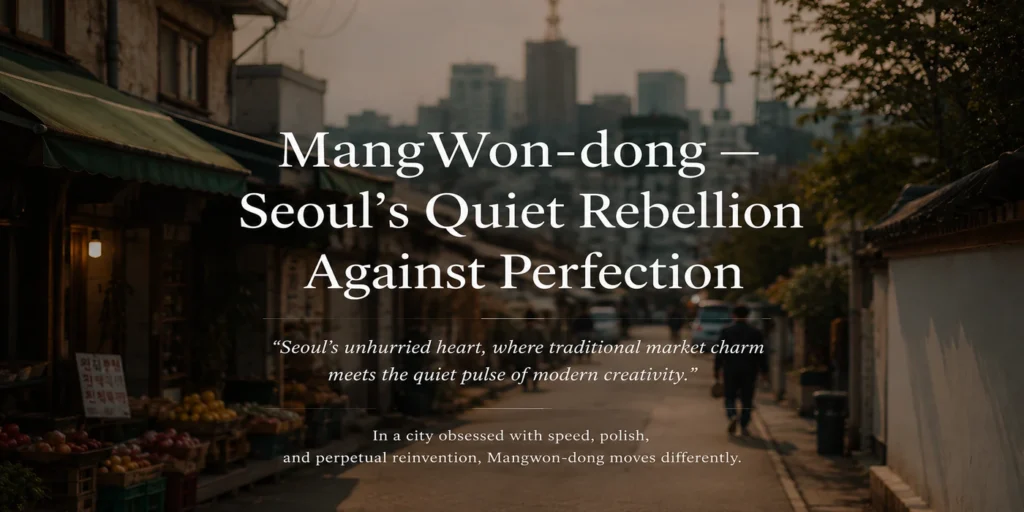
MangWon-dong — Seoul’s Quiet Rebellion Against Perfection
“Seoul’s unhurried heart, where traditional market charm meets the quiet pulse of modern creativity.”
In a city obsessed with speed, polish, and perpetual reinvention, Mangwon-dong moves differently.
Tucked just west of the Han River near Hongdae, Mangwon is where Seoul exhales — a neighborhood of low-rise alleys, independent cafés, aging markets, analog photo booths, vinyl bars, handwritten menus, and locals who seem pleasantly uninterested in Seoul’s race toward luxury. It is not glamorous in the traditional sense. That is precisely its charm.
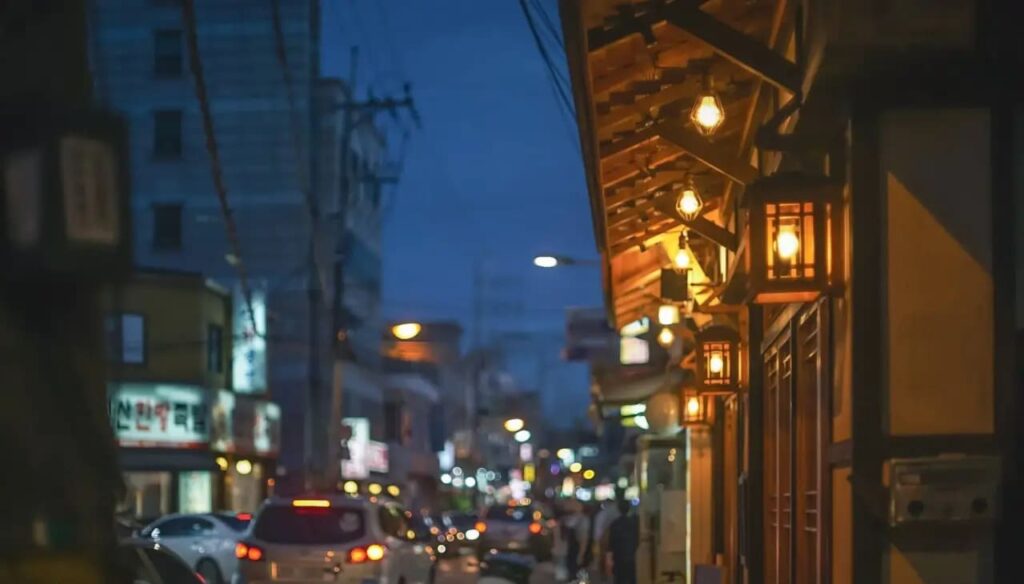
While nearby Seongsu industrialized itself into curated cool and Gangnam perfected aspirational modernity, Mangwon remained intimate, human, and stubbornly local. The result is one of Seoul’s most quietly magnetic neighborhoods — a place where students, artists, young families, designers, and longtime residents coexist with unusual ease.
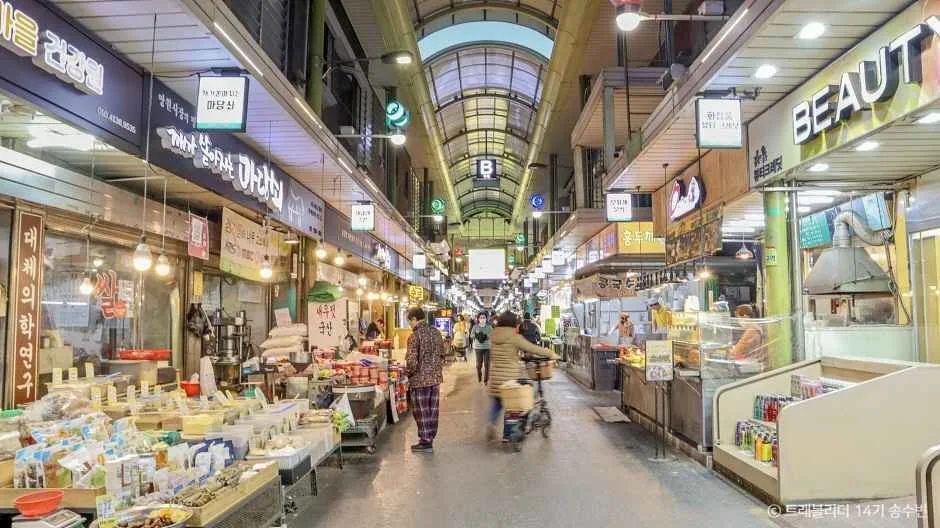
At the heart of the district lies Mangwon Market, a traditional Korean market that feels refreshingly untouched by spectacle. Elderly vendors sell freshly fried hotteok beside minimalist bakeries and specialty coffee roasters. A narrow alley may reveal a natural wine bar hidden above a stationery shop, while another leads to a tiny listening café playing jazz through vintage speakers.
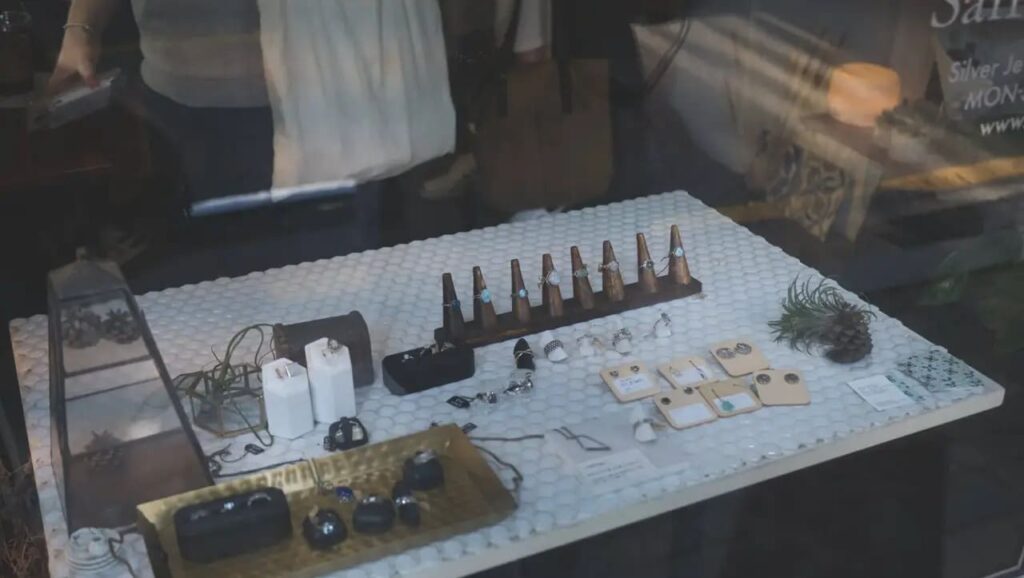
Mangwon’s beauty is not immediate. It reveals itself slowly — through the scent of roasted sesame oil drifting from the market, the soft afternoon light along residential streets, the hum of bicycles heading toward Hangang Park, and conversations lingering outside cafés long after sunset.
For travelers seeking Seoul beyond luxury storefronts and neon intensity, Mangwon offers something increasingly rare: authenticity without performance.
This is not the Seoul that tries to impress you.
It is the Seoul that quietly becomes unforgettable.
The Anti-Gangnam
Why Mangwon
the Seoul neighborhood we can’t stop dreaming about.
Forget the neon-lit skyscrapers and the frantic pace of Myeongdong. In the west of Seoul, nestled between the Han River and the bustling student hub of Hongdae, lies Mangwon-dong—a neighborhood that has perfected the art of the slow burn.
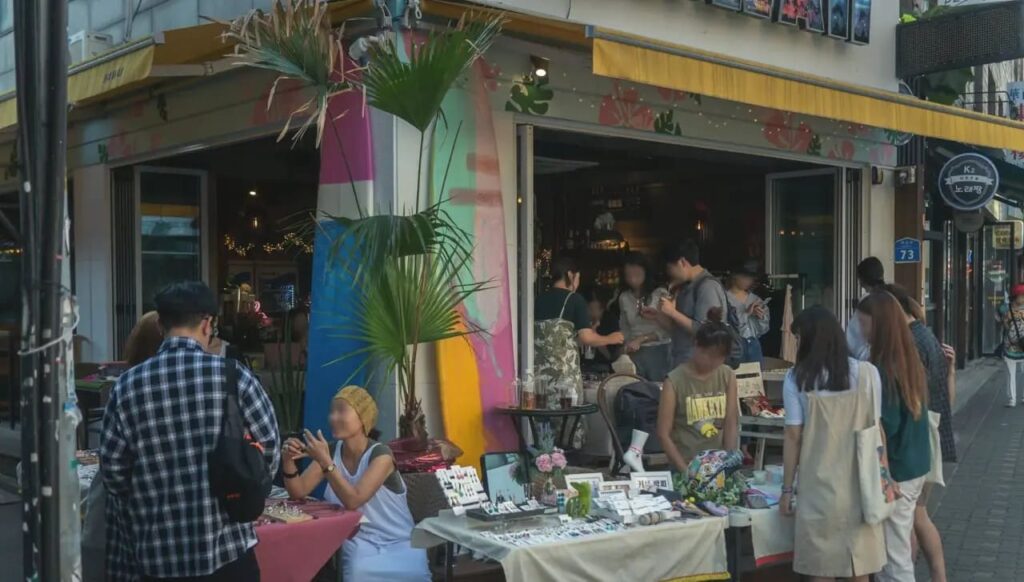
Once a humble residential area, Mangwon has transformed into a sanctuary for independent makers, specialty coffee roasters, and culinary minimalists. It is a place where grandmas still haggle over peppers at the local market, just steps away from a boutique selling artisanal Japanese stationery.
Why Mangwon Still Feels Different
Mangwon-dong was not named for trendiness, creativity, or cafés.
Long before it became one of Seoul’s most beloved neighborhoods, Mangwon-dong carried a far more poetic meaning. The name “Mangwon” (망원) roughly translates to “looking far into the distance” — a reference often associated with the elevated views once possible from this part of western Seoul, near the Han River. In a city historically shaped by mountains, rivers, and watchpoints, Mangwon suggested perspective: a place from which one could see beyond the immediate horizon.
Today, that meaning feels strangely intact.
In modern Seoul — a city defined by relentless speed, hyper-competition, and polished perfection — Mangwon-dong represents something increasingly rare to Koreans: emotional breathing room.
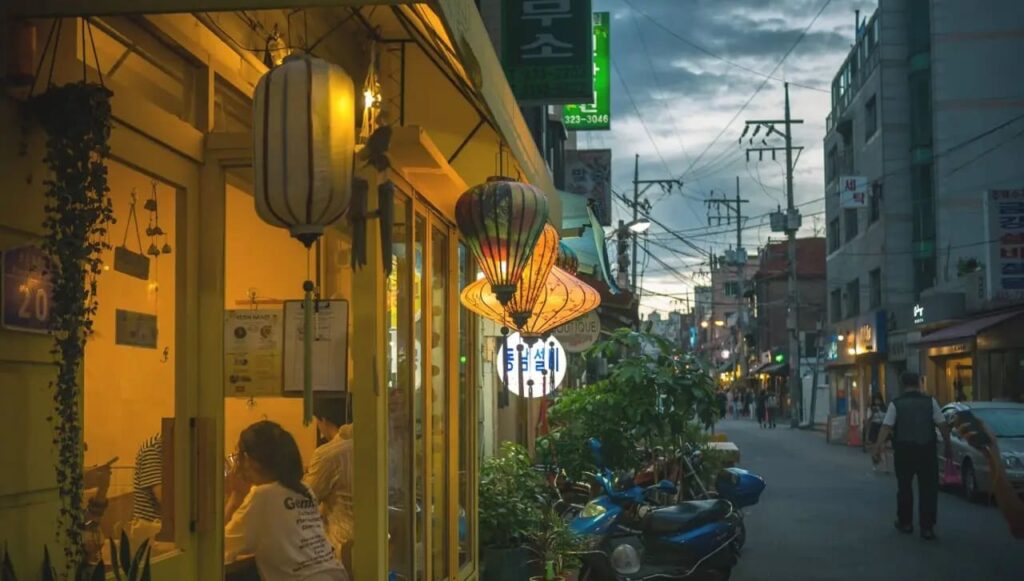
This is not Seoul’s richest neighborhood, nor its most fashionable in the conventional sense. There are no monumental skyscrapers, luxury flagships, or curated spectacles designed for attention. Instead, Mangwon moves at a distinctly human rhythm. Elderly residents still gather at traditional markets in the early morning. Independent cafés spill quietly onto narrow streets. Young creatives, writers, and designers have quietly settled here over the years.
Yet decades-old noodle shops and family-run vegetable stalls remain untouched, existing beside newer cafés without pressure to reinvent themselves.
For many Koreans, Mangwon embodies a quieter aspiration — not the Seoul of ambition, but the Seoul of balance.
“It is where people come when they are tired of performing success.“
And perhaps that is precisely why international travelers increasingly find themselves drawn here as well.
For foreign visitors, Mangwon-dong offers something far more difficult to manufacture than “hidden gem” aesthetics: authenticity without performance.
Unlike neighborhoods designed primarily for tourism, Mangwon still feels lived-in. The atmosphere is intimate rather than spectacular.
The neighborhood reveals itself gradually — through market mornings, quiet cafés, grocery bags at dusk, and the small human details that rarely appear in guidebooks.
Or, as many locals might describe it without saying so directly:
the place where Seoul slows down, and looks further.
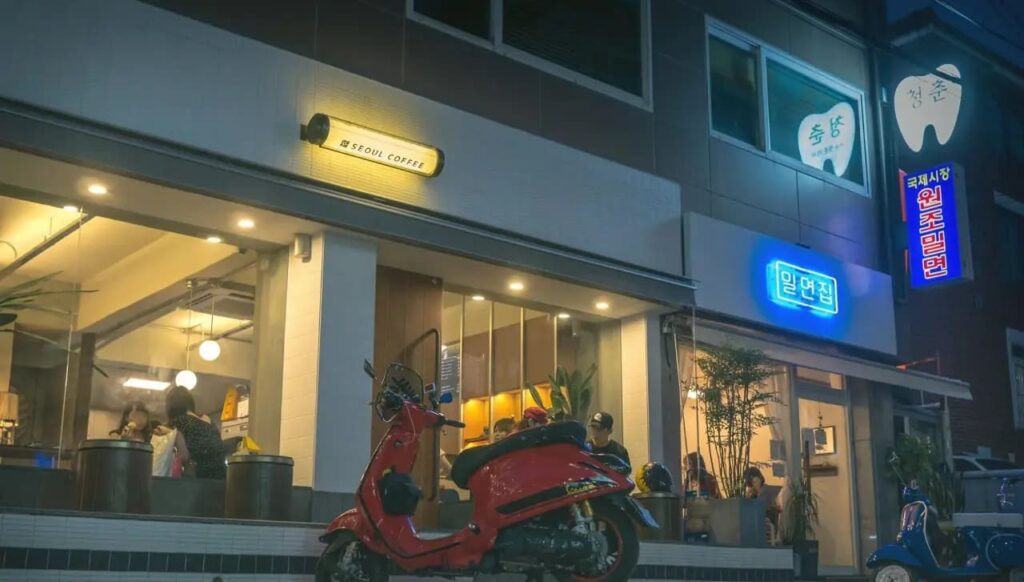
A Culinary Microcosm
Mangwon-dong’s dining scene is defined by its small scale. You won’t find many chains here; instead, you’ll find tiny, six-seat kitchens where chefs focus on one or two dishes. From the legendary fried chicken at Mangwon Market to the refined vegan bistros tucked away in the back alleys, every meal feels personal.
- Deep Blue Lake: A cobalt-blue roastery that treats coffee like fine wine.
- Mangwon Market: Try the ‘Krokets’ and the sweet ‘Dakgangjeong’.
- Bali in Mangwon: Tropical escapism through authentic Indonesian flavors.
Where to Shop
The Curated Life
Shopping in Mangwon is a treasure hunt. “Mangnidan-gil” is the main artery, but the real magic happens in the capillaries. Zero-waste shops, vintage record stores, and independent bookshops offer a highly curated glimpse into the creative minds of Seoul’s youth.
“There is a palpable sense of community here. Shops often collaborate, and owners know their regulars by name—a rarity in a mega-city like Seoul.”
Directions
Exit 2 of Mangwon Station on Subway Line 6 provides the best access to the city center.
“Mangwon-dong doesn’t scream for your attention.
It waits for you to discover its rhythm.”
Bakery near Mangwon-dong
🎬 Mangwon & Everyday Seoul
- My Mister (2018, 나의 아저씨) Starring: Lee Sun-kyun, IU
Quiet alleys, emotional realism & everyday Seoul life - Our Beloved Summer (2021, 그 해 우리는) Starring: Choi Woo-shik, Kim Da-mi
Warm cafés, riverside walks & youthful nostalgia - Because This Is My First Life (2017, 이번 생은 처음이라) Starring: Jung So-min
Small apartments, local cafés & modern Seoul relationships
🌿 Slow Seoul & Local Life
- Mangwon Market (망원시장) Traditional snacks, street food & local neighborhood culture
- Mangwon Hangang Park Riverside sunsets, bike rides & peaceful Seoul evenings
- Mangwon Café Culture Independent bakeries, vintage cafés & quiet creative spaces
More to Explore on KHOREA.COM
Discover more stories across Korea — choose a category that inspires you.