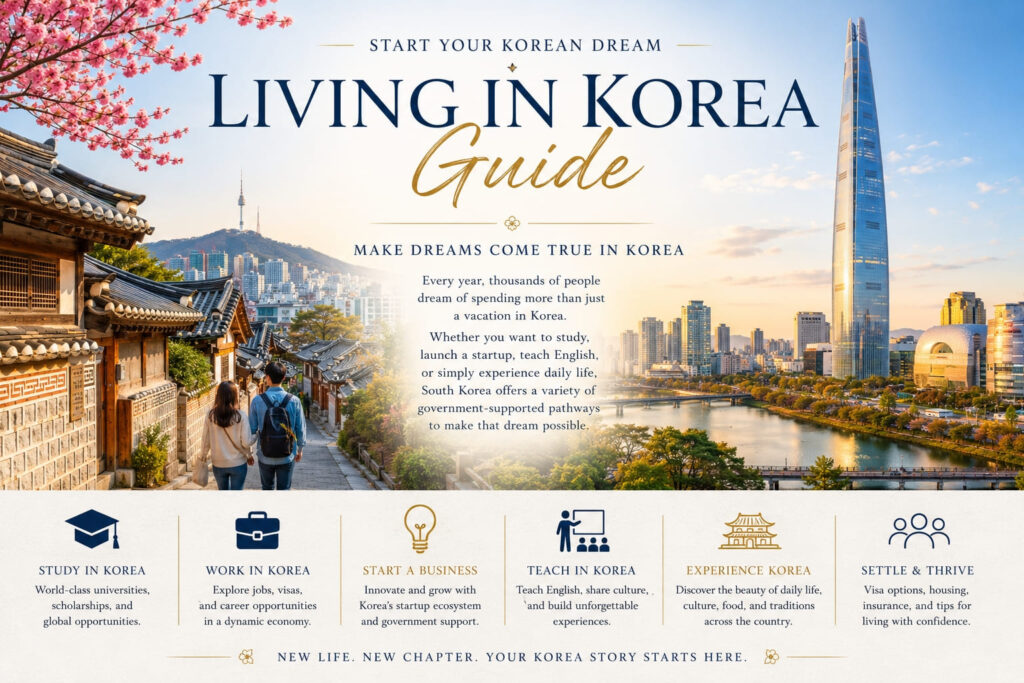
Design Your Korean Dream
Make Dreams Come True in Korea
Every year, thousands of people dream of spending more than just a vacation in Korea. Whether you want to study, launch a startup, teach English, or simply experience daily life, South Korea offers a variety of government-supported pathways to make that dream possible.
National Government Programs
1. Academic Path: Global Korea Scholarship (GKS)
This is the flagship government program managed by the Ministry of Education. It is designed to invite international students to pursue a degree or an exchange program, covering 100% of your living and studying costs.
- Who it is for: International students looking to study for an exchange semester, an undergraduate degree (3–4 years), or a graduate degree (2–3 years).
- Funding & Benefits:
- Full tuition coverage and free round-trip airfare.
- Monthly Stipend: Around ₩1,000,000 to ₩1,100,000 per month (plenty for a comfortable student life in Seoul).
- Settlement allowance (₩200,000), National Health Insurance coverage, and a completion grant.
- Visa Provided: D-2 (Student Visa).
- How to Apply: Applications open annually (usually around February for graduate programs and September for undergraduate programs). You can apply via either the Embassy Track (through the Korean embassy in your home country) or the University Track (directly applying to a participating Korean university).
- Official Portal:Study in Korea (GKS) ↗

2. Entrepreneurial Path: K-Startup Grand Challenge & Commercialization Support
The Ministry of SMEs and Startups heavily funds foreign tech talent to live and set up businesses in South Korea.
K-Startup Grand Challenge (KSGC)
- Who it is for: Foreign tech startups and entrepreneurs with at least a prototype or an established business under 7 years old.
- Funding & Benefits:
- Living Expenses: Selected teams receive a 3.5-month settlement stipend covering living costs during the initial acceleration phase (approx. $10,000 to $12,000 total per team).
- Top-performing teams that stay for the second stage receive an additional 3.5 months of living expense grants.
- Free office space in Pangyo Techno Valley (Korea’s Silicon Valley), 1-on-1 mentoring, and potential equity-free grant prizes for top winners.
- Visa Pathway: D-8-4 (Startup Visa) through the OASIS (Overall Assistance for Startup Immigration System) points-based program.
VISA information / VISA apply
Global Startup Commercialization Support Program
- Who it is for: Tech-based startups led by a non-Korean national willing to incorporate their business in Korea.
- Funding & Benefits: Non-dilutive (equity-free) commercialization grants averaging ₩50,000,000 to ₩80,000,000 to cover product development, labor costs, marketing, and essential travel expenses for a 10-month period.
- How to Apply: Applications typically open around March/April. You must submit a detailed business plan in English outlining how you intend to localize your service/product for the Korean or Asian market.
- Official Portal:K-Global Startup Center ↗
3. Cultural & Employment Path: EPIK (English Program in Korea)
If you want guaranteed income while experiencing Korean culture without starting a business or studying, the Ministry of Education runs the EPIK program.
- Who it is for: Passport holders from one of the 7 designated English-speaking countries (US, UK, Canada, Australia, New Zealand, Ireland, South Africa) who hold a bachelor’s degree.
- Funding & Benefits:
- Monthly Salary:₩2,100,000 to ₩2,700,000 depending on experience and location.
- Free Housing: Provided by the school or local office of education.
- Entrance allowance (₩1,300,000) for flights, settlement allowance (₩300,000), medical insurance subsidy, and a 1-month salary bonus upon completion of the 1-year contract.
- Visa Provided: E-2 (Foreign Language Teaching Visa).
- How to Apply: Applications open biannually for the Spring (February entry) and Fall (August entry) terms. You apply directly through the EPIK portal or certified recruiting agencies.
- Official Portal:EPIK Official Website ↗
Summary of Core Requirements
| Program Type | Main Funding Source | Key Benefit | Minimum Stay | Primary Visa |
|---|---|---|---|---|
| Academic (GKS) | Ministry of Education | Full tuition + ₩1M/mo stipend | 1–4 years | D-2 |
| Startup (KSGC / Commercialization) | Ministry of SMEs and Startups | ₩50M–80M grants + free office | 10–12 months | D-8-4 |
| Teaching (EPIK) | Ministry of Education | ₩2.1M+/mo salary + free housing | 1 year (renewable) | E-2 |
Pro Tip for Applying: For all programs, the South Korean government prioritizes alignment with local economic and cultural goals. If applying for startups or academia, highlight how your presence will benefit Korea’s global integration, technology ecosystem, or cultural exchange.

Seoul Metropolitan Government Programs
While central government programs handle formal entry and visa pathways, local government (municipal) policies in South Korea—led by the Seoul Metropolitan Government—provide the on-the-ground ecosystem that allows foreigners to sustain themselves long-term.
These initiatives offer everything from equity-free business grants and subsidized tech education to free language integration and cost-of-living safety nets.

1. Local Startup Funding: Seoul Global Center (SGC)
The Seoul Global Center, operated directly by the Seoul Metropolitan Government, acts as the primary hub for foreign residents. Beyond basic counseling, they offer active financial and operational programs to help expat entrepreneurs survive their first year.
- Foreign Startup Incubation Program: SGC provides selected foreign entrepreneurs with free physical office spaces (incubator offices) in premium areas like Jongno or Gangnam for 6 months to a year, dramatically reducing overhead costs.
- Startup Commercialization Grants: They periodically open funding rounds for foreign-led startups registered in Seoul. Winners receive seed grants (typically ₩5,000,000 to ₩10,000,000) explicitly to cover local marketing, prototype refinement, or patent filings.
- Free Professional Consultations: Navigating local corporate taxes, business registration, and patent laws can be expensive. SGC provides 100% free expert consultations with certified local public accountants, lawyers, and patent attorneys in multiple languages.
- How to Apply: Announcements are posted under the “Notice” section of the Seoul Foreign Portal. Applications usually require a localized pitch deck or a business registration certificate located within Seoul.
2. Professional & Technical Upskilling: Seoul IT Centres
Instead of giving direct cash, Seoul often funds intensive, high-value professional training programs that lead directly to corporate placement or freelance sustainability.
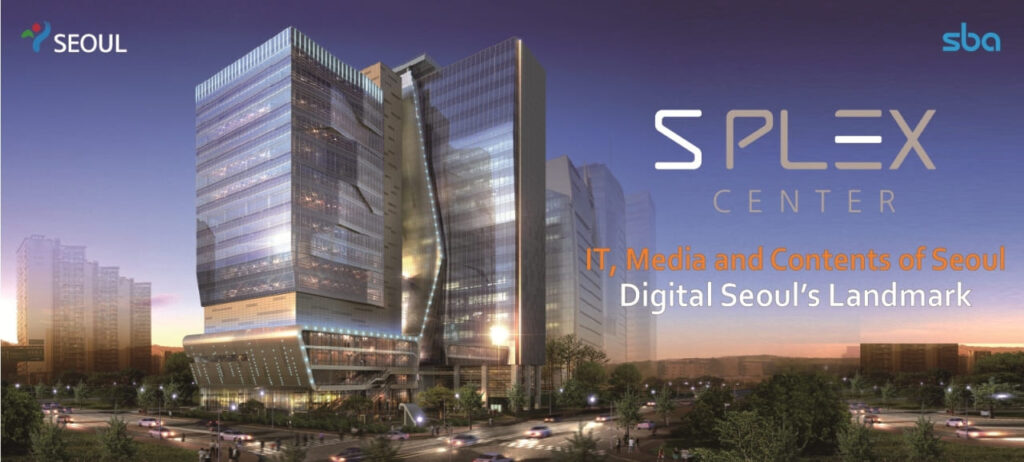
- Free Professional / IT Training: Centers like the Seoul Foreign Resident Center (Yeongdeungpo) run completely subsidized technical academies. Programs include Full-Stack Web Development, UI/UX Design, AI Applications, and Global E-Commerce (Coupang/Amazon selling).
- The Benefit: These courses normally cost millions of won in the private sector but are completely free for foreigners holding eligible long-term visas. They also frequently provide direct networking events with local tech companies looking to hire foreign talent.
- Free Advanced Korean (TOPIK) Classes: Passing higher levels of the TOPIK exam unlocks the F-2-7 (Resident Visa) points-based system, which frees you from being tied to a single employer. Nearly all municipal Global Village Centers (GVCs) provide free multi-month TOPIK prep courses.
3. Localization & Micro-Grants: Global Village Centers (GVC)
Seoul operates specialized Global Village Centers in districts with high expat concentrations (such as Itaewon, Ichon, Seorae, and Yeonnam).
- Seoul Supporter Programs & Micro-Grants: Districts frequently recruit “Global Supporters” or “Foreign Resident Leaders.” For example, programs like the Seongdong Foreigners’ Global Supporters pay foreign residents activity expenses (stipends) to create multilingual social media content, assist in local festival translations, or audit public infrastructure for accessibility.
- Free Psychological & Living Support: The Seoul Foreign Resident Center offers free 1-on-1 psychological counseling sessions in English, Chinese, and other languages to support mental well-being and help expats combat the psychological fatigue of relocation.
- Emergency Financial Relief: During broader economic challenges or public health crises, the Seoul Metropolitan Government occasionally extends voucher-based cash handouts (e.g., local prepaid gift vouchers like Seoul Pay+) to qualifying foreign households who are registered under local health insurance or have family ties to local residents.
Strategic Overview of Municipal Support
| Center / Hub | Primary Focus | Practical Benefit | Best For |
|---|---|---|---|
| Seoul Global Center | Business & Legal | Free Office Space, Equity-free Seed Grants, Free Legal/Tax Consulting | Entrepreneurs, Tech Founders, Freelancers |
| Seoul Foreign Resident Centers | Careers & Tech Education | Free Coding Bootcamps, E-Commerce Training, Free Mental Health Counseling | Job Seekers, Career Changers |
| Global Village Centers (GVCs) | Daily Integration & Local Projects | Paid “Supporter” Roles, Free TOPIK Prep, Cultural Integration Grants | Content Creators, Community Leaders, Students |
How to Monitor & Secure This Support
Because municipal grants and cohorts open dynamically throughout the year, the most efficient method is to bookmark the Seoul Foreign Portal.
- Visit the Seoul Foreign Portal ↗
- Regularly check the “Center News” and “Registrations” tabs.
- If you reside in a specific district (like Yongsan, Mapo, or Gangnam), visit your local Global Village Center website directly, as they run independent localized micro-budgets separate from the main Seoul city budget.
Want to know where to live in Korea?
Explore our guides to Seoul, Pangyo, Gangwon, Busan, and other destinations to find the place that matches your lifestyle.
🛏️ Hotels in Myeongdong
Choose your preferred booking partner.




You May Also Like
- 2027 FISU Universiade—When the World Comes to Korea
- Daejeon – Where Korea Builds Tomorrow
- Is Korea Expensive? Seoul Travel Cost Breakdown
- Korea, Devotion to human welfare
- 7 Reasons to Travel to Korea
- Design Your Perfect Korea Trip
- Why Visit South Korea in 2026: A Complete Luxury Korea Travel Guide
- Explore Korea with KTX
More to Explore on KHOREA
Discover more stories across Korea — choose a category that inspires you.